Question
How does conductance of a semi-conductor changes with increase in temperature?

Answer

Since, resistance of a semiconductor decreases with increase in temperature, so its conductance $\left(\frac{1}{R}\right)$ with increase in temperature.

Need a full question paper?

Generate a complete, print-ready paper with questions like this in minutes — across 16+ boards, with answer keys.
Start Generating Free

Similar questions

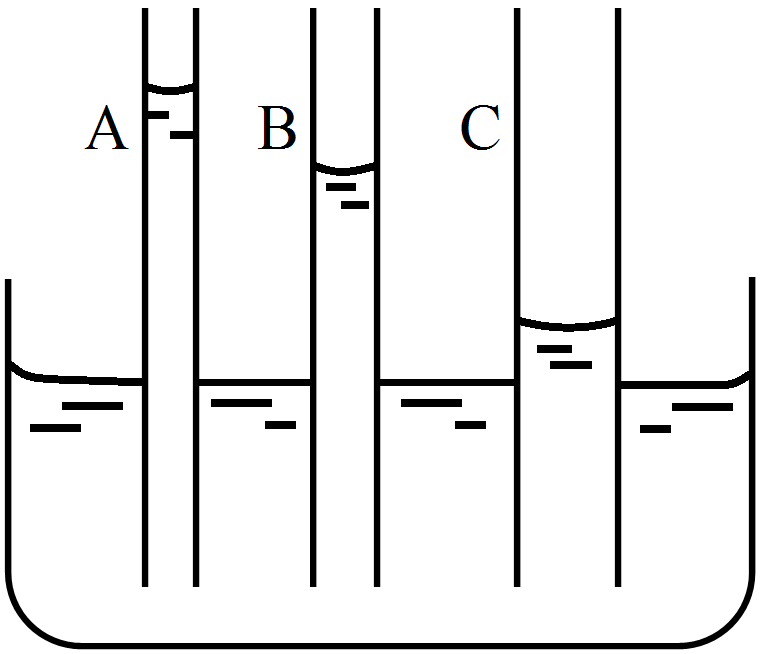
The capillaries shown in have inner radii 0.5mm, 1.0mm and 1.5mm respectively. The liquid in the beaker is water. Find the heights of water level in the capillaries. The surface tension of water is 7.5 × 10⁻²N/m.

Answer the following questions, which help you understand the difference between Thomson’s model and Rutherford’s model better.
Is the average angle of deflection of α-particles by a thin gold foil predicted by Thomson’s model much less, about the same, or much greater than that predicted by Rutherford’s model?
A long straight current carrying wire passes normally through the centre of circular loop. If the current through the wire increases, will there be an induced emf in the loop? Justify.
To which part of the electromagnetic spectrum does a wave of frequency 5 x 10¹⁹ Hz belong?
When a solid melts or a liquid boils, the temperature does not increase even when heat is supplied. Where does the energy go?
shows a capacitor made of two circular plates each of radius 12 cm, and separated by 5.0 cm. The capacitor is being charged by an external source (not shown in the figure). The charging current is constant and equal to 0.15A.
  1. Calculate the capacitance and the rate of charge of potential difference between the plates.
  2. Obtain the displacement current across the plates.
  3. Is Kirchhoff’s first rule (junction rule) valid at each plate of the capacitor? Explain.
​​​​​​​
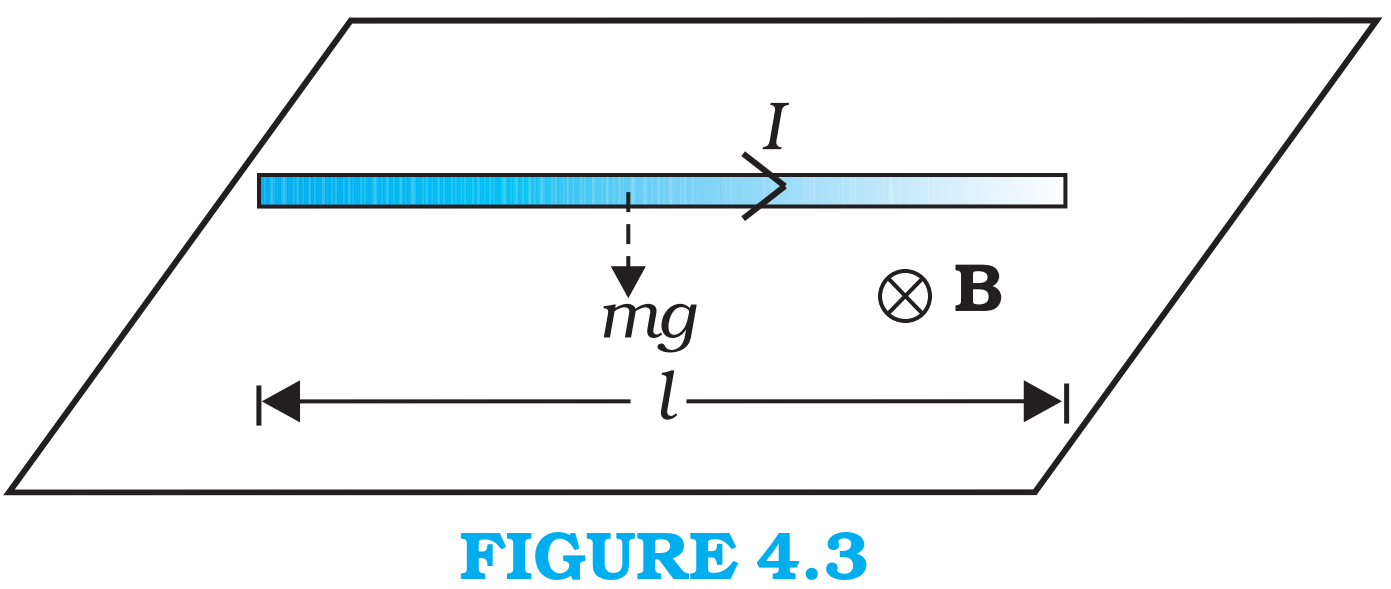
A straight wire of mass $200 g$ and length $1.5 m$ carries a current of $2 A$. It is suspended in mid-air by a uniform horizontal magnetic field B (Fig. 4.3). What is the magnitude of the magnetic field?
Image
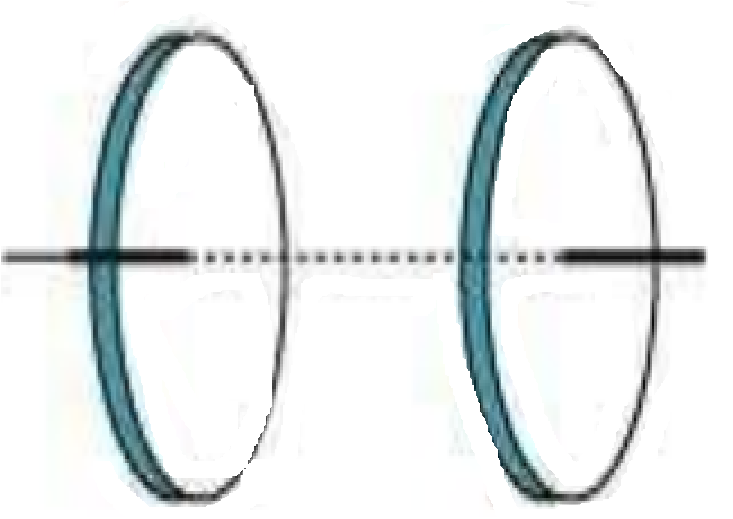
Two circular loops are placed with their centres separated by a fixed distance. How would you orient the loops to have:
  1. The largest mutual inductance.
  2. The smallest mutual inductance?
What type of wavefront will emerge from an (i) point source, and (ii) distant light source?
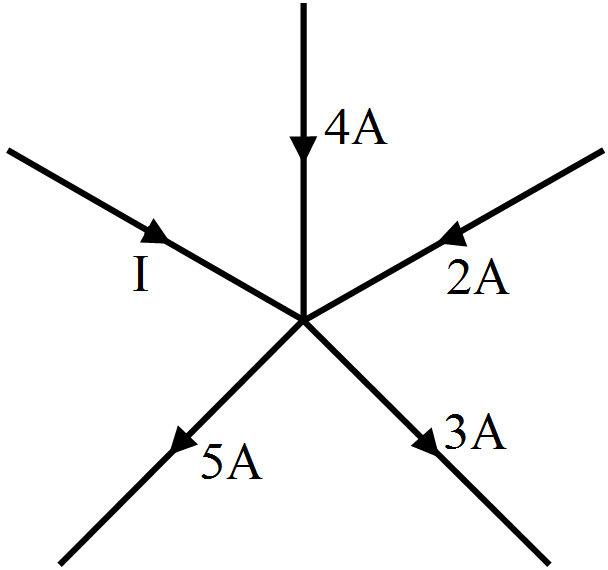
What is the value of I in the given current distribution?