Question
How Does Ideal Machine Differ from a Practical Machine ?

Answer

Ideal machine Practical machine
1. Efficiency is 100%. 1. Efficiency is less than 100%
2. Its parts are weightless, elastic and perfectly smooth. 2. Its parts are not weightless, elastic or perfectly smooth.
3. There is no loss in energy due to friction 3. There is always some loss of energy due to friction
4. Work output of such a machine is equal to the work input. 4. Work output is always less than the work input.

Need a full question paper?

Generate a complete, print-ready paper with questions like this in minutes — across 16+ boards, with answer keys.
Start Generating Free

Similar questions

$0.5 kg$ of lemon squash at $30^{\circ} C$ is placed in a refrigerator which can remove heat at an average rate of $30 Js ^{-1}$. How long will it take to cool the lemon squash to $5^{\circ} C$ ? Specific heat capacity of squash $=4200 Jkg ^{-1} K ^{-1}$
A bucket kept under a running tap is getting filled with water. A person sitting at a distance is able to get an idea when the bucket is about to be filled.
(i) What change takes place in the sound to give this idea?
(ii) What causes the change in the sound?
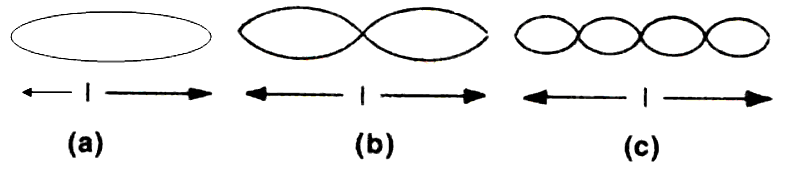
Fig. shows three ways in which the string of an instrument can vibrate.

(i) Which of the diagram shows the principle note?
(ii) Which has the frequency four times that of the first?
(iii) What is the ratio of the frequency of the vibration in (a) and (b)?
Name the device used to protect the electric circuits from over loading and short circuit. On what effect of current does it work?
State the relation between the refractive index $\mu$ and the velocity of light $\left( v _{ m }\right)$ in that medium.
A man standing between two cliffs produces a sound and hears two successive echoes at intervals of $3s$ and $4s$ respectively. Calculate the distance between the two cliffs. The speed of sound in the air is $330 ms^{−1}.$
A uniform metre rule balances horizontally on a knife edge placed at the 58 cm mark when a weight of 20gf is suspended from one end.
  1. Draw a diagram of the arrangement.
  2. What is the weight of the rule?
A body, when acted upon by a force of 10 kgf, gets displaced by 0.5 m. Calculate the work done by the force, when the displacement is (i) in the direction of force, (ii) at an angle of 60° with the force, and (iii) normal to the force. (g = 10 N kg-1)
A machine raises a load of 750 N through a height of 16 m in 5 seconds. Calculate the power at which the machine works.
Calculate the equivalent resistance between $P$ and $Q$ from the following diagram: