Question
How does the maximum kinetic energy of electrons emitted vary with the work function of the metal?Maximum kinetic energy Ek = hν – W Clearly, smaller the work function W, greater is the Ek This means that when work function of a metal increases, maximum kinetic energy of photoelectrons decreases.
Answer

Maximum kinetic energy $E_k= hν - W$
Clearly, smaller the work function W, greater is the $E_k$ This means that when work function of a metal increases, maximum kinetic energy of photoelectrons decreases.

Need a full question paper?

Generate a complete, print-ready paper with questions like this in minutes — across 16+ boards, with answer keys.

Start Generating Free

Similar questions

A small town with a demand of 800kW of electric power at 220V is situated 15km away from an electric plant generating power at 440V. The resistance of the two wire line carrying power is 0.5Ω per km. The town gets power from the line through a 4000-220V step-down transformer at a sub-station in the town.
  1. Estimate the line power loss in the form of heat.
  2. How much power must the plant supply, assuming there is negligible power loss due to leakage?
  3. Characterise the step up transformer at the plant.
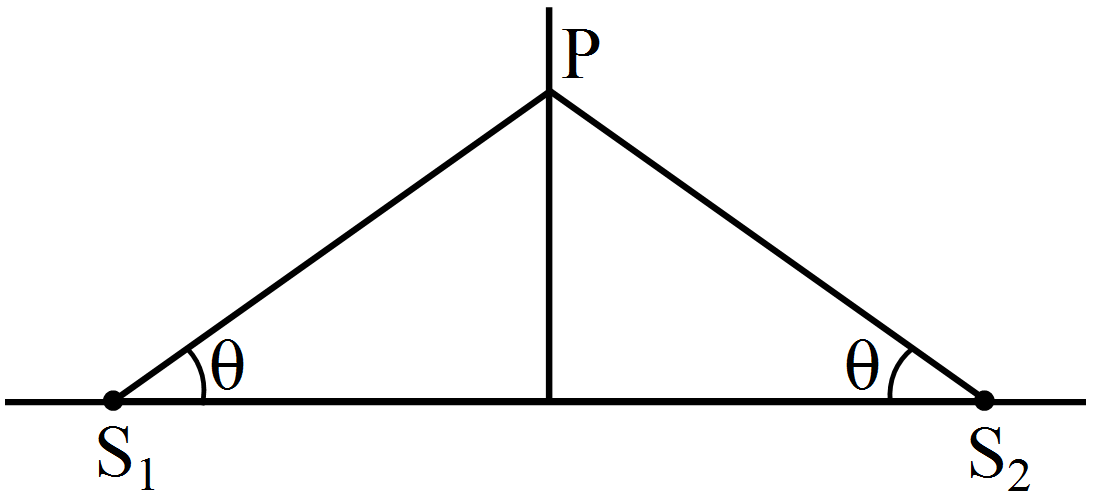
Two sources of sound $S_1$ and $S_2$ vibrate at same frequency and are in phase figure. The intensity of sound detected at a point P as shown in the figure is $I_0.$
  1. If 0 equals $45^\circ,$ what will be the intensity of sound detected at this point if one of the sources is switched off?
  2. What will be the answer of the previous part if =$ 60^\circ?$
Define electric flux. Write its S.I. unit.
A charge q is enclosed by a spherical surface of radius R. If the radius is reduced to half, how would the electric flux through the surface change?
A cylinder rolls on a horizontal plane surface. If the speed of the centre is 25m/s, what is the speed of the highest point?
What is the principle of superposition of charges?
The electric foree between two electric charges in a medium is F . The distance between them is $d$. At what distance were they placed from each other
so that the electric foree becomes (i) 3 F (ii) $\frac{ F }{4}$ ?
Two point charges are placed at a distance d from each other. Due to these, the electric field intensity at any point is zero. But the point is not in the middle of these charges although on the line connecting them, write two necessary conditions for this to happen.
Explain the unit of energy $e{V}$ (electron volt) and define 1 eV .
A wire has a length of 2.0m and a resistance of $5.0\Omega.$ Find the electric field existing inside the wire if it carries a current of 10A.
In which direction would a compass needle align if taken to geographic (i) north pole and (ii) south pole?