Question
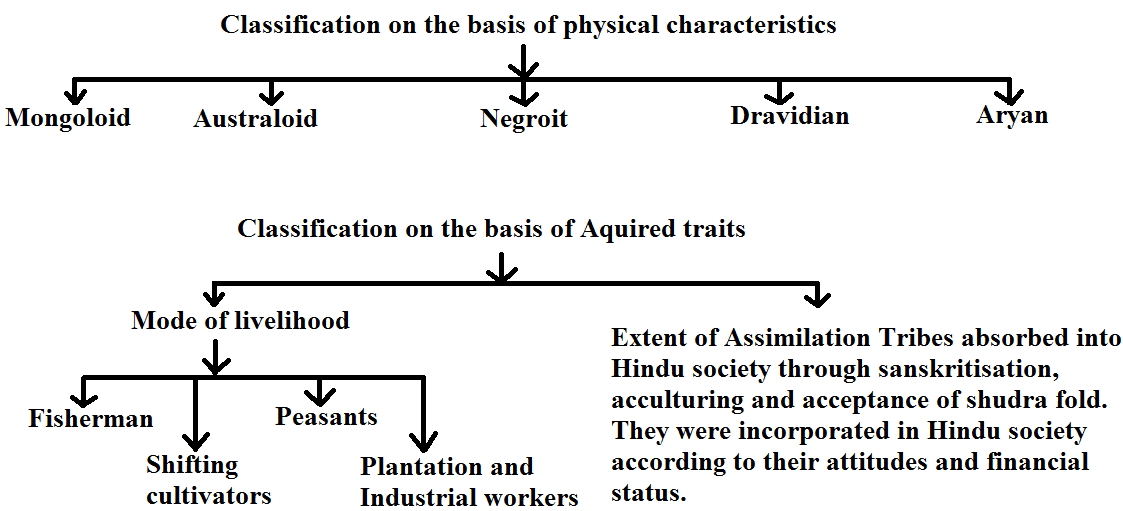
How have tribes been classified in India?

Answer


Classification on the basis of size:
In terms of size, tribals range between seven million to less than 100 person (In Andaman Nicobar Islands). The biggest tribes are the Gonds, Bhils, Santhals, Oraons, Minas, Bodos, and Mundas each at least a million people. The tribals in India shared 8.2% of total population i.e. 85 million people according to 2001 census..

Need a full question paper?

Generate a complete, print-ready paper with questions like this in minutes — across 16+ boards, with answer keys.

Start Generating Free

Similar questions

Highlight the caste-based markets and trading networks in pre-colonial India.
Discuss the ways that strengthened the institution of caste in India under colonial rule.
Write a note on tribal identities in India today with special reference to Jharkhand.
Explain three different ways in which the Indian economy changed after the advent of colonialism.
Read the passage and answer the following questions:
India is working with the UN to tackle these issues on a global scale. UN secretary-general Ban Ki-moon is championing two new initiatives – Every Woman Every Child and the Sustainable Energy for All Initiative – because access to energy and improving women and children‘s health are fundamental to achieving all our development goals. India is an example of how a commitment to these two goals leads to results.
A bright future for India begins with increased efforts to promote safe motherhood. According to USAID, today, India accounts for more maternal deaths than any other country in the world; avoidable complications during pregnancy and childbirth kill approximately 67,000 Indian women annually. These unfortunate statistics are a reality in part because many Indian mothers are still in their teens; nearly one-third of all women deliver a child before the age of 20.
The Indian government has committed to promoting maternal health and family planning, pledging to spend $3.5 billion per year on improving health services, especially women‘s and children‘s health. India‘s ministry of health has announced it is strengthening efforts in the 264 districts that account for nearly 70% of all infant and maternal deaths. The government is implementing a Mother and Child Tracking System, which tracks every pregnant woman by name for the provision of timely antenatal care, institutional delivery and postnatal care, and immunisations for newborns.
Source: The Times of India, April 2, 2012.
  1. Define maternal mortality rate.
  2. What reasons are responsible for more maternal deaths in India than any other country in the world? What efforts are being done by Indian health ministry to overcome this issue?
In agrarian societies, periodic markets are a central feature of social and economic organisations. Explain.
Read the following passage and answer the questions below:
Surprise! Punjab, Bengal lead in curbing birthrate silently, and without much Sarkari fanfare, dramatic changes are taking place in the population indicators of some states that you won't see reflected in country level data. Crude birth rate dipped from 26.4 to 22.8 for the whole country between 1998 and 2008. That's a 14% decline. But in eight major states, the decline was much more. In Punjab, the birthrate fell by a whopping 23%, followed by Kerala and Maharashtra (both 20%) and West Bengal (18%).
Countrywide, the crude death rate, came down by 18% in a decade again there were surprises in the toppers' list. Both Madhya Pradesh and Rajasthan saw a 23% dip in death rates, closely followed by Bihar (22%) and U.P. (20%).
These astonishing figures are computed from the annual Sample Registration System survey done by the Government's Census office for the year 1998 and 2008, the latest available, covering a sample of 7.1 million people spread across the country.
There has been a significant decline in the infant mortality rate in India from 72 in 1998 to 53 in 2008. Although the figure is still shocking, at least there has been a decline of 26% over the past decade.
(Times of India, New Delhi, July 26, 2010)
  1. What is crude birth rate and natural growth rate of population?
  2. Name the states with maximum amount of decline in birthrate and in death rate. What does the fall in death rate and birth rate indicate?
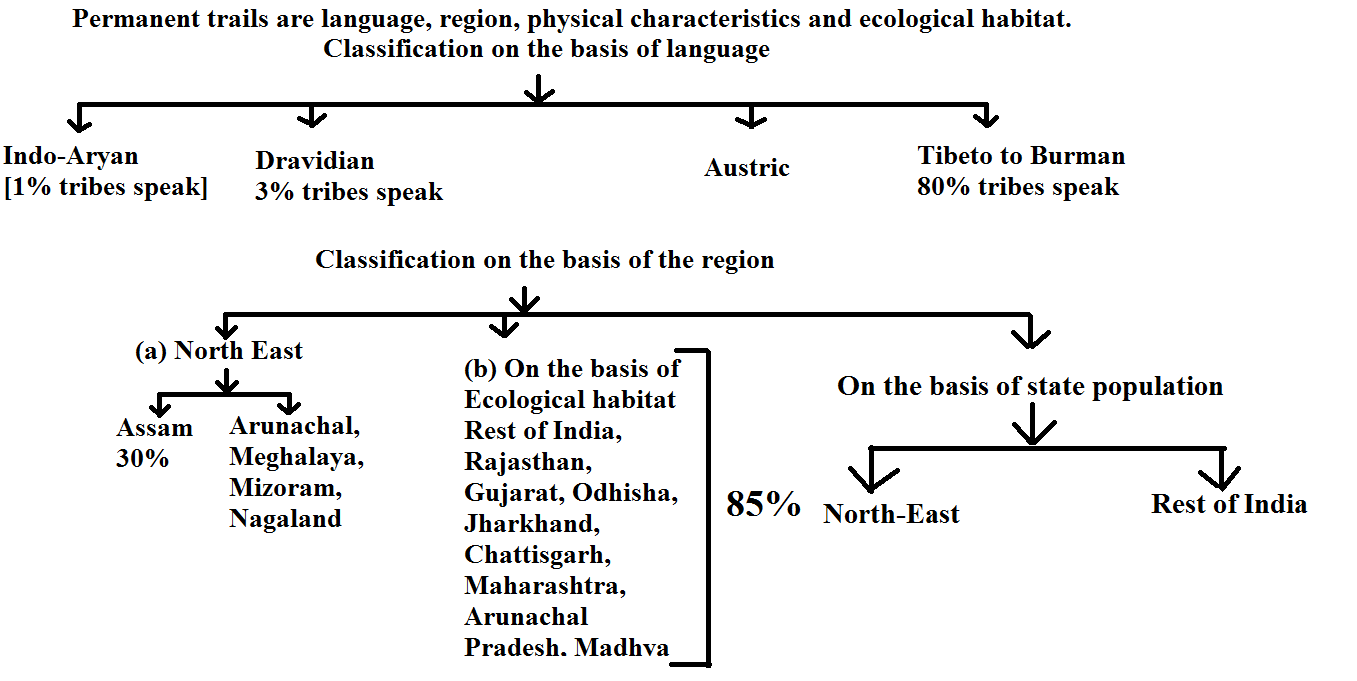
'Tribes have been classified according to their "permanent" and "acquired" traits.' Explain.
Explain the common features of the caste system as it existed in the past.
What are the factors behind the assertion of tribal identities today?