Question
How many ova will be produced by one fully grown primary oocyte?

Answer

One ova is produced by one fully grown primary oocyte.

Need a full question paper?

Generate a complete, print-ready paper with questions like this in minutes — across 16+ boards, with answer keys.

Start Generating Free

Similar questions

Match Column I with Column II.
S. No.
Column I
S. No.
Column II
A.
Cleavage
1.
Outer layer of the blastocyst that attaches to the endometrium during implantation.
B.
Implantation
2.
Mitotic divisions of the zygote in quick succession.
C.
Inner cell mass
3.
Embedding of the blastocyst in the endometrium of uterus.
D.
Trophoblast
4.
Release of secondary oocyte from the ovary.
E.
 
5.
Group of cells attached to one end of trophoblast that differentiate into embryo proper.
What are the advantages of using biofertilisers in agriculture?
Three microbes are listed below. Name the product produced by each one of them and mention their use:
  1. Aspergillus niger.
  2. Trichoderma polysporum.
  3. Monascus purpureus.
Besides better aeration and mixing properties, what other advantages do stirred tank bioreactors have over shake flasks?
Study the graph given below and answer the questions that follows.

  1. Write the status of food and space in the curves A and B.
  2. In the absence of predators, which one of the two curves would appropriately depict the prey population?
  3. Time has been shown on X-axis and there is a parallel dotted line above it. Give the significance of this dotted line.
What is a test cross? How can it decipher the heterozygosity of a plant?
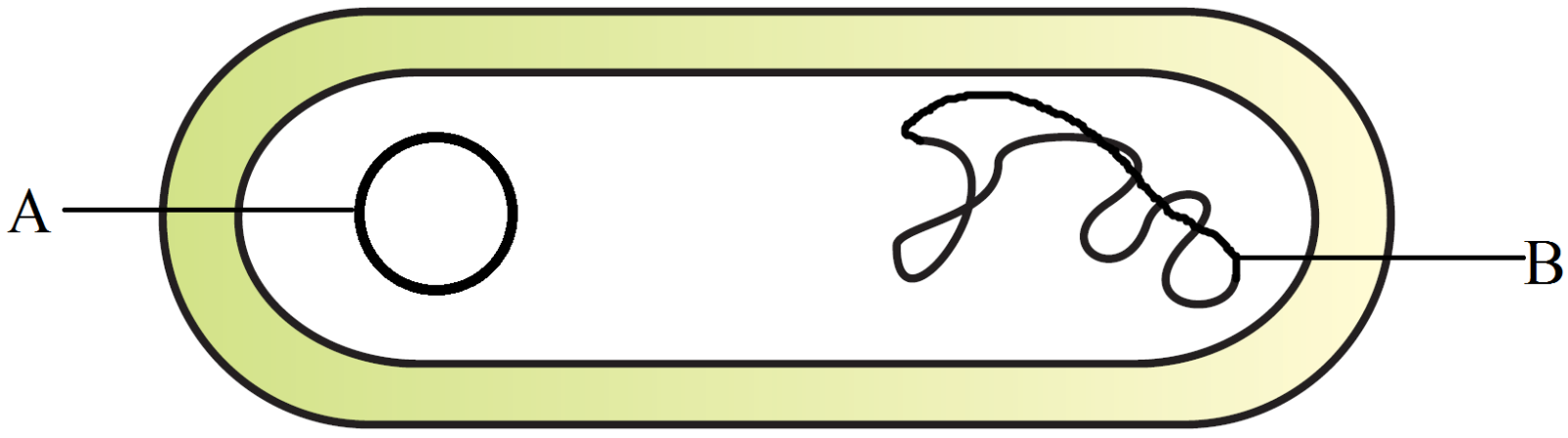
  1. A bacterial cell is shown in the figure given below. Label the part 'A' and 'B'. Also mention the use of part 'A' in rDNA technology.

  1. Suppose a linear DNA fragment and a plasmid has three restriction sites for EcoRI. How many fragments will be produced from linear DNA and plasmid, respectively.
Describe the major features of embryonic development at various months of pregnancy.
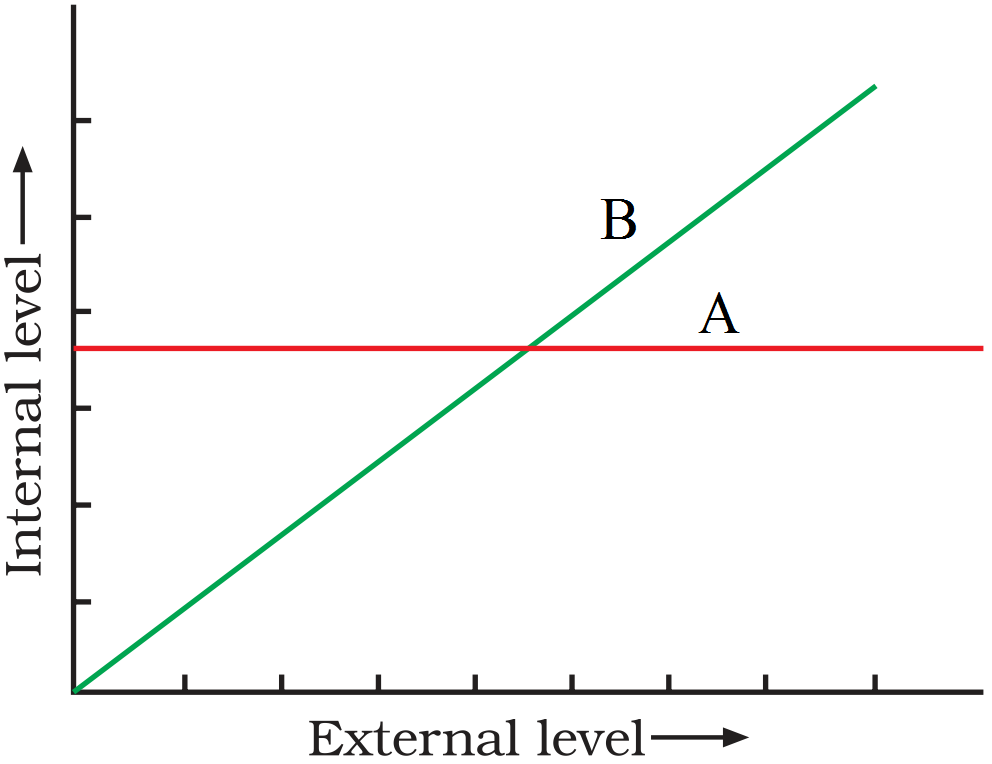
The following graph represents the organismic response to certain environmental condition (e.g. temperature):

  1. Which one of these, 'a' or 'b', depicts conformers?
  2. What does the other line graph depict?
  3. How do these organisms differ from each other with reference to homeostasis?
  4. Mention the category to which humans belong.

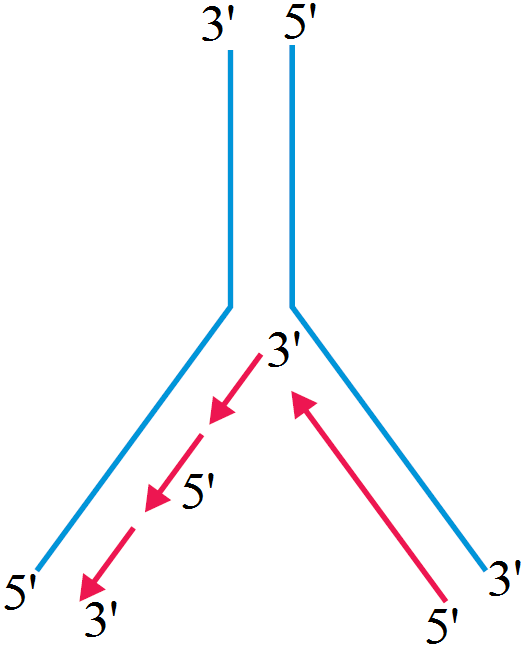
Why do you see two different types of replicating strands in the given DNA replication fork? Explain. Name these strands.