Question
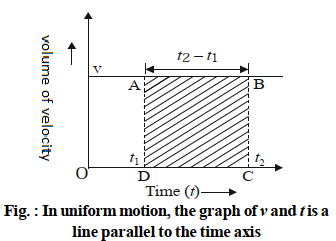
How to find displacement from velocity-time graph? Explain.

Need a full question paper?

Generate a complete, print-ready paper with questions like this in minutes — across 16+ boards, with answer keys.
Start Generating Free

Similar questions

A bat emits ultrasonic sound of frequency 1000 kHz in air. If the sound meets a water surface, what is the wavelength of (a) the reflected sound, (b) the transmitted sound? Speed of sound in air is 340m s –1 and in water 1486m s–1.
A 4m long aluminium wire whose diameter is 3mm is used to support a mass of 50kg. What will be the elongation of the wire? Y for aluminium is 7 × 10¹⁰Nm-2. Given: g = 9.8ms-2.
The volume of an ideal gas is V at a pressure P. On increasing the pressure by $\Delta\text{P},$ the change in volume of the gas is $(\Delta\text{V}_1)$ under isothermal conditions and $(\Delta\text{V}_2)$ under adiabatic conditions. Is $\Delta\text{V}_1>\Delta\text{V}_2$ or vice-versa and why?
The magnitude of gravitational field at distances r1 and r2 from the centre of a uniform sphere of radius R and mass M are I1 and I2 respectively. Find the ratio of $\Big(\frac{\text{I}_1}{\text{I}_2}\Big)$ if r1 > R and r2 < R.
Check by the method of dimensional analysis whether the following relations are correct.
$\text{v}=\sqrt{\frac{\text{P}}{\text{D}}}$ where v = velocity of sound and P = pressure, D = density of medium
$\text{n}=\frac{1}{21}\sqrt{\frac{\text{F}}{\text{m}}},$ where n = frequency of vibration
l = legnth of the string
F = Stretching force
m = mass per unit length of the string.
A refrigerator is to maintain eatables kept inside at 9°C. If room temperature is 36°C, calculate the coefficient of performance.
The sunlight reaching Earth has maximum electric field of 810Vm-1. What is the maximum magnetic field in this light?
The photograph of a house occupies an area of 1.75cm2 on a 35mm slide. The slide is projected on to a screen, and the area of the house on the screen is 1.55m2. What is the linear magnification of the projector-screen arrangement.
The momentum p of a particle changes with time t according to the relation $\frac{\text{dp}}{\text{dt}}=(10\text{N})+(2\text{N/s)t}.$ If the momentum is zero at t = 0, what will the momentum be at t = 10s?
Establish a relation between linear velocity and angular velocity in a uniform circular motion and explain the direction of linear velocity.