Read the passage given below and answer the following questions from 1 to 5.
Relative velocity is velocity of any object with respect to other object which may be stationary or moving. Consider two objects A and B moving uniformly with average velocities vA and vB in one dimension, say along x-axis. (Unless otherwise specified, the velocities mentioned in this chapter are measured with reference to the ground). If x
A (0) and x
B (0) are positions of objects A and B, respectively at time t = 0, their positions x
A (t) and x
B (t) at time t are given by
x
A (t) = x
A (0) + v
A t
x
B (t) = x
B (0) + v
B t
Then, the displacement from object A to object B is given by
x
BA(t) = x
B (t) – x
A (t)
= [x
B (0) – x
A (0) ] + (v
B – v
A) t.
It tells us that as seen from object A, object B has a velocity v
B – v
A because the displacement from A to B changes steadily by the amount vB – vA in each unit of time. We say that the velocity of object B relative to object A is v
B – v
A V
BA = v
B – v
A Similarly, velocity of object A relative to object B is:
V
AB = v
A – v
B This shows V
BA= – V
AB.
- Velocity of object A relative to object B is:
- VAB = vA – vB
- VBA = vB – vA
- None of these
- Velocity of object B relative to object A is:
- vB – vA
- vA – vB
- None of these
- What is relative velocity?
- What is relative displacement?
- Show that VBA = – VAB :
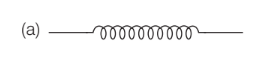
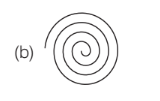 Usually, we assume that the springs are massless. Therefore, work done is stored in the spring in the form of elastic potential energy of the spring. Thus, potential energy of a spring is the energy associated with the state of compression or expansion of an elastic spring.