Question
How will you separate common salt, sand and iron filings from their mixture?

Answer

Mixture of common salt, sand and iron filings can be separated by using magnet first. A horse-shoe magnet is moved on the surface of the mixture. The iron filings are attracted by the magnet, they cling to the poles of the magnet and get separated. This process is repeated a number of times till complete separation of iron filings occur leaving behind mixture of common salt and sand. The mixture of common salt and sand is then dissolved in water and then filtered with the help of filter paper. Sand remains as residue on the filter paper while common salt solution is obtained as filtrate .The filtrate is then evaporated to get crystals of common salt.

Need a full question paper?

Generate a complete, print-ready paper with questions like this in minutes — across 16+ boards, with answer keys.

Start Generating Free

Similar questions

Define crop? Name the various types of crops. What are Kharif and Rabi crops?

Compare between mixed cropping and intercropping. Write down from advantage of both of these techniques.
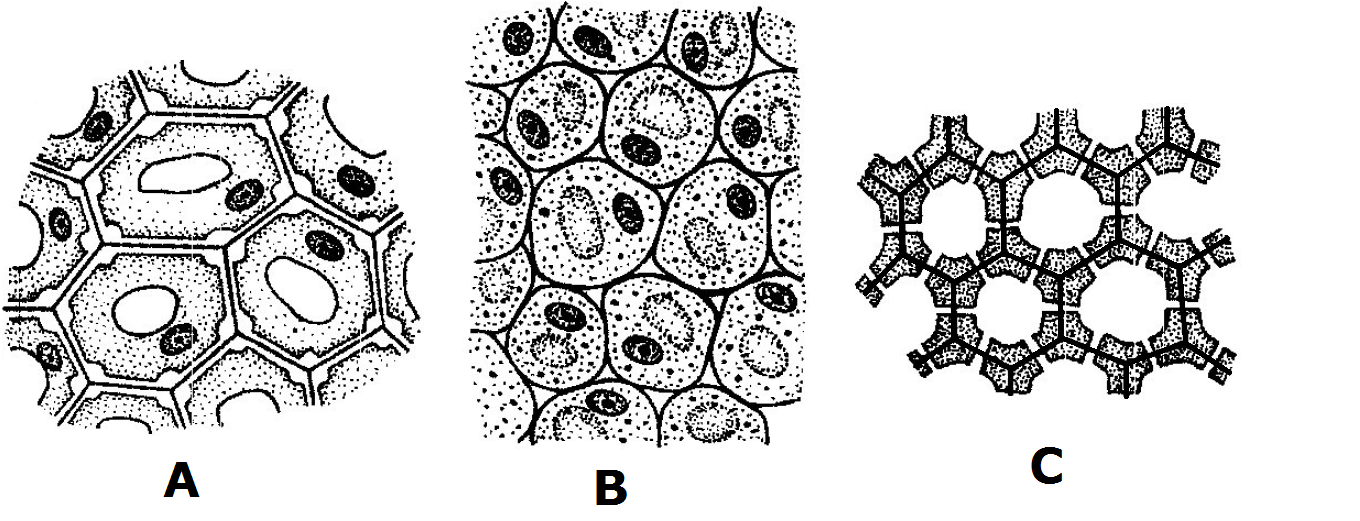
  1. Identify Figure A, B and C.
  2. Which one of them has heavy deposition of lignin?
  3. Which one of them provides both mechanical strength as well as flexibility?
  4. Which one of them can be modified to form air cavities in awuatic plants?
  5. Which one of them is commercially exploited to obtain Hemp and Jute?

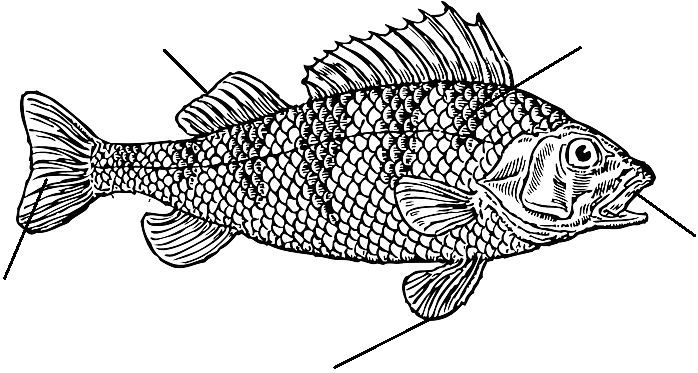
  1. Identify the figure and write down its class.
  2. Label A, B, C, and D.
  3. What if its respiratory organs?
  4. What type of adaptation this creature has?
  5. What type of endoskeleton it has?
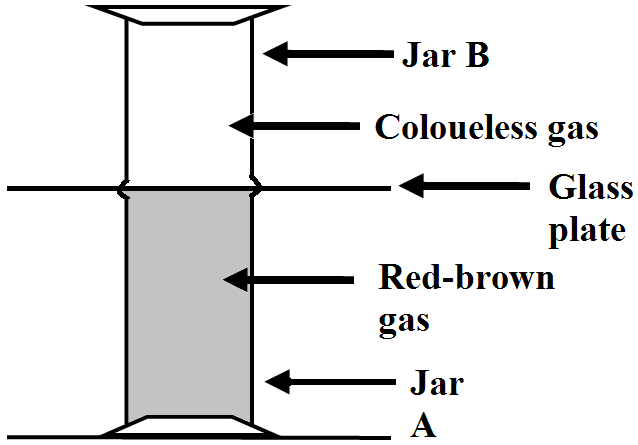
Look at the diagram on the right side. Jar A contains are d-brown gas whereas Jar B contains a colourless gas. The two gas jars are separated by a glass plate placed between them:

  1. What will happen when the glass plate between the two jars is pulled away?
  2. What name is given to the phenomenon which takes place?
  3. Name the brown gas which could be in jar A.
  4. Which is the colorless gas most likely to be present in jar B?
  5. Name one coloured solid and one colourless liquid which can show the same phenomenon.
What is irrigation? Discuss the various methods of irrigation.
Define the following terms:
  1. Cell inclusions.
  2. Cytosol.
  3. Protoplasm.
  4. Nucleoplasm.
Show by using the graphical method that:
$\text{s}=\text{ut}+\frac{1}{2}\text{at}^2$
where the symbols have their usual meanings.
Mention differences between light microscope and electron microscope.
If the back of your hand is moistened with alcohol, you will find that it rapidly becomes dry. Why is it that while it is drying, your hand feels cool?