Question
(i) Define contact inhibition.
(ii) Explain the difference between benign tumors
and malignant tumors.
(iii) Write any one cause of cancer.
Answer

(i) Contact inhibition : In our body, cell growth and differentiation is highly controlled and regulated. In cancer cells, there is breakdown of these regulatory mechanisms. Normal cells show a property called contact inhibition by virtue of which contact with other cells inhibits their uncontrolled growth.
(ii) Difference between benign tumors and malignant tumors :
S.No.Benign TumorsMalignant Tumors
1It is a non-cancerous tumor.Whereas it is a cancerous tumor.
2They normal remain confined to their original location.Whereas it is not confined to its original location.
3Metastasis property is not found.Metastasis property is found in these.
4Cause little damage to body.Cause more damage to body.
(iii) Cause of cancer : The chemical carcinogens present in tobacco smoke have been idetified as a major cause of lung cancer.

Need a full question paper?

Generate a complete, print-ready paper with questions like this in minutes — across 16+ boards, with answer keys.

Start Generating Free

Similar questions

Read the following and answer any four questions from (i) to (v) given below:

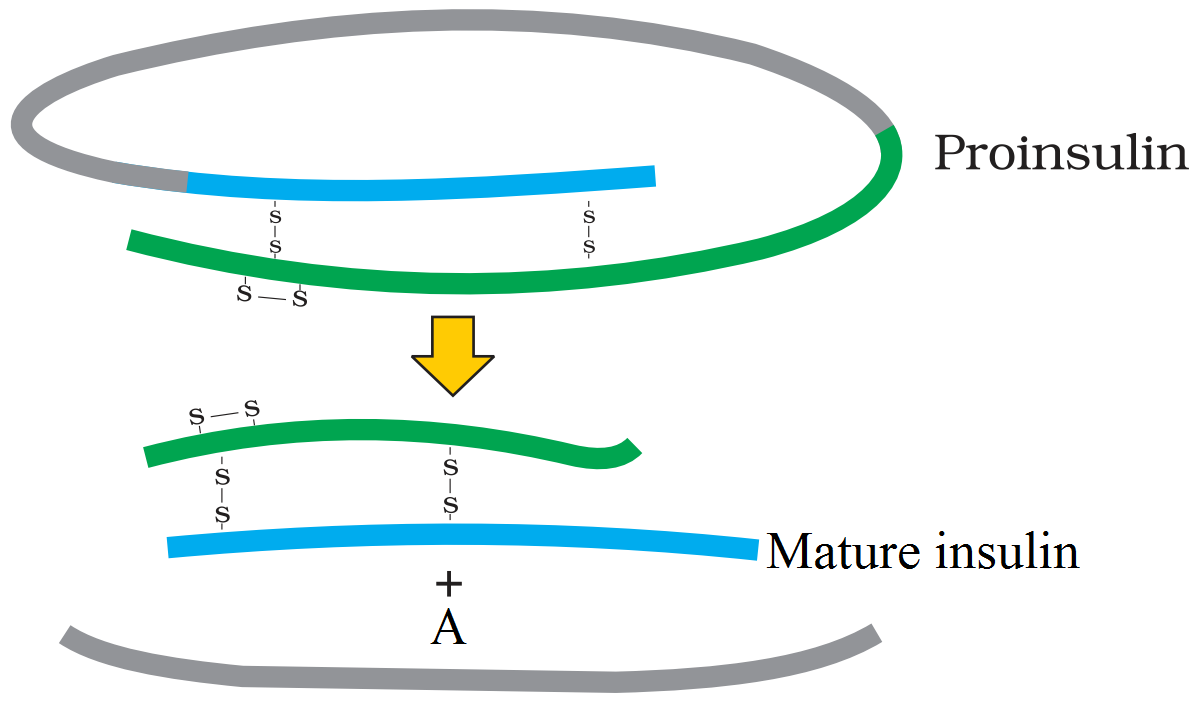
Insulin used to cure diabetes was earlier extracted from pancreas of slaughtered cattle and pigs. Insulin extracted from an animal source, though caused some patients to develop allergy or other types of reactions to the foreign protein. Human insulin consists of two short polypeptide chains : chain A and chain B, that are linked together by disulphide bridges. In mammals including humans, insulin is synthesised as a pro-hormone which contains an extra stretch called the C-peptide. This C peptide is not present in mature insulin and is removed during maturation into insulin.

  1. Identify A in the given figure.

  1. Polypeptide chain A.
  2. Polypeptide chain B.
  3. Polypeptide chain C.
  4. None of these.
  1. The following is a list of some stages involved in producing human insulin from genetically engineered bacteria.
  1. The bacteria are cultured in a fermenter for large scale production.
  2. Recombinant insulin is extracted from the bacterial cells that expresses insulin gene.
  3. The same restriction enzyme is used again to cut the bacterial plasmid for insertion of the human insulin gene.
  4. Bacteria take up the plasmid carrying the insulin gene.
  5. A restriction enzyme is used to cut human DNA to extract the insulin gene.

Select the correct order of these stages.

  1.  1, 5, 3, 4, 2
  2. 2, 4, 3, 5, 1
  3. 4, 5, 3, 2, 1
  4. 5, 3, 4, 1, 2
  1. To insert the insulin gene into bacterial DNA, both the bacterial plasmid and the human chromosome containing the insulin gene are treated with the same restriction enzyme. Using the same restriction enzyme ensures that
  1. DNA ligase is able to join the segments of human and bacterial DNA.
  2. The exact length of nucleotides matching the insulin gene is removed from the plasmid.
  3. Both the bacterial and human DNA will contain sticky ends.
  4. Sticky ends in the cut plasmid and insulin gene are complementary.
  1. Why is the fermentor important for the production of human insulin by transgenic bacteria?
  1. It provides optimal conditions for the transgenic to multiply rapidly.
  2. It facilitates the extraction and purification of insulin from the transgenic bacteria.
  3. It maximise the rate of fermentation of the transgenic bacteria.
  4. It provides the low-oxygen conditions that are important for insulin production.
  1. A bacteriologist carries out his first attempt at engineering E.coli with the gene for human insulin. During the process, he realises that his stock of DNA ligase has depleted but decides to continue anyway. What is a likely consequence of his decision?
  1. Bacteria with the rDNA will not be able to form colonies in a fermenter.
  2. The resulting plasmids are not able to enter the E.coli bacteria even after applying heat shock.
  3. The resulting E.coli bacteria do not contain the human insulin gene.
  4. The bacterial plasmids do not have sticky ends and are unable to accommodate the human gene.
Give a genetic explanation for the following cross. When a tall pea plant with round seeds was crossed with a dwarf pea plant with wrinkled seeds then all the individual of F1-population were tall with round seeds. However selfing among F1-population led to a 9:3:3:1 phenotypic ratio.
A child has blood group 'O'. If the father has blood group A and mother blood group B, work out the genotypes of the parents and the possible genotypes of the other offsprings.
Write short notes on the followings : (a) Predation (b) Competition

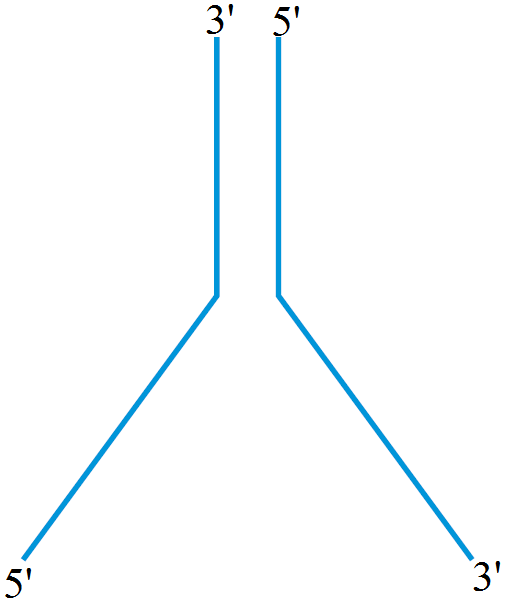
  1. Identify the structure shown above.
  2. Redraw the structure as a replicating fork and label the parts.
  3. Write the source of energy for this replication and list the enzymes involved in this process.
  4. Mention the difference in the synthesis based on the polarity of the two template strands.
Given below is a table showing the genotypes and the phenotypes of blood groups in the human population.
Genotype
Phenotype
W
Y
IB IO
Z
IA IB
O
X
O
  1. Identify the genotype Wand X, and the phenotype Y and Z.
  2. Name the pattern of inheritance exhibited by the phenotypes Y and Z in the table.
‘There is a paternity dispute for a child’. Which technique can solve the problem. Discuss the principle involved.
A flower of brinjal plant following the process of sexual reproduction produces 360 viable seeds.
Answer the following questions giving reasons:
How many ovules are minimally involved?
Observe the representation of genes involved in the lac operon given below.

  1. Identify the region where the repressor protein will attach normally.
  2. Under certain conditions repressor is unable to attach at this site. Explain.
  3. If repressor fails to attach to the said site what products will be formed by z, y and a?
  4. Analyse why this kind of regulation is called negative regulation.
Name any two chromosomal aberration associated disorders.
