MCQ
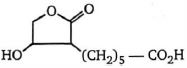
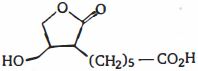
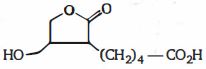
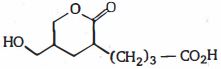
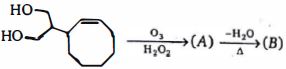
Identify $(B)$
  • A


  • C

  • D

Answer

Correct option: B.

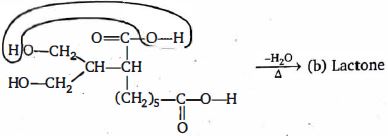
b

Need a full question paper?

Generate a complete, print-ready paper with questions like this in minutes — across 16+ boards, with answer keys.
Start Generating Free

Similar questions

An endothermic reaction is one in which
On the basis of the thermochemical equations
$H_2O(g) + C(s) \to CO(g) + H_2(g) \,\,\,\Delta H = 131\,kJ$
$CO(g) + \frac {1}{2} O_2(g) \to CO_2(g) \,\,\,\Delta H = –282\,kJ$
$H_2(g) + \frac {1}{2} O_2(g) \to H_2O(g) \,\,\,\Delta H = –242\,kJ$
$C(s) + O_2(g) \to CO_2(g) \,\,\,\Delta H = X\,kJ$
The value of $X$ will be....$kJ$
Three substances $A, B$ and $C$ can react to form $E$ and $D$ as shown $2A + 3B + C \rightarrow  4D + 2E$  If molar masses of  $A,B,C$ and $D$ are $40, 30, 20$ and $15$ respectively and $570\  gm$ of mixture of $A, B$ & $C$ is reacted then maximum mass of $E$ which can be obtained will be ............ $\mathrm{gm}$
All gases have the same number of moles in the same volume at constant temperature and pressure :
Product is
An organic compound contains $C = 38.8\% ,$ $H = 16\% $ and $N = 45.2\% $. Empirical formula of the compound is
In the isoelectronic species the ionic radii $\mathop A\limits^o $ of $N^{3-}, O^{2-}$ and $F^-$ are respectively given by :-
Which of the following statement is not correct regarding Bohr's model of hydrogen atom?
$N _{2( g )}+3 H _{2( g )} \rightleftharpoons 2 NH _{3( g )}$

$20 \;g \;\;\;\;5 \;g$

Consider the above reaction, the limiting reagent of the reaction and number of moles of $NH _{3}$ formed respectively are

Given below are two statements: one is labelled as Assertion $A$ and the other is labelled as Reason $R$

Assertion $A:$ In equation $\Delta_r G =- nFE _{\text {cell }}$ value of $\Delta_r G$ depends on $n$.

Reasons $R$ : $E_{\text {cell }}$ is an intensive property and $\Delta_{ r } G$ is an extensive property.

In the light of the above statements, choose the correct answer from the options given below