MCQ
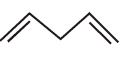
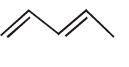
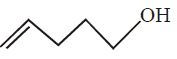
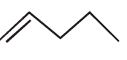
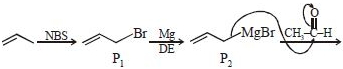
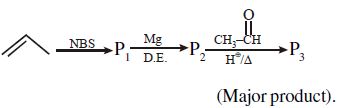
Identify $P_3$
  • A


  • C

  • D

Answer

Correct option: B.

b
As. $\mathrm{H}^{+} / \Delta$ is given $\therefore$ after formation of Alcohol dehydeation will take place.

Need a full question paper?

Generate a complete, print-ready paper with questions like this in minutes — across 16+ boards, with answer keys.

Start Generating Free

Similar questions

Which of the following has highest percentage of hydrogen
Which of the following carbocations is expected to be most stable?
A bivalent metal has an equivalent mass of 32. The molecular mass of the metal nitrate is:
Assign $A, B, C, D$ from given type of reaction. $XeF_4 +H_2O \longrightarrow Xe + XeO_3 + HF + O_2$
In the P3-, S2- and Cl- ions, the increasing order of size is:
The tendency of electron to loose electron is a measure of which of the following :
The two carbon atoms in acetylene are
The Bronsted acids in the reversible reaction are $HCO_3^ - (aq.) + O{H^ - }(aq.)\,$ $\rightleftharpoons$ $CO_3^{2 - }(aq.) + {H_2}O$
An ideal gas is expanded from $\left(p_1, V_1, T_1\right)$ to $\left(p_2, V_2, T_2\right)$ under different conditions. The correct statement(s) among the following is(are)

[$A$] The work done on the gas is maximum when it is compressed irreversibly from ( $\mathrm{p}_2, \mathrm{~V}_2$ ) to ( $\mathrm{p}_1, \mathrm{~V}_1$ ) against constant pressure $\mathrm{pl}_1$

[$B$] The work done by the gas is less when it is expanded reversibly from $V_1$ to $V_2$ under adiabatic conditions as compared to that when expanded reversibly from $V_1$ to $V_2$ under isothermal conditions

[$C$] The change in internal energy of the gas is ($i$) zero, if it is expanded reversibly with $T_1=T_2$, and ($ii$) positive, if it is expanded reversibly under adiabatic conditions with $T_1 \neq T_2$

[$D$] If the expansion is carried out freely, it is simultaneously both isothermal as well as adiabatic

For the equilibrium reaction, H2​O(l) ⇌ H2​O(g), what happens, if pressure is applied: