Question
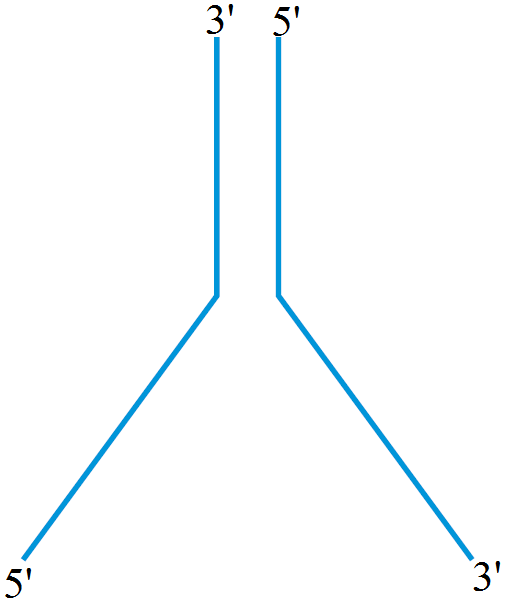
  1. Identify the structure shown above.
  2. Redraw the structure as a replicating fork and label the parts.
  3. Write the source of energy for this replication and list the enzymes involved in this process.
  4. Mention the difference in the synthesis based on the polarity of the two template strands.
Answer

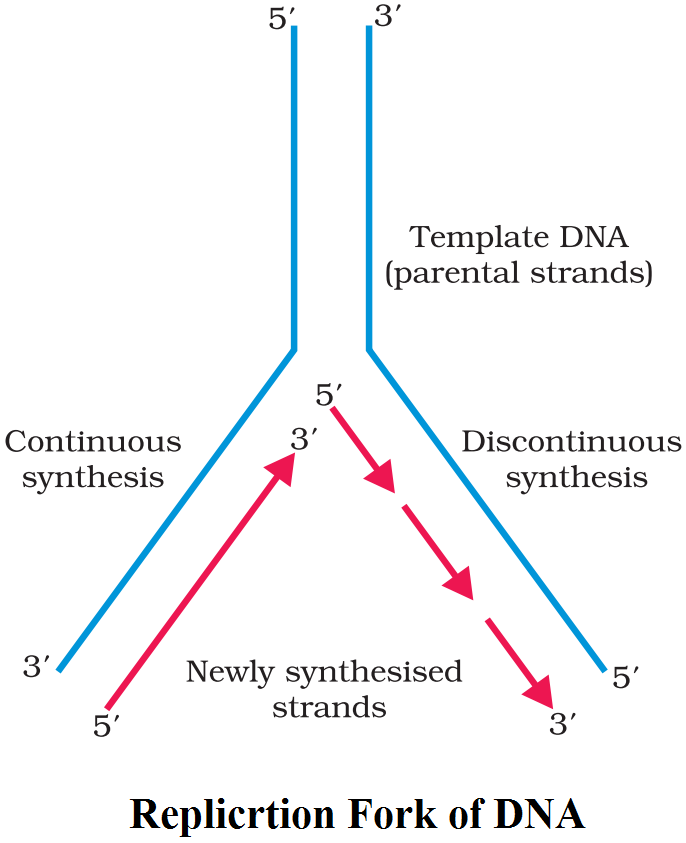
  1. It represents the parental or template DNA strands, showing the replication fork.
  2.  
  1. The deoxyribonucleoside triphosphates provide energy.
  2. DNA dependent DNA polymerase and DNA ligases are the enzymes involved;
  1.  
  1. On the template strand with 3' → 5' polarity, DNA synthesis is continuous, in the 5' → 3' direction.
  2. On the template strand with 5' → 3' polarity, DNA synthesis is discontinuous; DNA strand is synthesised as short segments, also in the 5' → 3' direction and the discontinuously synthesised segments become joined by DNA ligase.

Need a full question paper?

Generate a complete, print-ready paper with questions like this in minutes — across 16+ boards, with answer keys.

Start Generating Free

Similar questions

With the help of a neat and labelled diagram describe the anatomy of human eye'. Explain the mechanism of vision.
Explain the ovarian and uterine events that occur during a menstrual cycle in a human female, under the influence of Pituitary and Ovarian hormones respectively.
Human being is said to be most evolved, intelligent living being. Yet we are not self-sufficient. Think of various aspects for which we depend on other living beings for our survival.
Pistil of a flower does not accept pollen from any plant other than from its own kind. How does it happen? Explain.
Explain the stages involved in the maturation of microspore into male gametophyte.
OR
Describe the development of male gametophyte before pollination in angiosperms.
OR
Sketch and label male gametophyte in angiosperm.
Read the following and answer any four questions from (i) to (v) given below:
Gene therapy is the technique of genetic engineering to replace a faulty gene by a normal healthy functional gene. It is a way of treating genetic disease by introducing a piece of DNA into the cells of an affected individual. Liposomes can be used for gene therapy as they target the cells affected by a genetic disease.
  1. A patient suffers from adenosine deaminase (ADA) deficiency, an autosomal recessive immune deficiency in which bone marrow lymphoblasts cannot replicate to generate immuno-competent lymphocytes. The treatment option that would cure the patient is:
  1. Germ-line gene therapy to replace one ADA gene copy.
  2. Germ-line gene therapy to replace both ADA gene copies.
  3. Somatic cell gene therapy to replace both ADA gene copies in circulating lymphocytes.
  4. Somatic cell gene therapy to replace one ADA gene copy in bone marrow lymphoblasts.
  1. Which type of gene therapy is least effective in transferring DNA to the nucleus?
  1. Adenoviruses.
  2. DNA attached to a ligand.
  3. Liposomes.
  4. Retroviruses.
  1. Liposomes can be used for gene therapy as they target the cells affected by a genetic disease. The diagram shows the structure of a liposome.


What feature of a cell surface membrane allows the liposome to target cells affected by a genetic disease?
  1. Carrier molecules.
  2. Phosphate groups.
  3. Protein channels.
  4. Receptor molecules.
  1. Which of the following disorders would gene therapy be least effective?
  1. Cystic fibrosis.
  2. Huntington's disease.
  3. Sickle cell anaemia.
  4. Type II diabetes.
  1. Following are some reasons explaining why gene therapy is not yet fully an effective treatment for genetic diseases.
  1. Lack of knowledge of DNA sequences.
  2. Lack of efficient and safe gene delivery system.
  3. Cost of the technology.
  4. Some diseases involve multiple genes.
  5. Problems with appropriate gene regulation.
Select the correct option.
  1. I, III and V only
  2. II, IV and V only
  3. Ill, IV and V only
  4. I, III and IV only
Types of reflex actions.
Meiotic division during oogenesis is different from that in spermatogenesis. Explain how and why?
Packaging in Prokaryotes
Enumerate the role of microbes in producing some household products.