Question
If a current is passed in a spring, it
|
(a) Gets compressed |
(b) Gets expanded |
(c) Oscillates |
(d) Remains unchanged |
If a current is passed in a spring, it
|
(a) Gets compressed |
(b) Gets expanded |
(c) Oscillates |
(d) Remains unchanged |
(a) Gets compressed
Generate a complete, print-ready paper with questions like this in minutes — across 16+ boards, with answer keys.
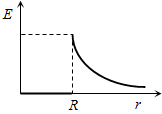
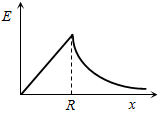
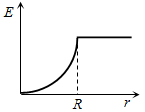
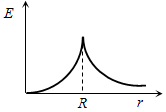
Which of the following graphs shows the variation of electric field E due to a hollow spherical conductor of radius R as a function of distance from the centre of the sphere
|
(a)
|
(b)
|
(c)
|
(d)
|
The potential at a point, due to a positive charge of 100μC at a distance of 9m, is
|
(a) |
(b) |
(c) |
(d) |
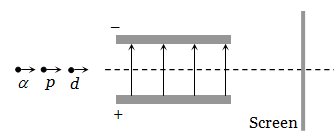
A proton, a deutron and an a-particle having the same momentum, enters a region of uniform electric field between the parallel plates of a capacitor. The electric field is perpendicular to the initial path of the particles. Then the ratio of deflections suffered by them is
|
(a) 1 : 2 : 8 |
(b) 1 : 2 : 4 |
(c) 1 : 1 : 2 |
(d) None of these |
The focal length of a combination of lenses formed with lenses having powers of + 2.50 D and – 3.75 D will be
|
(a) – 20 cm |
(b) – 40 cm |
(c) – 60 cm |
(d) – 80 cm |
An electron is moving along positive x-axis. To get it moving on an anticlockwise circular path in x-y plane, a magnetic filed is applied
|
(a) Along positive y-axis |
(b) Along positive z-axis |
|
(c) Along negative y-axis |
(d) Along negative z-axis |
A capacitor of capacitance 6μF is charged upto 100 volt. The energy stored in the capacitor is
|
(a) 0.6 Joule |
(b) 0.06 Joule |
(c) 0.03 Joule |
(d) 0.3 Joule |
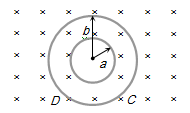
Plane figures made of thin wires of resistance R = 50 milli ohm/metre are located in a uniform magnetic field perpendicular into the plane of the figures and which decrease at the rate dB/dt = 0.1 m T/s. Then currents in the inner and outer boundary are. (The inner radius a = 10 cm and outer radius b = 20 cm)
|
(a) 10– 4 A (Clockwise), 2 × 10– 4 A (Clockwise) |
|
(b) 10– 4 A (Anticlockwise), 2 × 10– 4 A (Clockwise) |
|
(c) 2 × 10– 4 A (clockwise), 10– 4 A (Anticlockwise) |
|
(d) 2 × 10– 4 A (Anticlockwise), 10– 4 A (Anticlockwise) |