MCQ
If a glass prism is dipped in water, its dispersive power:
- AIncreases.
- BDecreases.
- CDoes not change.
- DMay increase or decrease depending on whether the angle of the prism is less than or greater than 60°.
If a glass prism is dipped in water, its dispersive power:
Explanation:
If $\mu$ is the refractive index and A is the angle of prism, then the angular dispersion produced by the prism will be given by $\delta=(\mu-1)\text{A}.$
Because the relative refractive index of glass with respect to water is small compared to the refractive of glass with respect to air, the dispersive power of the glass prism is more in air than that in water.
Generate a complete, print-ready paper with questions like this in minutes — across 16+ boards, with answer keys.
In two separate experiments the neutral points due to two small magnets are at a distance of r and 2r in broad side-on position. The ratio of their magnetic moments will be
| (a) 4 : 1 | (b) 1 : 2 | (c) 2 : 1 | (d) 1 : 8 |
During negative b - decay
|
(a) Neutron converts into proton |
(b) Proton converts into neutron |
|
(c) Neutron proton ratio increases |
(d) None of these |
In extrinsic P and N-type, semiconductor materials, the ratio of the impurity atoms to the pure semiconductor atoms is about
|
(a) 1 |
(b) |
(c) |
(d) |
Three resistors each of 2 ohm are connected together in a triangular shape. The resistance between any two vertices will be
|
(a) 4/3 ohm |
(b) 3/4 ohm |
(c) 3 ohm |
(d) 6 ohm |
Zener breakdown in a semi-conductor diode occurs when
|
(a) Forward current exceeds certain value |
(b) Reverse bias exceeds certain value |
|
(c) Forward bias exceeds certain value |
(d) Potential barrier is reduced to zero |
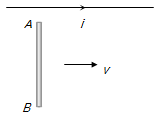
The current carrying wire and the rod AB are in the same plane. The rod moves parallel to the wire with a velocity v. Which one of the following statements is true about induced emf in the rod
|
(a) End A will be at lower potential with respect to B |
|
(b) A and B will be at the same potential |
|
(c) There will be no induced e.m.f. in the rod |
|
(d) Potential at A will be higher than that at B |
To form a composite 16Μf, 1000 V capacitor from a supply of identical capacitors marked 8 μF, 250 V we require a minimum number of capacitors
|
(a) 40 |
(b) 32 |
(c) 8 |
(d) 2 |