Question
If a soap bubble expands, the pressure inside the bubble:

Answer

$P=P_{0}+\frac{4 T}{R}$

$\Rightarrow R$ increases and $P$ decreases

Need a full question paper?

Generate a complete, print-ready paper with questions like this in minutes — across 16+ boards, with answer keys.
Start Generating Free

Similar questions

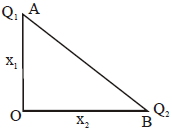
Charges $Q _{1}$ and $Q _{2}$ arc at points $A$ and $B$ of a right angle triangle $OAB$ (see figure). The resultant electric field at point $O$ is perpendicular to the hypotenuse, then $Q _{1} / Q _{2}$ is proportional to
In the case of forward biasing of $PN-$ junction, which one of the following figures correctly depicts the direction of flow of carriers
Assertion : A point object is placed at a distance of $26\,cm$ from a convex mirror of focal length $26\,cm$. The image will not form at infinity.

Reason : For above given system the equation $\frac{1}{u} + \frac{1}{v} = \frac{1}{f}$ gives $v = \infty $.
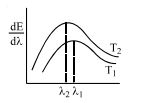
The spectral emissive power $E_\lambda $ for a body at temperature $T_1$ is plotted against the wavelength and area under the curve is found to be $A$. At a different temperature $T_2$ the area is found to be $9A$. Then $\lambda _1/\lambda _2 =$
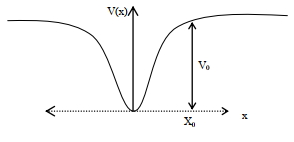
When a particle of mass $m$ moves on the $x$-axis in a potential of the form $V(x)=\mathrm{kx}^2$ it performs simple harmonic motion. The corresponding time period is proportional to $\sqrt{\frac{\mathrm{m}}{\mathrm{k}}}$, as can be seen easily using dimensional analysis. However, the motion of a particle can be periodic even when its potential energy increases on both sides of $\mathrm{x}=0$ in a way different from $\mathrm{kx}^2$ and its total energy is such that the particle does not escape to infinity. Consider a particle of mass $\mathrm{m}$ moving on the $x$-axis. Its potential energy is $V(x)=\alpha x^4(\alpha>0)$ for $|x|$ near the origin and becomes a constant equal to $\mathrm{V}_0$ for $|x| \geq X_0$ (see figure). $Image$

$1.$ If the total energy of the particle is $E$, it will perform periodic motion only if

$(A)$ $E$ $<0$ $(B)$ $E$ $>0$ $(C)$ $\mathrm{V}_0 > \mathrm{E}>0$ $(D)$ $E > V_0$

$2.$ For periodic motion of small amplitude $\mathrm{A}$, the time period $\mathrm{T}$ of this particle is proportional to

$(A)$ $\mathrm{A} \sqrt{\frac{\mathrm{m}}{\alpha}}$ $(B)$ $\frac{1}{\mathrm{~A}} \sqrt{\frac{\mathrm{m}}{\alpha}}$ $(C)$ $\mathrm{A} \sqrt{\frac{\alpha}{\mathrm{m}}}$ $(D)$ $\mathrm{A} \sqrt{\frac{\alpha}{\mathrm{m}}}$

$3.$ The acceleration of this particle for $|\mathrm{x}|>\mathrm{X}_0$ is

$(A)$ proportional to $\mathrm{V}_0$

$(B)$ proportional to $\frac{\mathrm{V}_0}{\mathrm{mX}_0}$

$(C)$ proportional to $\sqrt{\frac{\mathrm{V}_0}{\mathrm{mX}_0}}$

$(D)$ zero

Give the answer qustion $1,2$ and $3.$
Let $\rho (r)\, = \frac{Q}{{\pi {R^4}}}\,r$ be the volume charge density distribution for a solid sphere of radius $R$ and total charge $Q$. For a point $'p'$ inside the sphere at distance $r_1$ from the centre of the sphere, the magnitude of electric field is
Two amplifier are connected one after the other in series (cascade). The first amplifier has a voltage gain $10$ and the second has a voltage gain of $20$. If the input signal is $0.01\, V$, the out $ac$ signal will be........$V$
According to the theorem of parallel axes $I = {I_g} + M{d^2}$, the graph between $I$ and $d$ will be
If the Young's double slit experiment is performed with white light, then which of the following is not true.
Hydrogen atoms are excited from ground state to the principal quantum number 5 . Number of spectral lines observed will be