MCQ
If $f(a+b-x)=f(x)$, then $\int_a^b x f(x) d x=$ _________.
  • A
    $\frac{a+b}{2} \int_a^b f(x) d x$
  • B
    $\frac{b-a}{2} \int_a^b f(x) d x$
  • C
    $\frac{a+b}{2} \int_a^b f(b+x) d x$
  • D
    $\frac{a+b}{2} \int_a^b f(b-x) d x$

Answer

SELF

Need a full question paper?

Generate a complete, print-ready paper with questions like this in minutes — across 16+ boards, with answer keys.
Start Generating Free

Similar questions

Let $f\left( x \right), x \in \left[ {0,\infty } \right)$ be a non-negative continuous function. If $f'\left( x \right)\cos x \le f\left( x \right)\sin x\ \forall\, x \ge 0$, then the value of $f(2\pi)$ is equal to
Let $A = \left[ {\begin{array}{*{20}{c}}5&{5\alpha }&\alpha \\0&\alpha &{5\alpha }\\0&0&5\end{array}} \right]$, If ${\left| A \right|^2} = 25$, then $\left| \alpha \right|$ equals
Choose the correct answer from the given four options.

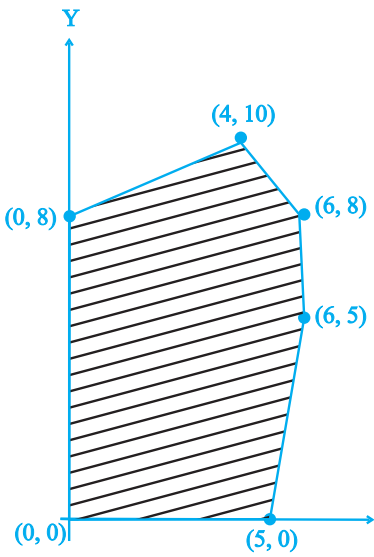
The feasible solution for a LPP shown in Fig. 12.12. Let z = 3x - 4y be objective functio. (Maximum value of Z + Minimum value of Z) is equal to:
The shortest distance between the lines $\frac{x-3}{2}=\frac{y-2}{3}=\frac{z-1}{-1}$ and $\frac{x+3}{2}=\frac{y-6}{1}=\frac{z-5}{3}$ is
Forces of magnitudes $3$ and $2$ units acting in the directions $5\,i + 3\,j + 4\,k$ and $3\,i + 4\,j - 5\,k$ respectively act on a particle which is displaced from the points $(1, -1, -1)$ to $(3, 3, 1)$. The work done by the forces is equal to
Choose the correct answers from the given four options:
If $\text{y}=\log\Big(\frac{1-\text{x}^2}{1+\text{x}^2}\Big),$ then $\frac{\text{dy}}{\text{dx}}$ is equal to:
  1. $\frac{4\text{x}^3}{1-\text{x}^4}$
  2. $\frac{-4\text{x}}{1-\text{x}^4}$
  3. $\frac{1}{4-\text{x}^4}$
  4. $\frac{-4\text{x}^3}{1-\text{x}^4}$
The sum of all values of $\alpha$, for which the points whose position vectors $\hat{i}-2 \hat{j}+3 \hat{k}, 2 \hat{i}-3 \hat{j}+4 \hat{k}$, $(\alpha+1) \hat{i}+2 \hat{k}$ and $9 \hat{i}+(\alpha-8) \hat{j}+6 \hat{k}$ are coplanar, is equal to
If $\int {\frac{{{x^2} - x + 1}}{{{x^2} + 1}}{e^{{{\cot }^{ - 1}}}}{}^x\,dx = A(x)} {e^{{{\cot }^{ - 1}}}}{}^x + C,$ then $A(x)$ is equal to
The projection of the line segment joining the points $(1,-1,3)$ and $(2,-4,11)$ on the line joining the points $(-1,2,3)$ and $(3,-2,10)$ is
If $\int\limits_a^x {t\,y(t)dt} = x^2 + y (x)$ then $y$ as a function of $x$ is