MCQ
If $n$ is a positive integer, then ${\left( {\frac{{1 + i}}{{1 - i}}} \right)^{4n + 1}}$=
  • A
    $1$
  • B
    $-1$
  • $i$
  • D
    $ - i$

Answer

Correct option: C.
$i$
c
(c)Since $\frac{{1 + i}}{{1 - i}} = \frac{{(1 + i)(1 + i)}}{{(1 - i)(1 + i)}} = i$
Therefore ${\left( {\frac{{1 + i}}{{1 - i}}} \right)^{4n + 1}} = {i^{4n + 1}} = i{i^{4n}} = i\,\,\,\,\,({i^{4n}} = 1)$.

Need a full question paper?

Generate a complete, print-ready paper with questions like this in minutes — across 16+ boards, with answer keys.

Start Generating Free

Similar questions

For hyperbola $\frac{{{x^2}}}{{{{\cos }^2}\alpha }} - \frac{{{y^2}}}{{{{\sin }^2}\alpha }} = 1$ which of the following remains constant with change in $'\alpha '$
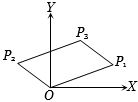
If the points ${P_1}$and ${P_2}$ represent two complex numbers ${z_1}$ and ${z_2}$, then the point ${P_3}$ represents the number
The middle term in the expansion of ${\left( {3x - \frac{{{x^3}}}{6}} \right)^9}$ are :-
$50^{\text {th }}$ root of a number $x$ is $12$ and $50^{\text {th }}$ root of another number $y$ is $18$ . Then the remainder obtained on dividing $( x + y )$ by $25$ is $........$.
$\int_0^{\pi /2} {} \log \sin x\,dx = $
For the curve $C :$ $\left(x^{2}+y^{2}-3\right)+\left(x^{2}-y^{2}-1\right)^{5}=0$, the value of $3 y^{\prime}-y^{3} y^{\prime \prime}$, at the point $(\alpha, \alpha), \alpha>0$, on $C$, is equal to.
In a box there are $2$ red, $3$ black and $4$ white balls. Out of these three balls are drawn together. The probability of these being of same colour is
Let $\alpha=\frac{-1+i \sqrt{3}}{2} .$ If $a=(1+\alpha) \sum\limits_{k=0}^{100} \alpha^{2 k}$ and $\mathrm{b}=\sum\limits_{\mathrm{k}=0}^{100} \alpha^{3 \mathrm{k}},$ then a and $\mathrm{b}$ are the roots of the quadratic equation
For $n \in N$, let $S _{ n }=\left\{ z \in C :| z -3+2 i |=\frac{ n }{4}\right\}$ and $T _{ n }=\left\{ z \in C :| z -2+3 i |=\frac{1}{ n }\right\}$ Then the number of elements in the set $\left\{ n \in N : S _{ a } \cap T _{ n }=\phi\right\}$ is.
If $\alpha_1<\alpha_2<\alpha_3<\alpha_4<\alpha_5<\alpha_6$, then the equation $(x-\alpha_1)(x-\alpha_3) (x-\alpha_5) + 3 (x-\alpha_2) (x-\alpha_4) (x-\alpha_6) = 0$ has :-