MCQ
If the surface tension of a liquid is $T$, the gain in surface energy for an increase in liquid surface by $A$ is
  • A
    $A{T^{ - 1}}$
  • $AT$
  • C
    ${A^2}T$
  • D
    ${A^2}{T^2}$

Answer

Correct option: B.
$AT$
b
(b) Surface energy = surface tension $×$ increment in area = $T \times A$

Need a full question paper?

Generate a complete, print-ready paper with questions like this in minutes — across 16+ boards, with answer keys.

Start Generating Free

Similar questions

A $1000\,\, kg$ elevator rises from rest in the basement to the fourth floor, a distance of $20\,\, m$. As it passes the fourth floor its speed is $4\,m/sec$. There is a constant frictional force of $500\, N$. The work done by the lifting mechanism is
A wire of area of cross-section $10^{-6}\,m^2$ is increased in length by $0.1\%$. The tension produced is $1000\, N$. The Young's modulus of wire is
A ball thrown up from a location, returns back at the same location. Which of the following statements are correct.

$(a)$ Distance travelled by ball can be zero
$(b)$ Displacement of ball is zero
$(c)$ Average velocity of ball is zero
$(d)$ Acceleration of the ball is zero
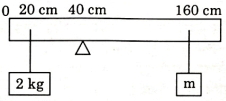
A uniform rod of length $200 \,\mathrm{~cm}$ and mass $500 \,\mathrm{~g}$ is balanced on a wedge placed at $40\,cm$ mark. A mass of $2\, \mathrm{~kg}$ is suspended from the rod at $20\, \mathrm{~cm}$ and another unknown mass $'m'$ is suspended from the rod at $160\, \mathrm{~cm}$ mark as shown in the figure. Find the value of $'m'$ such that the rod is in equilibrium. $\left(\mathrm{g}=10 \,\mathrm{~m} / \mathrm{s}^{2}\right)$
Column$-II$ is related to Column$-I$. Join them appropriately :
Column $-I$  Column $-II$ 
$(a)$ When temperature raised Young’s modulus of body $(i)$ Zero
$(b)$ Young’s modulus for air $(ii)$ Infinite
  $(iii)$ Decreases
  $(iv)$Increases
$\text{SI}$ unit of capacitance is:
Ten tuning forks are arranged in increasing order of frequency in such a way that any two nearest tuning forks produce $4$ beats/sec. The highest frequency is twice of the lowest. Possible highest and the lowest frequencies are
Which of the following has largest moment of inertia?
The equation of a travelling wave is $y = 60\cos (1800t - 6x)$ where $y$ is in microns, $t$ in seconds and $x$ in metres. The ratio of maximum particle velocity to velocity of wave propagation is
If a liquid takes $30 \;sec$ in cooling from $80^{\circ} C$ to $70^{\circ} C$ and $70 \;sec$ in cooling from $60^{\circ} C$ to $50^{\circ} C$, then find the room temperature.