MCQ
If two streams of protons move parallel to each other in the same direction, then they
  • A
    Do not exert any force on each other
  • Repel each other
  • C
    Attract each other
  • D
    Get rotated to be perpendicular to each other

Answer

Correct option: B.
Repel each other
 Repel each other

Need a full question paper?

Generate a complete, print-ready paper with questions like this in minutes — across 16+ boards, with answer keys.
Start Generating Free

Similar questions

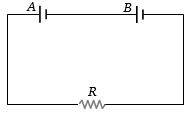
Two batteries $A$ and $B$ each of $e.m.f.$ $2\, V$ are connected in series to an external resistance $R = 1 \,ohm$. If the internal resistance of battery $A$ is $1.9\, ohms$ and that of $B$ is $0.9\, ohm$, what is the potential difference between the terminals of battery $A$ ............. $V$
The resistance of a galvanometer is $50 \Omega$ and the current required to give full scale deflection is $100 \mu A$. In order to convert it into an ammeter for reading up to $10 A $, it is necessary to put a resistance of
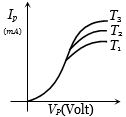
For the diode, the characteristic curves are given at different temperature. The relation between the temperatures is
The wavelength of ${K_\alpha }$ line in copper is $1.54 Å$. The ionisation energy of $K$ electron in copper in Joule is
A double convex lens of focal length $20 cm$ is made of glass of refractive index $3 / 2$. When placed completely in water ${(_a}{\mu _w} = 4/3)$, its focal length will be.....$cm$
Which of the following figures correctly depicts the direction of magnetic field of a current-carrying coil ?
Your are given three equal resistances. In how many combinations can they be arranged?
A point source $S$ is placed at the bottom of a transparent block of height $10 \ mm$ and refractive index $2.72$ . It is immersed in a lower refractive index liquid as shown in the figure. It is found that the light emerging from the block to the liquid forms a circular bright spot of diameter $11.54 \ mm$ on the top of the block. The refractive index of the liquid is
Phenomenon of bending of waves around corners of obstacle without a change in medium is called _________.
In the following reaction the value of $‘X’$ is $_7{N^{14}}{ + _2}H{e^4}\, \to \,X{ + _1}{H^1}$