MCQ
If $u = {x^2} + {y^2}$ and $x = s + 3t,$$y = 2s - t,$ then ${{{d^2}u} \over {d{s^2}}} = $
  • A
    $12$
  • B
    $32$
  • C
    $36$
  • $10$

Answer

Correct option: D.
$10$
d
(d) $u = {x^2} + {y^2},$ $x = s + 3t,$ $y = 2s - t$

Now $\frac{{dx}}{{ds}} = 1,$ $\frac{{dy}}{{ds}} = 2$ .....$(i)$

$\frac{{{d^2}x}}{{d{s^2}}} = 0,$ $\frac{{{d^2}y}}{{d{s^2}}} = 0$ ......$(ii)$

Now $u = {x^2} + {y^2}$, $\frac{{du}}{{ds}} = 2x\,.\,\frac{{dx}}{{ds}} + 2y\,.\,\frac{{dy}}{{ds}}$

$\frac{{{d^2}u}}{{d{s^2}}} = 2{\left( {\frac{{dx}}{{ds}}} \right)^2} + 2x\frac{{{d^2}x}}{{d{s^2}}} + 2{\left( {\frac{{dy}}{{ds}}} \right)^2} + 2y\left( {\frac{{{d^2}y}}{{d{s^2}}}} \right)$

From $(i)$ and $(ii),$ 

$\frac{{{d^2}u}}{{d{s^2}}} = 2 \times 1 + 0 + 2 \times 4 + 0 = 10$.

Need a full question paper?

Generate a complete, print-ready paper with questions like this in minutes — across 16+ boards, with answer keys.
Start Generating Free

Similar questions

The shortest distance between the lines $\frac{x-3}{2}=\frac{y+15}{-7}=\frac{z-9}{5}$ and $\frac{x+1}{2}=\frac{y-1}{1}=\frac{z-9}{-3}$ is
If ${a_1},\;{a_2},\,{a_3},......{a_{24}}$ are in arithmetic progression and ${a_1} + {a_5} + {a_{10}} + {a_{15}} + {a_{20}} + {a_{24}} = 225$, then ${a_1} + {a_2} + {a_3} + ........ + {a_{23}} + {a_{24}} = $
The locus of the point of intersection of perpendicular tangents to the ellipse $\frac{{{x^2}}}{{{a^2}}} + \frac{{{y^2}}}{{{b^2}}} = 1$, is
The largest interval lying in $\left( { - \frac{\pi }{2},\frac{\pi }{2}} \right)$ for which the function, $f\left( x \right) = {4^{ - {x^2}}} + {\cos ^{ - 1}}\left( {\frac{x}{2} - 1} \right) + \log \left( {\cos x} \right)$  is defined is
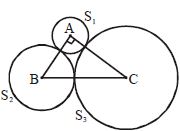
Figure shows $\Delta  ABC$ with $AB = 3, AC = 4$  &  $BC = 5$. Three circles $S_1, S_2$  &  $S_3$ have their centres on $A, B  $ &  $C$ respectively and they externally touches each other. The sum of areas of three circles is
Number of positive integral solution of the equation $xyz = 90$ is equal to :-
If ${\tan ^{ - 1}}x + 2{\cot ^{ - 1}}x = \frac{{2\pi }}{3},$ then $x =$
A vector $\vec{a}$ is parallel to the line of intersection of the plane determined by the vectors $\hat{i}, \hat{i}+\hat{j}$ and the plane determined by the vectors $\hat{i}-\hat{j}, \hat{i}+\hat{k}$. The obtuse angle between $\vec{a}$ and the vector $\vec{b}=\hat{i}-2 \hat{j}+2 \hat{k}$ is
Let $z_k=\cos \left(\frac{2 k \pi}{10}\right)+ i \sin \left(\frac{2 k \pi}{10}\right) ; k =1,2, \ldots 9$.

List $I$ List $II$
$P.$ For each $z_k$ there exists a $z_j$ such that $z_k \cdot z_j=1$ $1.$ True
$Q.$ There exists a $k \in\{1,2, \ldots ., 9\}$ such that $z_{1 .} . z=z_k$ has no solution $z$ in the set of complex numbers. $2.$ False
$R.$ $\frac{\left|1-z_1\right|\left|1-z_2\right| \ldots . .\left|1-z_9\right|}{10}$ equals $3.$ $1$
$S.$ $1-\sum_{k=1}^9 \cos \left(\frac{2 k \pi}{10}\right)$ equals $4.$ $2$

Codes: $ \quad P \quad Q \quad R \quad S$

Area of the region $\left\{(x, y) \in \mathbb{R}^2: y \geq \sqrt{|x+3|}, 5 y \leq x+9 \leq 15\right\}$ is equal to