MCQ
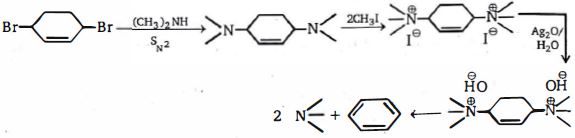
(Image) $\xrightarrow[{2\,\,molar\,\,equivalent}]{{C{H_3}NHC{H_3}}}(A)$ $\xrightarrow{{BaO}}(B)\,\xrightarrow{\begin{subarray}{l} 
  C{H_3}I \\ 
  (2\,\,molar\,\,equivalent) 
\end{subarray} }(C)$ $\xrightarrow{{A{g_2}O\,/\,{H_2}O}}\,(D)\, + \,{(C{H_3})_3}N$

End product $(D)$ in the given sequence is
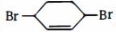
  • A


  • C

  • D

Answer

Correct option: B.

b

Need a full question paper?

Generate a complete, print-ready paper with questions like this in minutes — across 16+ boards, with answer keys.

Start Generating Free

Similar questions

Propene, $C{H_3} - CH = C{H_2}$ can be converted to $1-$ propanol by oxidation. Which set of reagents among the following is ideal to effect the conversion
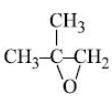
$B\mathop {\xleftarrow{{C{H_3}OH}}}\limits_{C{H_3}ONa} $ $[Figure]$ $\mathop {\xrightarrow{{{H_2}{O^{18}}}}}\limits_{{H^ + }} A$

$A$ and $B$ are

The reaction of the type $2{X_2} + S \to S{X_4}$ is shown by sulphur when $X$ is
Internal resistance of a battery cell increases with:
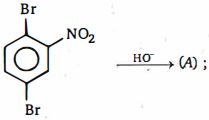
Product of the given reaction is
The compound $I$ and $II$ are related as

$\mathop {\begin{array}{*{20}{c}}
  {\begin{array}{*{20}{c}}
  {COOH\,\,} \\ 
  {|\,\,\,\,\,\,\,\,\,\,\,\,\,\,\,} \\ 
  {H - C - OH\,\,\,\,\,\,\,\,\,\,\,} \\ 
  {|\,\,\,\,\,\,\,\,\,\,\,\,\,\,\,} 
\end{array}} \\ 
  {Br - C - H\,\,\,\,\,\,\,\,\,\,\,\,\,\,\,\,\,} \\ 
  {|\,\,\,\,\,\,\,\,\,\,\,\,\,\,\,\,\,} \\ 
  {\,\,\,COOC{H_3}} 
\end{array}}\limits_{(I)} $ $\mathop {\begin{array}{*{20}{c}}
  {\begin{array}{*{20}{c}}
  {\,\,\,\,\,\,\,\,COOC{H_3}\,\,} \\ 
  {|\,\,\,\,\,\,\,\,\,\,\,\,\,\,\,} \\ 
  {H - C - Br\,\,\,\,\,\,\,\,\,\,\,} \\ 
  {|\,\,\,\,\,\,\,\,\,\,\,\,\,\,\,} 
\end{array}} \\ 
  {HO - C - H\,\,\,\,\,\,\,\,\,\,\,\,\,\,\,\,\,} \\ 
  {\,\,|\,\,\,\,\,\,\,\,\,\,\,\,\,\,\,\,\,} \\ 
  {\,\,\,\,\,\,\,COOH\,\,\,\,\,\,\,\,} 
\end{array}}\limits_{(II)} $

The common name for propan-2-ol is:
Hydrogen bonding does not play any role in boiling of
The number of geometrical isomers of the complex $\left[ {Co{{(N{O_2})}_2}{{(N{H_3})}_2}} \right]$ is
$Cu|Cu^{2+} (0.01\,M)||\, Cu^{2+}\,(0.1\,M)|\,Cu$ 

$E_{cell} = $ ?