MCQ
In a cathode ray tube, the screen is coated with fluorescent material:
- AIt produces spots on the screen
- BBeam of light is not in a straight line
- CLight deviates away after striking
- DNone of these
Explanation:
When the electron beam strikes the screen coated with fluorescent material the electrical signals appear as visual pattern or spots on the screen.
Generate a complete, print-ready paper with questions like this in minutes — across 16+ boards, with answer keys.
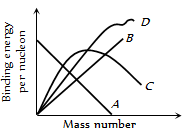
Binding energy per nucleon plot against the mass number for stable nuclei is shown in the figure. Which curve is correct
|
(a) A |
(b) B |
(c) C |
(d) D |
The current in a LR circuit builds up to  th of its steady state value in 4s. The time constant of this circuit is
|
(a) |
(b) |
(c) |
(d) |
The unit of magnetic moment is
|
(a) Wb/m |
(b) |
(c) A.m |
(d) |
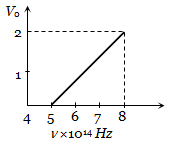
The stopping potential ( versus frequency (n) plot of a substance is shown in figure the threshold wave length is
|
(a) 5 |
(b) 6000Å |
|
(c) 5000 Å |
(d) Can not be estimated from given data |
Assertion : Torque on the coil is the maximum, when coil is suspended in a radial magnetic field.
Reason : The torque tends to rotate the coil on its own axis.
|
(a) If both assertion and reason are true and the reason is the correct explanation of the assertion. |
|
(b) If both assertion and reason are true but reason is not the correct explanation of the assertion. |
|
(c) If assertion is true but reason is false. |
|
(d) If the assertion and reason both are false. |


