MCQ
In $a$ one dimensional collision between two identical particles $A$ and $B, B$ is stationary and $A$ has momentum $p$ before impact. During impact, $B$ gives impulse $J$ to $A.$
  • A
    The total momentum of the $‘A$ plus $B’$ system is $p$ before and after the impact, and $(p-J)$ during the impact.
  • B
    During the impact $A$ gives impulse $J$ to $ B$
  • C
    The coefficient of restitution is $\frac{{2J}}{p} - 1$
  • Both $(B)$ and $(C)$

Answer

Correct option: D.
Both $(B)$ and $(C)$
d
Let $u=$ speed of A before impact. Thus, $p=m u$

Let $v_{1}, v_{2}=$ speeds of $A$ and $B$ after impact.

$u=v_{1}+v_{2}$ and $v_{1}-v_{2}=-e u$

$u=v_{1}+v_{2}$ and $v_{1}-v_{2}=-e u$

$\therefore v_{1}=\frac{1}{2} u(1-e)$ and $v_{2}=\frac{1}{2} u(1+e)$

$J=m v_{2}=m\left[\frac{1}{2} u(1+e)\right]=\frac{1}{2} p(1+e)$

$\Rightarrow e=\frac{2 J}{p}-1$

Need a full question paper?

Generate a complete, print-ready paper with questions like this in minutes — across 16+ boards, with answer keys.

Start Generating Free

Similar questions

A p-type semiconductor is:
  1. Positively charged.
  2. Negatively charged.
  3. Uncharged.
  4. Uncharged at 0K but charged at higher ternperatures.
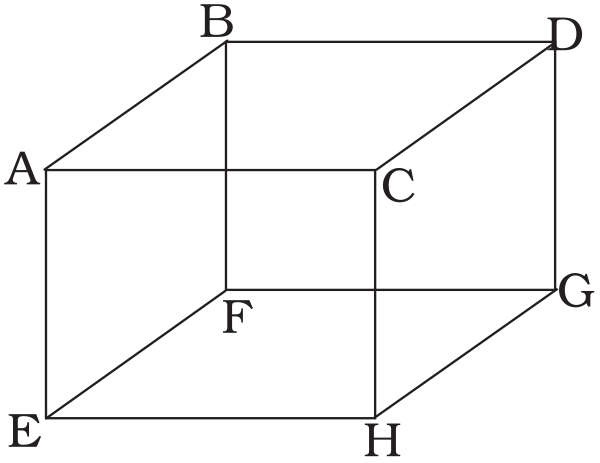
1 mole of an ideal gas is contained in a cubical volume V, ABCDEFGH at 300K (figure). One face of the cube (EFGH) is made up of a material which totally absorbs any gas molecule incident on it. At any given time,
  1. The pressure on EFGH would be zero.
  2. The pressure on all the faces will be equal.
  3. The pressure of EFGH would be double the pressure on ABCD.
  4. The pressure on EFGH would be half that on ABCD.

A air bubble of radius $1\,cm$ in water has an upward acceleration $9.8\, cm\, s ^{-2}$. The density of water is $1\, gm\, cm ^{-3}$ and water offers negligible drag force on the bubble. The mass of the bubble is$.......gm$

$\left( g =980 \,cm / s ^{2}\right)$

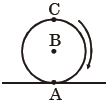
A sphere is rolling without slipping on a fixed horizontal plane surface. In the figure $A$ is the point of contact, $B$ is the centre of sphere and $C$ is its topmost point, then

$(i){\vec V_C} - {\vec V_A} = 2\left( {{{\vec V}_B} - {{\vec V}_C}} \right)$

$(ii){\vec V_C} - {\vec V_B} = {\vec V_B} - {\vec V_A}$

$(iii)\left| {{{\vec V}_C} - {{\vec V}_A}} \right| = 2\left| {{{\vec V}_B} - {{\vec V}_C}} \right|$

$(iv)\left| {{{\vec V}_C} - {{\vec V}_A}} \right| = 4\left| {{{\vec V}_B}} \right|$

The area of the hole of heat furnace is $10^{-4}\,m^2.$ It radiates $1.58\times 10^5\,cal$ of heat per hour. If the emissivity of the furnace is $0.80,$ then its temperature is .......... $K$
A wooden block, initially at rest on the ground, is pushed by a force which increases linearly with time $t$. Which of the following curve best describes acceleration of the block with time :
$A$ block of mass $m$ moving with a velocity $v_0$ on a smooth horizontal surface strikes and compresses a spring of stiffness $k$ till mass comes to rest as shown in the figure. This phenomenon is observed by two observers:

$A$: standing on the horizontal surface

$B$: standing on the block According to the observer $A$

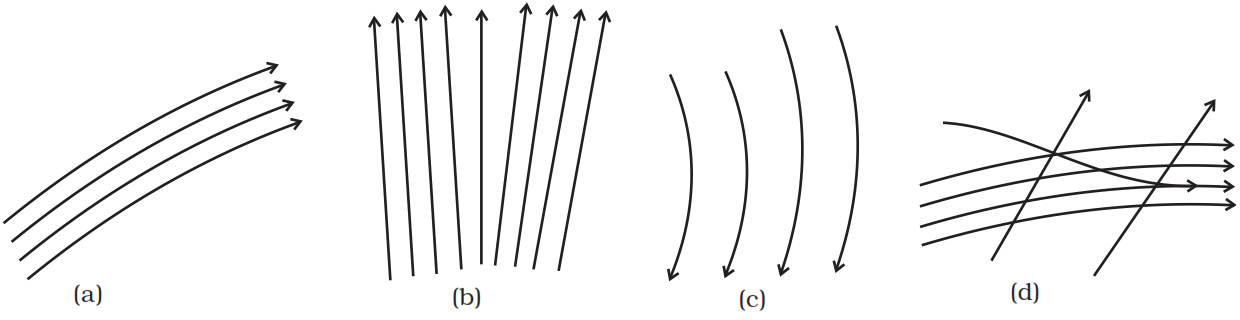
Which of the following diagrams does not represent a streamline flow?

Two samples $A$ and $B$ of a gas initially at the same pressure and temperature are compressed from volume $ V$ to $ V/2$ ($A$ isothermally and adiabatically). The final pressure of $ A$ is
A wheel is subjected to uniform angular acceleration about its axis. Initially its angular velocity is zero. In the first $2$ sec, it rotates through an angle ${\theta _1}$. In the next $2$ sec, it rotates through an additional angle ${\theta _2}$. The ratio of ${\theta _2}\over{\theta _1}$ is