Question
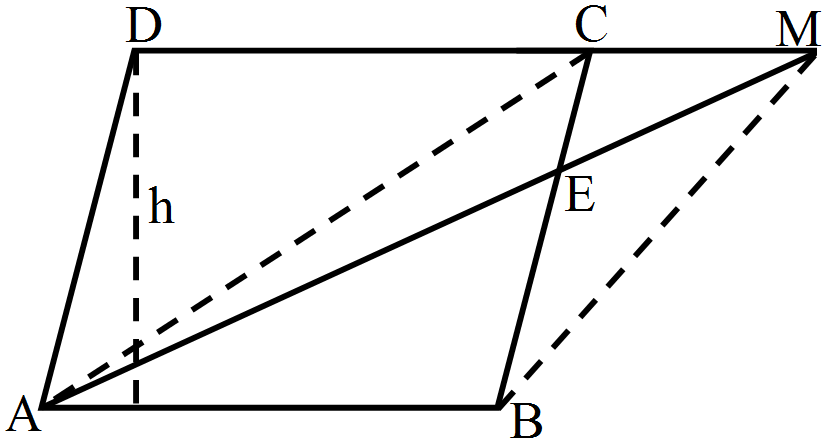
In a parallelogram ABCD, any point E is taken on the side BC. AE and DC when produced meet at a point M. Prove that $\text{ar}(\triangle\text{ADM})=\text{ar}(\text{ABMC}).$
Generate a complete, print-ready paper with questions like this in minutes — across 16+ boards, with answer keys.
 $\text{ar}(\triangle\text{ABC})=2\text{ar}(\triangle\text{BEC})$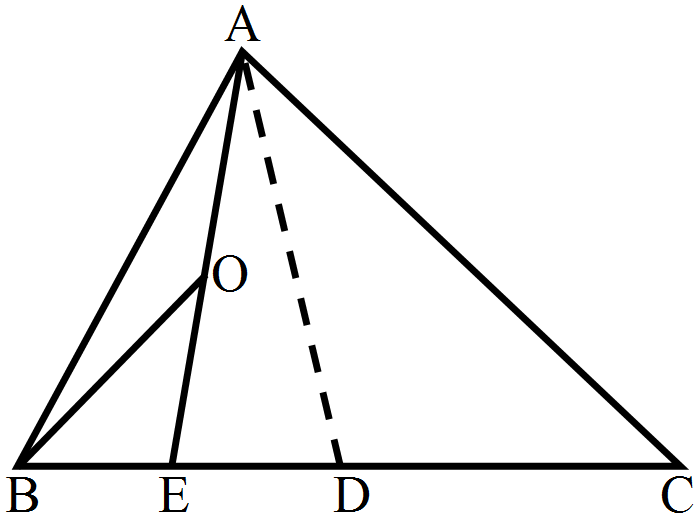
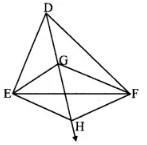
Given: Point G (centroid) is the point of concurrence of the medians of ADEF.
DG = GH
To prove: □GEHF is a parallelogram.