MCQ
In a transistor:
- AThe emitter has the least concentration of impurity.
- BThe collector has the least concentration of impurity.
- CThe base has the least concentration of impurity.
- DAll the three regions have equal concentrations of impurity.
Generate a complete, print-ready paper with questions like this in minutes — across 16+ boards, with answer keys.
Before the saturation state of a diode at the plate voltages of 400 V and 200 V respectively the currents are i1 and i2 respectively. The ratio i1/i2 will be
(a) 
|
(b) 2
|
(c) 2 | (d) 1/2 |
The measurement of voltmeter in the following circuit is

|
(a) 2.4 V |
(b) 3.4 V |
(c) 4.0 V |
(d) 6.0 V |
If the work function of a photometal is 6.825 eV. Its threshold wavelength will be (c = 3 
|
(a) 1200 Å |
(b) 1800 Å |
(c) 2400 Å |
(d) 3600 Å |
X-rays are known to be electromagnetic radiations. Therefore the X-ray photon has
| (a) Electric charge |
| (b) Magnetic moment |
| (c) Both electric charge and magnetic moment |
| (d) Neither electric charge nor magnetic moment |
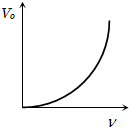
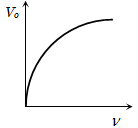
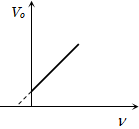
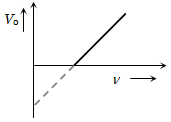
For a photoelectric cell the graph showing the variation of cut of voltage (Vo) with frequency (n) of incident light is best represented by
|
(a)
|
(b)
|
(c)
|
(d)
|