Question
In a Van de Graaff type generator a spherical metal shell is to be a $15 \times 10^6V$ electrode. The dielectric strength of the gas surrounding the electrode is $5 \times 10^7Vm^{–1.}$ What is the minimum radius of the spherical shell required? $($You will learn from this exercise why one cannot build an electrostatic generator using a very small shell which requires a small charge to acquire a high potential.$)$
Answer

Potential difference, $V = 15 \times 10^6V$
otelectrtc strength of the surrounding gas $={5}\times{10}^{7}\frac{\text{V}}{\text{m}}$
Electric field intensity, $E =$ Dielectric strength $= {5}\times {10}^{7}\frac{\text{V}}{\text{m}}$
Minimum radius of the spherical shell required for the purpose is given by,
$\text{r}=\frac{\text{V}}{\text{E}}$
$=\frac{15\times10^{6}}{5\times{10}^{7}}={0.3}\text{m}={30}\text{ cm}$
Hence, the minimum radius of the spherical shell required is $30\ cm.$

Need a full question paper?

Generate a complete, print-ready paper with questions like this in minutes — across 16+ boards, with answer keys.

Start Generating Free

Similar questions

In Young's double-slit experiment using monochromatic light of wavelength 2, the intensity of light at a point on the screen where path difference is λ, is K units. What is the intensity of light at a point where path difference is λ/3?
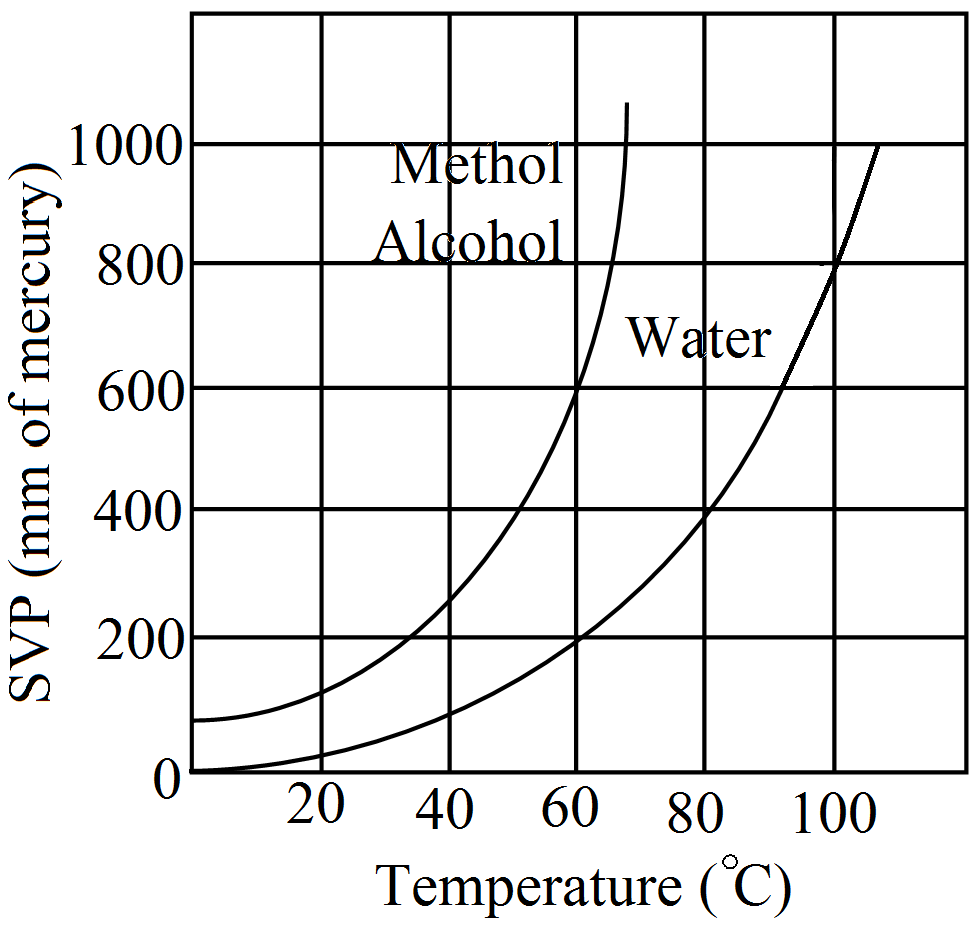
Using figure. of the text, find the boiling point of methyl alcohol at 1atm (760mm of mercury) and at 0.5atm.
Explain the reflection of a plane wave using Huygen's principle.
Find the wavelength of the electron orbiting in the first excited state in hydrogen atom.
Gamma rays and radio waves travel with the same velocity in free space. Distinguish between them in terms of their origin and the main application.
Two bulbs are rated $(P_1, V)$ and $(P_2, V).$ If they are connected in series in parallel across a supply $V.$
Find the power dissipated in the two combinations in terms of $P_1$ and $P_2.$
The radius of the innermost electron orbit of a hydrogen atom is 5.3 ×10⁻¹¹ m. What are the radii of the n = 2 and n = 3 orbits? 
Using the formula $\overrightarrow{\text{F}}=\text{q}\overrightarrow{\text{v}}\times\overrightarrow{\text{B}}$ and $\text{B}=\frac{\mu_0\text{i}}{2\pi\text{r}},$ show that the $SI$ units of the magnetic field $B$ and the permeability constant $\mu_0$ may be written as $N/A-m$ and $NA^2$ respectively.
Two convex lenses of same focal length but of aperture $A_1$ and $A_2 (A_2 < A_1),$ are used as the objective lenses in two astronomical telescopes having identical eyepieces. What is the ratio of their resolving power? Which telescope will you prefer and why? Give reason.
State the underlying principle of a cyclotron. Write briefly how this machine is used to accelerate charged particles to high energies.