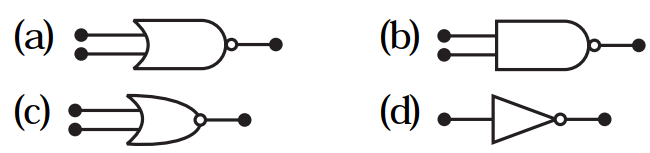
MCQ
In an intrinsic semiconductor, conductivity is due to:
- ADopin
- BBreaking of covalent bonds
- CFree electrons
- DHoles
Explanation:
In intrinsic semiconductors, n = p. Hence, at room temperature, no free electrons are available for conduction.
If some energy is supplied to the atoms of intrinsic semiconductor, the covalent bonds will break and electrons will be freed, each electron will leave behind a hole and capture a new hole the process will continued and charge flows through intrinsic semiconductor.
Thus, in intrinsic semiconductor conductivity is due to breaking of covalent bonds.
Generate a complete, print-ready paper with questions like this in minutes — across 16+ boards, with answer keys.
When light rays from the sun fall on a convex lens along a direction parallel to its axis
|
(a) Focal length for all colours is the same |
|
(b) Focal length for violet colour is the shortest |
|
(c) Focal length for yellow colour is the longest |
|
(d) Focal length for red colour is the shortest |
A plano-convex lens is made of refractive index of 1.6. The radius of curvature of the curved surface is 60 cm. The focal length of the lens is
|
(a) 400 cm |
(b) 200 cm |
(c) 100 cm |
(d) 50 cm |
The e.m.f. in a thermoelectric circuit with one junction at ૦℃ and the other at t℃ is given by  . The neutral temperature is then
(a) 
|
(b) - 
|
(c) - 
|
(d)
|
An ammeter of 100 W resistance gives full deflection for the current of 10–5 amp. Now the shunt resistance required to convert it into ammeter of 1 amp. range, will be
|
(a) |
(b) |
(c) |
(d) |
The half life of a radioactive element which has only  of its original mass left after a lapse of 60 days is
|
(a) 12 days |
(b) 32 days |
(c) 60 days |
(d) 64 days |
The energy of an X- ray photon of wavelength 1.65 Å is (h = 6.6  , 1eV = 1.6
|
(a) 3.5 keV |
(b) 5.5 keV |
(c) 7.5 keV |
(d) 9.5 keV |