MCQ
In an isochoric process the increase in internal energy is
  • Equal to the heat absorbed
  • B
    Equal to the heat evolved
  • C
    Equal to the work done
  • D
    Equal to the sum of the heat absorbed and work done

Answer

Correct option: A.
Equal to the heat absorbed
(a)For isochoric process $\Delta V = 0$ so ${q_v} = \Delta E$ i.e. heat given to a system under constant volume is used up in increasing $\Delta E$.

Need a full question paper?

Generate a complete, print-ready paper with questions like this in minutes — across 16+ boards, with answer keys.

Start Generating Free

Similar questions

$IUPAC$ name of is

$C{{H}_{3}}-\underset{C{{H}_{3}}}{\mathop{\underset{|\,\,\,\,\,}{\mathop{\overset{OH}{\mathop{\overset{|\,\,\,\,}{\mathop{C-}}\,}}\,}}\,}}\,C{{H}_{2}}-\underset{C{{H}_{3}}\,}{\mathop{\underset{|\,\,\,\,\,\,\,}{\mathop{CH-}}\,}}\,C{{H}_{3}}$

The number of following statement/s which is/are incorrect is

$(A)$ Line emission spectra are used to study the electronic structure

$(B)$ The emission spectra of atoms in the gas phase show a continuous spread of wavelength from red to violet

$(C)$ An absorption spectrum is like the photographic negative of an emission spectrum

$(D)$ The element helium was discovered in the sun by spectroscopic method

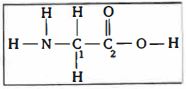
What are the hybridisation of the carbon atoms labeled $C_1$ and $C_2$, respectively in glycine?

$C_1$          $C_2$

If combustion of $4g$ of $CH_4$ liberates $2.5\, kcal$ of heat, the heat of combustion of $CH_4$ is .....$kcal$
Which one of the following is not the characteristic of Planck's quantum theory of radiation
From the given set of species, point out the species from each set having least atomic radius 

$(A)\, F^-, Na^+, Mg^{+2}$              $(B) \,Ni, Cu, Zn$
$(C)\, N^{-3}, Cs^+, H^-$                $(D)\, Li, He, Be^{+2}$
In which of the following is the  $O-N-O$  bond angle highest ?
The sulphate of a metal $M$ contains $9.87\%$ of $M$. This sulphate is isomorphous with $ZnS{O_4}.7{H_2}O$. The atomic weight of $M$ is
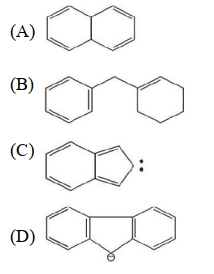
Among the given organic compounds, the total number of aromatic compounds is___________
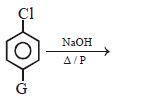
Rate of reaction is maximum if $G$ is