MCQ
In covalency
- AElectrons are transferred
- ✓Electrons are equally shared
- CThe electron of one atom are shared between two atoms
- DNone of the above
Example: In $CH _4$, carbon shares its four electrons with four electrons of four different $H$ - atoms to form $4$ covlent bonds. Hence covalency of carbon is $4.$
Generate a complete, print-ready paper with questions like this in minutes — across 16+ boards, with answer keys.
$\begin{array}{|c|c|c|c|}\hline {} &\text { Molisch's Test} & {\text { Barfoed Test}} & {\text { Biuret Test}} \\ \hline \text { A} & { Positive } & {\text { Negative }} & {\text { Negative }} \\ \hline \text { B } & {\text { Positive }} & {\text { Positive }} & {\text { Negative }} \\ \hline \text { C } & {\text { Negative }} & {\text { Negative }} & {\text { Positive }} \\ \hline\end{array}$
$A, B$ and $C$ are respectively
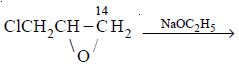
$A$ (predominantly) is
$(A)$ Over all order of this reaction is one
$(B)$ Order of this reaction can't be determined
$(C)$ In region$-I$ and $III$, the reaction is of first and zero order respectively
$(D)$ In region$-II$, the reaction is of first order
$(E)$ In region$-II$, the order of reaction is in the range of $0.1$ to $0.9$.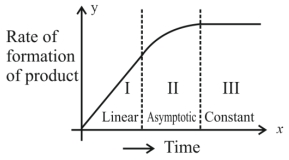
the product $(X)$ is