MCQ
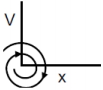
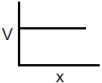
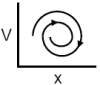
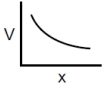
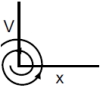
In damped oscillation graph between velocity and position will be
  • A

  • B


  • D

Answer

Correct option: C.

c
In the case of damped oscillation, the amplitude keeps on decreasing that implies the graph for $V$ versus $x$ is,

Need a full question paper?

Generate a complete, print-ready paper with questions like this in minutes — across 16+ boards, with answer keys.
Start Generating Free

Similar questions

The coefficient of performance of a refrigerator is $5$ . If the temperature inside freezer is $-20\,^oC$ , the temperature of the surroundings to which it rejects heat is ....... $^oC$
The $r.m.s.$ speed of the molecules of a gas in a vessel is $400$ $m{s^{ - 1}}$. If half of the gas leaks out, at constant temperature, the $r.m.s.$ speed of the remaining molecules will be ..... $ms^{-1}$
The unit of percentage error is
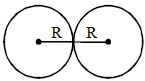
Two masses (spheres) as in fig are placed. If mass density of each sphere is $'\rho '$. Find force between than
If ${q}_{{f}}$ is the free charge on the capacitor plates and ${q}_{{b}}$ is the bound charge on the dielectric slab of dielectric constant $k$ placed between the capacitor plates, then bound charge $q_{b}$ can be expressed as 
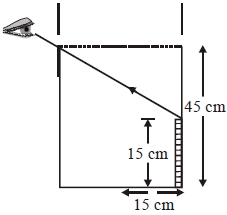
An observer can see through a small hole on the side of a jar (radius $15\, cm$ ) at a point at height of $15\, cm$ from the bottom (see figure). The hole is at a height of $45\, cm$. When the jar is filled with a liquid up to a height of $30\, cm$ the same observer can see the edge at the bottom of the jar. If the refractive index of the liquid $N / 100,$ where $N$ is an integer, the value of $N$ is $.....$
If a stone projected from ground, takes $4 \,s$ to reach the topmost point of its trajectory, then time of flight is .......... $s$
One yard in $SI$ units is equal
In Young's double slit experiment, one of the slit is wider than other, so that amplitude of the light from one slit is double of that from other slit. If $I_m$ be the maximum intensity, the resultant intensity $I$ when they interfere at phase difference $\phi$ is given by
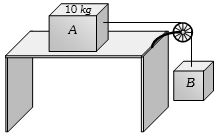
If mass of $A = 10\,\,kg$, coefficient of static friction $= 0.2$, coefficient of kinetic friction = $0.2$. Then mass of $B$ to start motion is