- Half the active nuclei decay.
- Less than half the active nuclei decay.
- More than half the active nuclei decay.
- All the nuclei decay.
Explanation:
The average life is the mean life time for a nuclei to decay.
It is given as
$\tau=\frac{1}{\lambda}=\frac{\text{T}_{\frac{1}{2}}}{0.693}$
Here, $\tau,\lambda$ and $\text{T}_{\frac{1}{2}}$ are the average life, decay constant and half life-time of the active nuclei, respectively. The value of the average lifetime comes to be more than the average lifetime. Therefore, in one average life, more than half the active nuclei decay.
Generate a complete, print-ready paper with questions like this in minutes — across 16+ boards, with answer keys.
A white screen illuminated by green and red light appears to be
|
(a) Green |
(b) Red |
(c) Yellow |
(d) White |
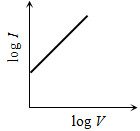
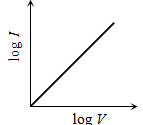
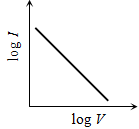
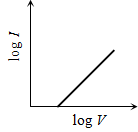
When a current I is passed through a wire of constant resistance, it produces a potential difference V across its ends. The graph drawn between log I and log V will be
|
(a)
|
(b)
|
(c)
|
(d)
|
What is the modulation index of an over modulated wave
|
(a) 1 |
(b) Zero |
(c) < 1 |
(d) > 1 |
The focal lengths of the objective and eye-lens of a microscope are 1 cm and 5 cm respectively. If the magnifying power for the relaxed eye is 45, then the length of the tube is
|
(a) 30 cm |
(b) 25 cm |
(c) 15 cm |
(d) 12 cm |
Through a semiconductor, an electric current is due to drift of
|
(a) Free electrons |
(b) Free electrons and holes |
|
(c) Positive and negative ions |
(d) Protons |