Question
In order for a linear programming problem to have a unique solution, the solution must exist.
  1. At the intersection of the nonnegativity constraints.
  2. At the intersection of a nonnegativity constraint and a resource constraint.
  3. At the intersection of the objective function and a constraint.
  4. At the intersection of two or more constraints.
  5. None of the above.

Answer

  1. At the intersection of two or more constraints.

Solution:

In order for a linear programming problem to have a unique solution, the solution must exist at the intersection of two or more constraints.

Then the problem becomes convex and has a single optimum (maximum or minimum).

Need a full question paper?

Generate a complete, print-ready paper with questions like this in minutes — across 16+ boards, with answer keys.

Start Generating Free

Similar questions

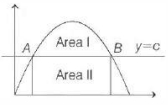
The figure shows a portion of the graph $y=2 x-4 x^3$.The line $y=c$ is such that the areas of the regions marked $I$ and $II$ are equal. If $a, b$ are the $x$-coordinates of $A, B$ respectively, then $a+b$ equals
Which of the following sets are convex?

  1. $\{(\text{x},\text{y}):\text{x}^2+\text{y}^2\geq1\}$

  2. $\{(\text{x},\text{y}):\text{y}^2\geq\text{x}\}$

  3. $\{(\text{x},\text{y}):3\text{x}^2+4\text{y}^2\geq5\}$

  4. $\{(\text{x},\text{y}):\text{y}\geq2,\text{y}\leq4\}$

If the system of linear equations

$7 x+11 y+\alpha z=13$

$5 x+4 y+7 z=\beta$

$175 x+194 y+57 z=361$

has infinitely many solutions, then $\alpha+\beta+2$ is equal to

Let $\mathrm{P}(\alpha, \beta, \gamma)$ be the image of the point $\mathrm{Q}(3,-3,1)$ in the line $\frac{x-0}{1}=\frac{y-3}{1}=\frac{z-1}{-1}$ and $R$ be the point $(2,5,-1)$. If the area of the triangle $\mathrm{PQR}$ is $\lambda$ and $\lambda^2=14 \mathrm{~K}$, then $\mathrm{K}$ is equal to:
Let $S$ be the set of all real numbers and let $R$ be a relation on $S$ defined by $a R b \Leftrightarrow a^2+b^2=1$. Then, $R$ is
If matrix $\text{A}=\big[\text{a}_{\text{ij}}\big]_{2\times2'}$ where $\text{a}_\text{ij}=\begin{cases}1,&\text{if }\text{i }\neq\text{j}\\0,&\text{if }\text{i }=\text{j}\end{cases},$ then A2 is equal to:
  1. I
  2. A
  3. O
  4. -I
The corner points of the feasible region determined by the system of linear constraints are (0, 10),(5, 5),(15, 15),(0, 20). Let z = px + qy where p, q > 0. Condition on p and q so that the maximum of z occurs at both the points (15, 15) and (0, 20) is __________:
  1. q = 2p
  2. p = 2p
  3. p = q
  4. q = 3p
If the vectors $\hat{\text{i}}-2\text{x}\hat{\text{j}}+3\text{y}\hat{\text{k}}$ and $\hat{\text{i}}+2\text{x}\hat{\text{j}}-3\text{y}\hat{\text{k}}$ are perpendicular, then the locus of (x,y) is:
  1. A circle.
  2. An ellipse.
  3. A hyperbola.
  4. None of these.
A random variable X has the following probability distribution:

X: 1 2 3 4 5 6 7 8
P(X): 0.15 0.23 0.12 0.10 0.20 0.08 0.07 0.05

Find the events E = {X : X is a prime number}, F{X : X < 4}, the probability $\text{P}(\text{E}\cup\text{F})$ is:

Let $f: R \rightarrow R$ be a differentiable function that satisfies the relation $f ( x + y )= f ( x )+ f ( y )-1, \forall x$, $y \in R$. If $f ^{\prime}(0)=2$, then $|f(-2)|$ is equal to $.........$.