MCQ
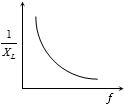
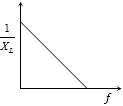
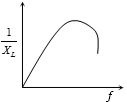
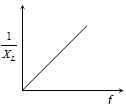
In pure inductive circuit, the curves between frequency $f$ and reciprocal of inductive reactance $1/XL$ is
  • A

  • B


  • D

Answer

Correct option: C.

c
(c) ${X_L} = 2\pi fL$ ==> ${X_L} \propto f$$ \Rightarrow \frac{1}{{{X_L}}} \propto \frac{1}{f}$
i.e., graph between $\frac{1}{{{X_L}}}$and $f$ will be a hyperbola.

Need a full question paper?

Generate a complete, print-ready paper with questions like this in minutes — across 16+ boards, with answer keys.
Start Generating Free

Similar questions

In one model of the electron, the electron of mass $m_e$ is thought to be a uniformly charged shell of radius $R$ and total charge $e$, whose electrostatic energy $E$ is equivalent to its mass $m_e$ via Einstein's mass energy relation $E=m_e c^2$. In this model, $R$ is approximately $\left(m_e=9.1 \times 10^{-31} \,kg , c=3 \times 10^8 \,ms ^{-1}\right.$, $1 / 4 \pi \varepsilon_0=9 \times 10^9 \,Fm ^{-1}$, magnitude of the electron charge $=1.6 \times 10^{-19} \,C$ )
The length of a potentiometer wire is $l$. $A$ cell of $\mathrm{emf}$ $E$ is balanced at a length $l/3$ from the positive end of the wire. If the length of the wire is increased by $l/2$. At what distance will the same cell give a balance point.
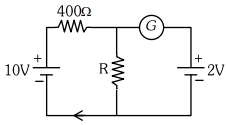
If the galvanometer $G$ does not show any deflection in the circuit shown, the value of $R$ is given by $............\Omega$
Three waves of equal frequency having amplitudes $10\, \mu m, 4\, \mu m$ and $7\, \mu m$ arrive at a given point with successive phase difference of $\pi/2$. The amplitude of  the resulting wave in $\mu m$ is given by
A parallel plate condenser is immersed in an oil of dielectric constant $2$. The field between the plates is
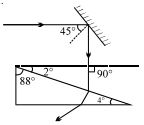
$A$ ray of light strikes a plane mirror at an angle of incidence $45^o$ as shown in the figure.After reflection, the ray passes through a prism of refractive index $1.5$, whose apex angle is $4^o$. The angle through which the mirror should be rotated if the total deviation of the ray is to be $90^o$ is
A carrier is simultaneously modulated by two sine waves with modulation indices of $0.4$ and $0.3$. The resultant modulation index will be
From the top of a $64\, ft$ high tower, a stone is thrown upwards vertically with the velocity of $48\, ft/s$. The greatest height (in $ft$) attained by the stone, assuming the value of the gravitational acceleration $g\, = 32\, ft/s^2$, is
Thermions are
A particle of mass $m$ travelling along $x-$ axis with speed $v_0$ shoots out $1/3^{rd}$ of its mass with a speed $2v_0$ along $y-$ axis. The velocity of remaining piece is