MCQ
In the formul $\bar{\text{x}}=\text{a+h}\big(\frac{\sum\text{f}_\text{i}\text{u}_\text{i}}{\sum\text{f}_\text{i}}\big)$ a stands for :
  • Assumed mean
  • B
    Class size
  • C
    Class mark
  • D
    Mean

Answer

Correct option: A.
Assumed mean
In the formula $\bar{\text{x}}=\text{a+h}\big(\frac{\sum\text{f}_\text{i}\text{u}_\text{i}}{\sum\text{f}_\text{i}}\big)$
$a\ ’$ stands for Assumed Mean
i.e., assumed mean value is the mid value $(\text{x}_\text{i})$ of class intervals of a set of grouped data.

Need a full question paper?

Generate a complete, print-ready paper with questions like this in minutes — across 16+ boards, with answer keys.
Start Generating Free

Similar questions

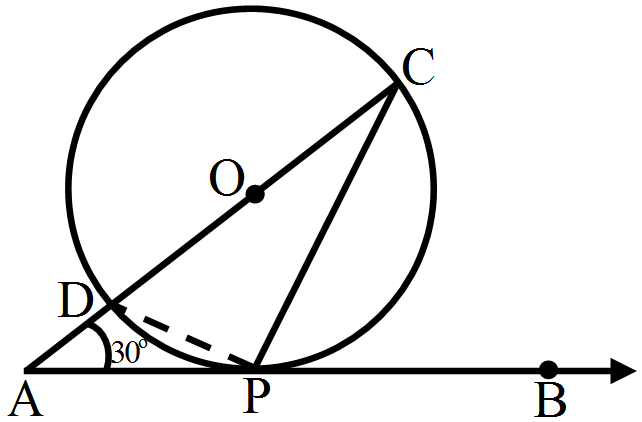
In the given figure $,O$ is the centre of the circle. $AB$ is the tangent to the circle at the point $P$. If $\angle\text{PAO} = 30^\circ$ then $\angle\text{CPB} + \angle\text{ACP}$ is equal to :​​​​​​​
A ladder $15m$ long just reaches the top of a vertical wall. If the ladder makes an angle of $60^\circ$ with the wall, then the height of the wall is :
Mark the correct alternative in the following: If the sum of three consecutive terms of an increasing $A.P$. is $51$ and the product of the first and third of these terms is $273,$ then the third term is:
The area of a circle is $220\ cm^2$. The area of ta square inscribed in it is
The area of circle is equal to the sum of the areas of two circles of radii $24\ cm$ and $7\ cm$. The diameter of the new circle is :
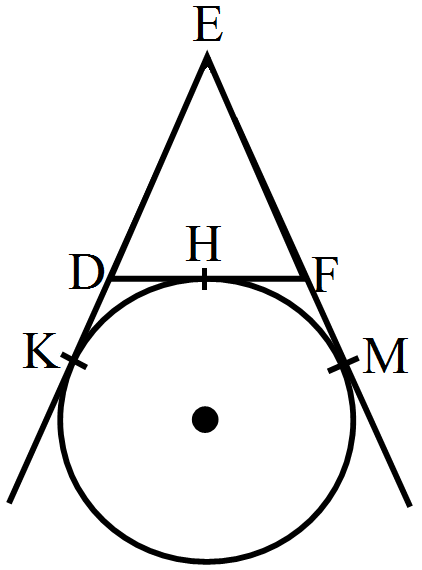
In the given figure, a circle touches the side $DF$ of $\triangle\text{EDF}$ at $H$ and touches $ED$ and $EF$ produced at $K$ and $M$ respectively. If $EK = 9\ cm$ then the perimeter of $\triangle\text{EDF}$ is :
If the system of equations $2 x+3 y=5,4 x+k y=10$ has infinitely many solutions, then $k=$
Directions : In the following questions, the Assertions $(A)$ and Reason $(s)\ (R)$ have been put forward. Read both the statements carefully and choose the correct alternative from the following:
Assertion : The roots of the quadratic equation $x^2+ 2x + 2 = 0$ are imaginary.
Reason : If discriminant $D = b^2- 4ac < 0$ then the roots of quadratic equation $ax^2+ bx + c = 0$ are imaginary.
The hypotenuse of a right triangle is $25\ cm$. The other two sides are such that one is $5\ cm$ longer than the other. The lengths of these sides are:
The LCM and HCF of two rational numbers are equal, then the numbers must be