In the given network capacitance, and
. What is the resultant capacitance between A and B
|
(a) 2.2 μF |
(b) 3.2 μF |
(c) 1.2 μF |
(d) 4.7 μF |
In the given network capacitance, and
. What is the resultant capacitance between A and B
|
(a) 2.2 μF |
(b) 3.2 μF |
(c) 1.2 μF |
(d) 4.7 μF |
(b) 3.2 μF
Generate a complete, print-ready paper with questions like this in minutes — across 16+ boards, with answer keys.
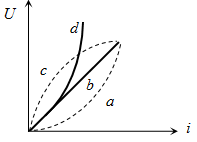
Which of the following plots may represent the thermal energy produced in a resistor in a given time as a function of the electric current

|
(a) a |
(b) b |
(c) c |
(d) d |

Boolean algebra is essentially based on
|
(a) Truth |
(b) Logic |
(c) Symbol |
(d) Numbers |
While tuning in a certain broadcast station with a receiver, we are actually
|
(a) Varying the local oscillator frequency |
|
(b) Varying the frequency of the radio signal to be picked up |
|
(c) Tuning the antenna |
|
(d) None of these |
A bullet of mass 2 gm is having a charge of 2μC. Through what potential difference must it be accelerated, starting from rest, to acquire a speed of 10 m/s
|
(a) 5 kV |
(b) 50 kV |
(c) 5 V |
(d) 50 V |
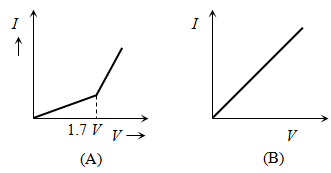
The V-i graphs A and B drawn for two voltameters. Identify each graph

|
(a) A for water voltameter and B for Cu voltameter |
|
(b) A for Cu voltameter and B for water voltameter |
|
(c) Both A and B represents Cu voltameter |
|
(d) None of these |