MCQ
$\int_{}^{} {\frac{{{x^5}}}{{\sqrt {1 + {x^3}} }}dx = } $
  • A
    $\frac{2}{9}{(1 + {x^3})^{3/2}} + c$
  • B
    $\frac{2}{9}{(1 + {x^3})^{3/2}} + \frac{2}{3}{(1 + {x^3})^{1/2}} + c$
  • $\frac{2}{9}{(1 + {x^3})^{3/2}} - \frac{2}{3}{(1 + {x^3})^{1/2}} + c$
  • D
    None of these

Answer

Correct option: C.
$\frac{2}{9}{(1 + {x^3})^{3/2}} - \frac{2}{3}{(1 + {x^3})^{1/2}} + c$
c
(c) Put $1 + {x^3} = {t^2} \Rightarrow 3{x^2}dx = 2t\,dt$ and ${x^3} = {t^2} - 1$
So, $\int_{}^{} {\frac{{{x^5}}}{{\sqrt {1 + {x^3}} }}\,dx = \int_{}^{} {\frac{{{x^2}.{x^3}}}{{\sqrt {1 + {x^3}} }}\,dx} } $
$ = \frac{2}{3}\int_{}^{} {\frac{{({t^2} - 1)\,.\,t\,dt}}{t} = \frac{2}{3}\int_{}^{} {({t^2} - 1)\,dt = \frac{2}{3}\left[ {\frac{{{t^3}}}{3} - t} \right]} } + c$
$ = \frac{2}{3}\left[ {\frac{{{{(1 + {x^3})}^{32}}}}{3} - {{(1 + {x^3})}^{12}}} \right] + c$.

Need a full question paper?

Generate a complete, print-ready paper with questions like this in minutes — across 16+ boards, with answer keys.

Start Generating Free

Similar questions

If $A$ and $B$ are square matrices of the same order, then $(A + B)(A - B)$ is equal to :
If $\int \frac{\cos \theta}{5+7 \sin \theta-2 \cos ^{2} \theta} d \theta=A \log _{e}|B(\theta)|+C$ where $C$ is a constant of integration, then $\frac{ B (\theta)}{ A }$ can be
$\int_{\,0}^{\,1} {\,\sin \left( {2{{\tan }^{ - 1}}\sqrt {\frac{{1 + x}}{{1 - x}}} } \right)\,dx = } $
If the angle between the vectors $\text{x}\hat{\text{i}}+3\hat{\text{j}}-7\hat{\text{k}}$ and $\text{x}\hat{\text{i}}-\text{x}\hat{\text{j}}+4\hat{\text{k}}$ is acute, then x lies in the interval:
If the diraction ratios of a line are proportional to $1, -3, 2,$ then its diraction cosines are:
Choose the correct answer from the given four options.Which one is not a requirement of a binomial distribution?
Let R be a relation on the set N of natural numbers defined by nRm if n divides m. Then, R is:
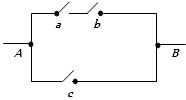
Consider the circuit,If the probability that each switch is closed is $p$, then find the probability of current flowing through $AB$
Let $A=\left[\begin{array}{ll}2 & 3 \\ a & 0\end{array}\right], a \in R$ be written as $P+Q$ where $P$ is a symmetric matrix and $Q$ is skew symmetric matrix. If $\operatorname{det}(Q)=9$, then the modulus of the sum of all possible values of determinant of $P$ is equal to:
If $f(x)=\left\{\begin{array}{ll}x+a, & x \leq 0 \\ |x-4|, & x>0\end{array}\right.$ and $g(x)=\left\{\begin{array}{ll}x+1 & x<0 \\ (x-4)^{2}+b, & x \geq 0\end{array}\right.$ are continuous on $R$, then $(gof) (2)+( fog) (-2)$ is equal to.