MCQ
$\int\limits^\pi_0\frac{1}{\text{a}+\text{b}\cos\text{x}}\text{ dx}=$
  • $\frac{\pi}{\sqrt{\text{a}^2-\text{b}^2}}$
  • B
    $\frac{\pi}{\text{ab}}$
  • C
    $\frac{\pi}{\text{a}^2-\text{b}^2}$
  • D
    $({\text{a}+\text{b}})\pi$

Answer

Correct option: A.
$\frac{\pi}{\sqrt{\text{a}^2-\text{b}^2}}$
We have,
$\text{I}=\int\limits^\pi_0\frac{1}{\text{a}+\text{b}\cos\text{x}}\text{ dx}$
$=\int\limits^\pi_0\frac{1}{\text{a}+\text{b}\frac{1-\tan^2\frac{\text{x}}{2}}{1+\tan^2\frac{\text{x}}{2}}}\text{ dx}$
$=\int\limits^\pi_0\frac{1+\tan^2\frac{\text{x}}{2}}{\text{a}\Big(1+\tan^2\frac{\text{x}}{2}\Big)+\Big(1-\tan^2\frac{\text{x}}{2}\Big)}\text{ dx}$
$=\int\limits^\pi_0\frac{1+\tan^2\frac{\text{x}}{2}}{(\text{a}+\text{b})+(\text{a}-\text{b})\tan^2\frac{\text{x}}{2}}\text{ dx}$
$=\int\limits^\pi_0\frac{\sec^2\frac{\text{x}}{2}}{(\text{a}+\text{b})+(\text{a}-\text{b})\tan^2\frac{\text{x}}{2}}\text{ dx}$
putting $\tan\frac{\text{x}}{2}=\text{t}$
$\Rightarrow \frac{1}{2}\sec^2\frac{\text{x}}{2}\text{dx}=\text{dt}$
$\Rightarrow\sec^2\frac{\text{x}}{2}\text{dx}=2\text{ dt}$
when $\text{x}\rightarrow0;\text{ t}\rightarrow0$
and $\text{x}\rightarrow\pi;\text{ t}\rightarrow\infty$
$\therefore\ \text{I}=\int\limits^\pi_0\frac{2\text{dt}}{(\text{a}+\text{b})+(\text{a}-\text{b})\text{t}^2}$
$=\frac{2}{\text{a}-\text{b}}\int\limits^\pi_0\frac{1}{\big(\frac{\text{a}+\text{b}}{\text{a}-\text{b}}\big)+\text{t}^2}\text{dt}$
$=\frac{2}{(\text{a}-\text{b})}\int\limits^\infty_0\frac{1}{\Big(\sqrt{\frac{\text{a}+\text{b}}{\text{a}-\text{b}}}\Big)^2+\text{t}^2}\text{ dt}$
$=\frac{2}{(\text{a}-\text{b})}\times\sqrt{\frac{\text{a}-\text{b}}{\text{a}+\text{b}}}$ $\Bigg[\tan^{-1}\frac{\text{t}}{\sqrt{\frac{\text{a}+\text{b}}{\text{a}-\text{b}}}}\Bigg]^\infty_0$
$=\frac{2}{\sqrt{\text{a}^2-\text{b}^2}}\Big[\frac{\pi}{2}\Big]$
$=\frac{\pi}{\sqrt{\text{a}^2-\text{b}^2}}$

Need a full question paper?

Generate a complete, print-ready paper with questions like this in minutes — across 16+ boards, with answer keys.
Start Generating Free

Similar questions

What is the value of $\int_{0}^{\frac{\pi}{2}}\frac{\sin\text{x}-\cos\text{x}}{1+\sin\text{x}\cos\text{x}}\text{dx}?$
$\int\limits_2^3 {\frac{{{{(x + 2)}^2}}}{{2{x^2} - 10x + 53}}} dx = $
The magnitude of the vector 6i + 2j + 3k is equal to:
Let $A$ be a symmetric matrix of order $2$ with integer entries. If the sum of the diagonal elements of $A ^{2}$ is $1,$ then the possible number of such matrices is
The value of $p$ for which the vectors $2 \hat{i}+p \hat{j}+\hat{k}$ and $-4 \hat{i}-6 \hat{j}+26 \hat{k}$ are perpendicular to each other, is :
If $F(\alpha ) = \left[ {\begin{array}{*{20}{c}}{\cos \alpha }&{ - \sin \alpha }&0\\{\sin \alpha }&{\cos \alpha }&0\\0&0&1\end{array}} \right]$ and $G\,(\beta ) = \left[ {\begin{array}{*{20}{c}}{\cos \beta }&0&{\sin \beta }\\0&1&0\\{ - \sin \beta }&0&{\cos \beta }\end{array}} \right]$, then ${[F(\alpha )\,G(\beta )]^{ - 1}} = $
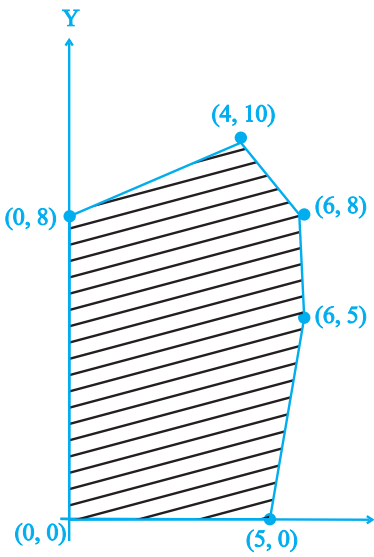
Choose the correct answer from the given four options. The feasible solution for a $\text{LPP}$ is shown in. Let $Z = 3x - 4y$ be the objective function. Maximum of $Z$ occurs at :
If a line has the direction ratio 18, 12, 4, then its direction cosines are:
The period of the function $f(x) = e^{x -[x]+|cos\, \pi x|+|cos\, 2\pi x|+....+|cos\, n\pi x|}$ (where $[.]$ denotes greatest integer function); is:-
If $y = y ( x )$ is the solution of the differential equation $\left(1+ e ^{2 x }\right) \frac{ dy }{ dx }+2\left(1+ y ^{2}\right) e ^{ x }=0$ and $y (0)=0$, then $6\left( y ^{\prime}(0)+\left( y \left(\log _{ e } \sqrt{3}\right)\right)^{2}\right)$ is equal to