MCQ
Ionisation constant of a weak acid $(H_A)$ in terms of $\Lambda _m^\infty $ and ${\Lambda _m}$ is
  • A
    ${K_a} = \frac{{C\Lambda _m^\infty }}{{\left( {{\Lambda _m} - \Lambda _m^\infty } \right)}}$
  • ${K_a} = \frac{{C\Lambda _m^2}}{{\Lambda _m^\infty \,\left( {\Lambda _m^\infty  - {\Lambda _m}} \right)}}$
  • C
    ${K_a} = \frac{{C{{\left( {\Lambda _m^\infty } \right)}^2}}}{{\Lambda _m^\infty \,\left( {{\Lambda _m} - \Lambda _m^\infty } \right)}}$
  • D
    None of these

Answer

Correct option: B.
${K_a} = \frac{{C\Lambda _m^2}}{{\Lambda _m^\infty \,\left( {\Lambda _m^\infty  - {\Lambda _m}} \right)}}$
b
$\quad\quad\quad\quad\quad HA ( aq ) \rightleftharpoons H ^{+}( aq )+ A ^{-}( aq )$

At eqm. $\quad c(1-\alpha) \quad\quad\quad c \alpha \quad\quad\quad c \alpha$

$K _{ a }=\frac{c \alpha^2}{1-\alpha} \text {; where } \alpha=\frac{\Lambda_{ m }}{\Lambda_{ m }^{\infty}}$

$\therefore \quad K_{ a }=\frac{c\left(\frac{\Lambda_{ m }}{\Lambda_{ m }^{\infty}}\right)^2}{\left(1-\frac{\Lambda_{ m }}{\Lambda_{ m }^{\infty}}\right)}$

$=\frac{ c \Lambda_{ m }^2}{\Lambda_{ m }^{\infty}\left(\Lambda_{ m }^{\infty}-\Lambda_{ m }\right)}$

Need a full question paper?

Generate a complete, print-ready paper with questions like this in minutes — across 16+ boards, with answer keys.

Start Generating Free

Similar questions

Barium ions$, \mathrm{CN}^{-}$ and $\mathrm{Co}^{2+}$ form an ionic complex. If that complex is supposed to be $75 \%$ ionised in water with vant Hoff factor $' i\ '$ equal to four, then the coordination number of $\mathrm{Co}^{2+}$ in the complex can be.
Consider the following reaction

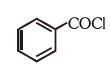
(image) $\frac{{{H_2}}}{{pd - BaS{O_4}}}\,'A'$

The product $'A'$ is

Which of the following amines can be prepared by Gabriel synthesis.
$a.$ Isobutyl amine.
$b. 2-$ Phenylethylamine.
$c. N-$methylbenzylamine.
$d.$ Aniline.
Amongst  $Ti{F_6}^{2 - }\,,\,Co{F_6}^{3 - }\,,\,C{u_2}C{l_2}$ and $NiCl_4^{2-}$ the colourless species are 
The potential for the given half cell at $298 \mathrm{~K}$ is $(-)$ $(-) \ldots \ldots \ldots . . \times 10^{-2} \mathrm{~V} .$

$2 \mathrm{H}_{(\mathrm{aq})}^{+}+2 \mathrm{e}^{-} \rightarrow \mathrm{H}_2(\mathrm{~g})$

${\left[\mathrm{H}^{+}\right]=1 \mathrm{M}, \mathrm{P}_{\mathrm{H}_2}=2 \mathrm{~atm}}$

(Given: $2.303 \mathrm{RT} / \mathrm{F}=0.06 \mathrm{~V}, \log 2=0.3$ )

The catalytic activity of the transition metal and their compound is due to their
Number of compounds from the following which will not produce orange red precipitate with Benedict solution is $..............$.  Glucose, maltose, sucrose, ribose,$2-$deoxyribose, amylose, lactose.
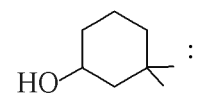
The IUPAC name ofImage
A solution contains $KCl$ in water. It is heated continuously and vapour formed is removed continuously. Vapour pressure of solution will be
A complex of platinum, ammonia and chloride produces four ions per molecule in the solution. The structure consistent with the observation is :