Question
Is boric acid a protic acid? Explain.

Answer

Boric acid is a Lewis acid; it is not a protonic acid.
Boric acid accepts electrons from hydroxyl ion of $\mathrm{H}_2 \mathrm{O}$ molecule.
$\mathrm{B}(\mathrm{OH})_3+2 \mathrm{HOH} \rightarrow\left[\mathrm{~B}(\mathrm{OH})_4\right]^{-}+\mathrm{H}_3 \mathrm{O}^{+}$

Need a full question paper?

Generate a complete, print-ready paper with questions like this in minutes — across 16+ boards, with answer keys.
Start Generating Free

Similar questions

How standard electrode potential can be calculated and state its importance.
${ }_{31} \mathrm{Ga}$ has slightly higher ionisation enthalpy than ${ }_{13} \mathrm{Al}$ although it occupies lower position in the group?
Explain conformational isomerism.
Derive the relationship between $\text{C}_\text{p}$ and $\text{C}_\text{V}$ for an ideal gas.
Nitric acid acts only as an oxidising agent while nitrous acid acts both as an oxidising as well as reducing agent. Explain.
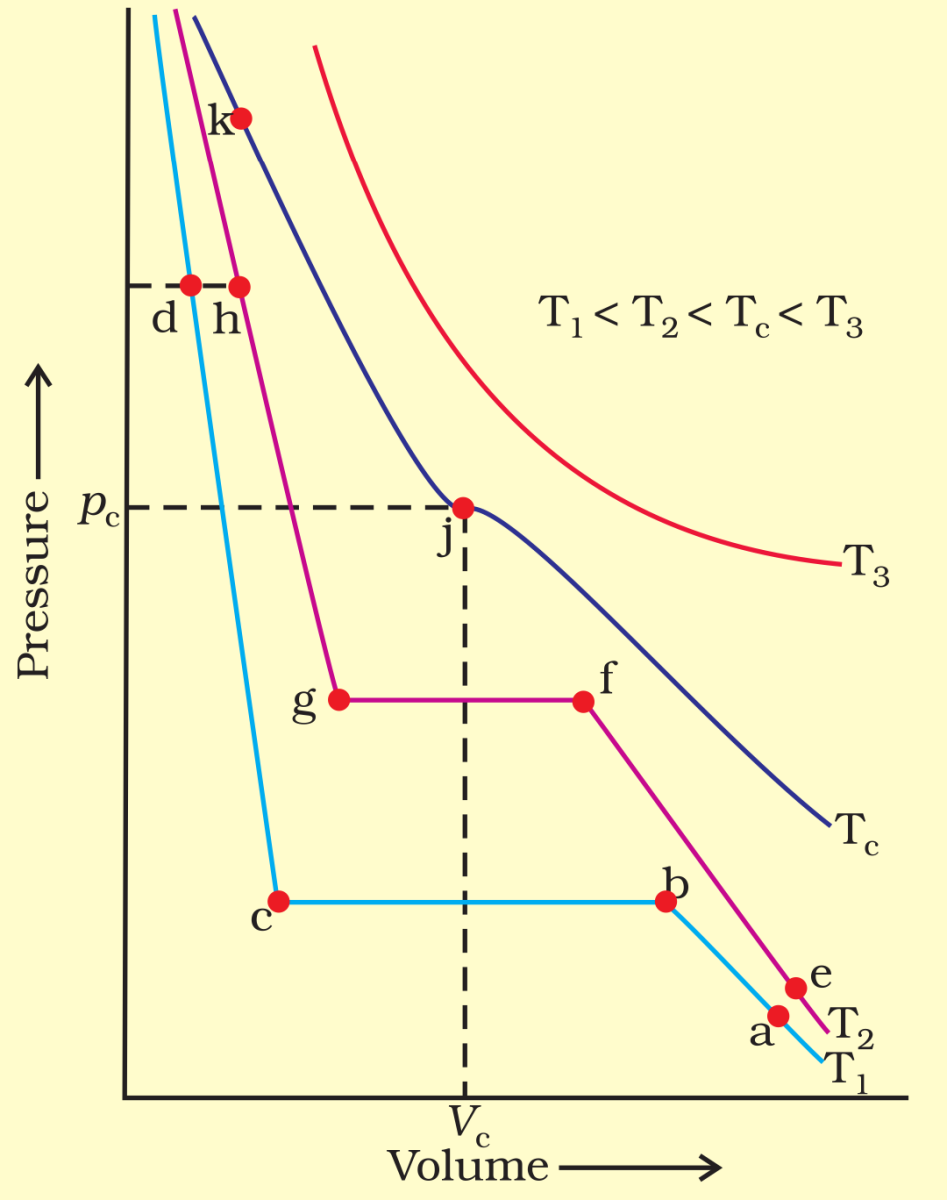
Isotherms of carbon dioxide at various temperatures are represented in Fig. Answer the following questions based on this figure.

a. In which state will $\mathrm{CO}_2$ exist between the points $a$ and $b$ at temperature $\mathrm{T}_1$ ?
b. At what point will $\mathrm{CO}_2$ start liquefying when temperature is $\mathrm{T}_1$ ?
c. At what point will $\mathrm{CO}_2$ be completely liquefied when temperature is $\mathrm{T}_2$.
d. Will condensation take place when the temperature is $T_3$ ?
e. What portion of the isotherm at $\mathrm{T}_1$ represent liquid and gaseous $\mathrm{CO}_2$ at equilibrium?
What do you understand by isoelectronic species? Name a species that will be isoelectronic with each of the following atoms or ions.
$\mathrm{Rb}^{+}$
Calculate the wavelength, frequency and wavenumber of a light wave whose period is $2.0 \times 10^{-10} \mathrm{~s}$.
Why the group 17 (halogen) elements of periodic table have more negative value of electron gain enthalpy?
Write formula for the following compound:
Tin(IV) oxide.