MCQ
Let $a,b \in R,\left( {a \ne 0} \right)$. if the function $f$ defined as

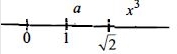
$f\left( x \right)\left\{ \begin{array}{l}
\frac{{2{x^2}}}{a}\,\,\,\,\,\,\,\,\,\,\,\,,\,\,\,\,\,0 \le x < 1\,\,\,\\
a\,\,\,\,\,\,\,\,\,\,\,\,\,\,\,\,\,,\,\,\,\,\,1 \le x < \sqrt 2 \,\,\,\,\,\,\,\,\,\,\,\,\,\,\,\,\,\\
\frac{{2{b^2} - 4b}}{{{x^3}}}\,\,\,,\,\,\,\,\,\sqrt 2  \le x < \infty 
\end{array} \right.\,\,\,\,$ 

is continuous in the interval $\left[ {0,\infty } \right)$ , then an ordered pair $(a, b)$ is

  • A
    $\left( { - \sqrt 2 ,1 - \sqrt 3 } \right)$
  • B
    $\left( {\sqrt 2 , - 1 + \sqrt 3 } \right)$
  • $\left( {\sqrt 2 ,1 - \sqrt 3 } \right)$
  • D
    $\left( { - \sqrt 2 ,1 + \sqrt 3 } \right)$
Answer

Correct option: C.
$\left( {\sqrt 2 ,1 - \sqrt 3 } \right)$
c
Continuity at $x=1$

$\frac{2}{a} = a \Rightarrow a =  \pm \sqrt 2 $

Continuity at $x = \sqrt 2 \,a = \sqrt 2 $

$a = \frac{{2{b^2} - 4b}}{{2\sqrt 2 }}$

Put $a = \sqrt 2 $

$2 = {b^2} - 2b\,\,\,\,\,\,\,\, \Rightarrow {b^2} - 2b - 2 = 0$

$b = \frac{{2 \pm \sqrt {4 + 4.2} }}{2} = 1 \pm \sqrt 3 $

So, $\left( {a,b} \right) = \left( {\sqrt 2 ,1 - \sqrt 3 } \right)$

Need a full question paper?

Generate a complete, print-ready paper with questions like this in minutes — across 16+ boards, with answer keys.

Start Generating Free

Similar questions

Let $J=\int_0^1 \frac{x}{1+x^8} d x$

Consider the following assertions:

$I$. $J>\frac{1}{4}$

$II$. $J<\frac{\pi}{8}$ Then,

The interval for which the given function $f(x) = 2{x^3} - 3{x^2} - 36x + 7$ is decreasing, is
If the integers $m$ and $n$ are chosen at random between $1$ and $100$, then the probability that a number of the form ${7^m} + {7^n}$ is divisible by $5$ equals
If A = {1, 2, 3}, then a relation R = {(2, 3)} on A is:
  1. Symmetric and transitive only.
  2. Symmetric only.
  3. Transitive only.
  4. None of these.
Let $A=\{a, b, c\}$ and $B=\{1,2,3,4\}$ Then the number of elements in the set $C =\{ f : A \rightarrow B \mid 2 \in f ( A )$ and $f$ is not one-one $\}$ is
If ${e^{f(x)}} = \frac{{10 + x}}{{10 - x}},\;x \in ( - 10,\;10)$ and $f(x) = kf\left( {\frac{{200x}}{{100 + {x^2}}}} \right)$, then $k = $
The points (k − 1, k + 2), (k, k + 1), (k + 1, k) are collinear for:
The ratio in which 2x + 3y + 5z = 1 divides the line joining the points (1, 0, -3) and (1, -5, 7) is:
  1. 5 : 3
  2. 3 : 2
  3. 2 : 1
  4. 1 : 3
Consider a pair of circles $(|x| -1)^2 + y^2$ = $1$ , Ram is moving away from origin along one circle in clockwise direction at the rate $2\ m/s$ and Shyam is moving away from origin along other circle in anticlockwise direction at the rate $1\ m/s$ . If Ram and Shyam start their journey from origin, then rate of change of distance between Ram and Shyam at the instant when Ram crosses $x-$ axis first time, is
If A5 = 0 Such that $\text{A}^{\text{n}}\neq\text{I for }1\leq\text{n}\leq4,\text{ then}(\text{I}-\text{A})^{-1}$ equals:
  1. A4
  2. A3
  3. I + A
  4. None of these.