MCQ
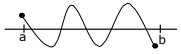
Let  $f:(a, b) \rightarrow R$ be twice differentiable function such that $f(x)=\int_{a}^{x} g(t) d t$ for a differentiable function $g(x) .$ If $f(x)=0$ has exactly five distinct roots in $(a, b)$, then $g(x) g^{\prime}(x)=0$ has at least:
  • seven roots in $(a, b)$
  • B
    five roots in $(a, b)$
  • C
    three roots in $(a, b)$
  • D
    twelve roots in $(a, b)$

Answer

Correct option: A.
seven roots in $(a, b)$
a
$\mathrm{f}(\mathrm{x})=\int_{\mathrm{a}}^{\mathrm{x}} \mathrm{g}(\mathrm{t}) \,\mathrm{d} \mathrm{t}$

$\mathrm{f}(\mathrm{x}) \rightarrow 5$

$\mathrm{f}^{\prime}(\mathrm{x}) \rightarrow 4$

$\mathrm{~g}(\mathrm{x}) \rightarrow 4$

$\mathrm{~g}^{\prime}(\mathrm{x}) \rightarrow 3$

Need a full question paper?

Generate a complete, print-ready paper with questions like this in minutes — across 16+ boards, with answer keys.

Start Generating Free

Similar questions

The differential equation of the family of curves $y = a\cos (x + b)$ is
Let $f (x)$ and $g (x)$ are two function which are defined and differentiable for all $x \ge x_0$. If $f (x_0) = g (x_0)$ and $f ' (x) > g ' (x)$ for all $x > x_0$ then
If $\text{f(x)}=|\text{x}-\text{a}|\ \phi\ (\text{x}),$ where $\phi(\text{x})$ is continuous function, then:
  1.  $\text{f}'(\text{a}^+)=\phi(\text{a})$
  2. $\text{f}'(\text{a}^-)=-\phi(\text{a})$
  3. $\text{f}'(\text{a}^+)=\text{f}'(\text{a}^-)$
  4. None of these
Differential coefficient of ${{{{\tan }^{ - 1}}x} \over {1 + {{\tan }^{ - 1}}x}}$ w.r.t. ${\tan ^{ - 1}}x$ is
Let the position vectors of the vertices $A, B$ and $C$ of a triangle be $2 \hat{i}+2 \hat{j}+\hat{k}, \quad \hat{i}+2 \hat{j}+2 \hat{k}$ and $2 \hat{i}+\hat{j}+2 \hat{k}$ respectively. Let $l_1, l_2$ and $l_3$ be the lengths of perpendiculars drawn from the ortho center of the triangle on the sides $\mathrm{AB}, \mathrm{BC}$ and $\mathrm{CA}$ respectively, then $l_1^2+l_2^2+l_3^2$ equals:
Let $g:(0, \infty) \rightarrow R$ be a differentiable function such that  $\int\left(\frac{x(\cos x-\sin x)}{e^{x}+1}+\frac{g(x)\left(e^{x}+1-x e^{x}\right)}{\left(e^{x}+1\right)^{2}}\right) d x=\frac{x g(x)}{e^{x}+1}+c$ for all $x >0$, where $c$ is an arbitrary constant. Then.
A function $f(x)$ is given by $f(x)=\frac{5^{x}}{5^{x}+5}$, then the sum of the series

$f\left(\frac{1}{20}\right)+f\left(\frac{2}{20}\right)+f\left(\frac{3}{20}\right)+\ldots \ldots+f\left(\frac{39}{20}\right)$ is equal to ....... .

The plane $XOZ$ divides the join of $(1,\, - 1,\,\,5)$ and $(2, 3, 4)$ in the ratio $\lambda :1$, then $\lambda $ is
If in a triangle $\overrightarrow {AB} = a,\,\,\overrightarrow {AC} = b$ and  $ D, E $ are the mid-points of  $ AB $ and  $ AC$  respectively, then $\overrightarrow {DE} $ is equal to
$\int_{ - \,\pi }^{\,\pi } {\frac{{2x(1 + \sin x)}}{{1 + {{\cos }^2}x}}dx} $ is