Question
Let x = f(t) and y = g(t) be parametric forms with t as a parameter, then
$\frac{\text{dy}}{\text{dx}}=\frac{\text{dy}}{\text{dt}}\times\frac{\text{dt}}{\text{dx}}=\frac{\text{g}'(\text{t})}{\text{f}'(\text{t})},$ where $\text{f}'(\text{t})\neq0.$
On the basis of above information, answer the following questions.
  1. The derivative of $\text{f}(\tan\text{x})\text{w.r.t.}\text{ g}(\sec\text{x})\text{ at}\text{ x}=\frac{\pi}{4},$ where f'(1) = 2 and $\text{g}'(\sqrt{2})=4,$ is:
  1. $\frac{1}{\sqrt{2}}$
  2. ${\sqrt{2}}$
  3. 1
  4. 0
  1. The derivative of $\sin^{-1}\Big(\frac{2\text{x}}{1+\text{x}^2}\Big)$ with respect to $\cos^{-1}\Big(\frac{1-\text{x}^2}{1+\text{x}^2}\Big)$ is:
  1. -1
  2. 1
  3. 2
  4. 4
  1. The derivative of $\text{e}^{\text{x}^3}$ with respect to log x is:
  1. $\text{e}^{\text{x}^3}$
  2. $3\text{x}^22\text{e}^{\text{x}^3}$
  3. $3\text{x}^3\text{e}^{\text{x}^3}$
  4. $3\text{x}^2\text{e}^{\text{x}^3}+3\text{x}$
  1. The derivative of $\cos^{-1}(2\text{x}^2-1)\text{w.r.t.}\cos^{-1}\text{x}$ is:
  1. $2$
  2. $\frac{-1}{2\sqrt{1-\text{x}^2}}$
  3. $\frac{2}{\text{x}}$
  4. $1-\text{x}^2$
  1. If $\text{y}=\frac{1}{4}\mu^4$ and $\mu=\frac{2}{3}\text{x}^3+5,$ then $\frac{\text{dy}}{\text{dx}}=$
  1. $\frac{2}{27}\text{x}^2(2\text{x}^3+15)^3$
  2. $\frac{2}{7}\text{x}^2(2\text{x}^3+15)^3$
  3. $\frac{2}{27}\text{x}(2\text{x}^3+5)^3$
  4. $\frac{2}{7}(2\text{x}^3+15)^3$
Answer

  1. (a) $\frac{1}{\sqrt{2}}$
Solution:
Now, $\frac{\text{df}(\tan\text{x})}{\text{dg}(\sec\text{x})}=\frac{\text{f}'(\tan \text{x})\sec^2\text{x}}{\text{g}'(\sec\text{x})\sec\text{x}\tan \text{x}}$
$=\frac{\text{f}'(\tan \text{x})\sec\text{x}}{\text{g}'(\sec\text{x})\tan \text{x}}$
$\therefore\Big[\frac{\text{df}(\tan\text{x})}{\text{dg}(\sec\text{x})}\Big]_{\text{x}=\frac{\pi}{4}}=\frac{\text{f}'(1)\sqrt{2}}{\text{g}'(\sqrt{2})\cdot1}=\frac{2\sqrt{2}}{4\cdot1}=\frac{1}{\sqrt{2}}$
  1. (b) 1
  1. (c) $3\text{x}^3\text{e}^{\text{x}^3}$
Solution:
Let $\text{y}=\text{e}^{\text{x}^3},\text{z}=\log\text{x}$
Differentiating w.r.t. x, we get
$\frac{\text{dy}}{\text{dx}}=\text{e}^{\text{x}^3}(3\text{x}^2)=3\text{x}^2\text{e}^{\text{x}^3}$ and $\therefore\frac{\text{dy}}{\text{dz}}=\frac{\frac{\text{dy}}{\text{dx}}}{\frac{\text{dz}}{\text{dx}}}=\frac{3\text{x}^2\text{e}^{\text{x}^3}}{\Big(\frac{1}{\text{x}}\Big)}=3\text{x}^3\text{e}^{\text{x}^3}$
  1. (a) $2$
Solution:
Let $\text{y}=\cos^{-1}(2\text{x}^2-1)=2\cos^{-1}\text{x}$
Differentiating w.r.t. $\cos^{-1}\text{x},$ we get
$\frac{\text{dy}}{\text{d}(\cos^{-1}\text{x})}=\frac{2\text{d}(\cos^{-1}\text{x})}{\text{d}(\cos^{-1}\text{x})}=2$
  1. (a) $\frac{2}{27}\text{x}^2(2\text{x}^3+15)^3$
Solution:
We have, $\text{y}=\frac{1}{4}\text{u}^4\Rightarrow\frac{\text{dy}}{\text{du}}=\frac{1}{4}\cdot4\text{u}^3=\text{u}^3$
and $\text{u}=\frac{2}{3}\text{x}^3+5\Rightarrow\frac{\text{du}}{\text{dx}}=\frac{2}{3}\cdot3\text{x}^2=2\text{x}^2$
$\therefore\frac{\text{dy}}{\text{dx}}=\frac{\text{dy}}{\text{du}}\cdot\frac{\text{du}}{\text{dx}}=\text{u}^3\cdot2\text{x}^2=\Big(\frac{2}{3}\text{x}^3+5\Big)^3(2\text{x})^2$
$=\frac{2}{27}\text{x}^2(2\text{x}^3+15)^3$

Need a full question paper?

Generate a complete, print-ready paper with questions like this in minutes — across 16+ boards, with answer keys.

Start Generating Free

Similar questions

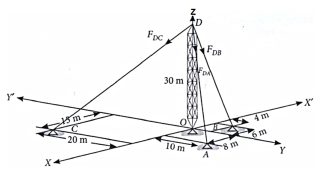
Read the following text carefully and answer the questions that follow: Consider the following diagram, where the forces in the cable are given.
Image
$i$. What is the equation of the line along cable $AD? (1)$
$ii$. What is length of cable $DC? (1)$
$iii$. Find vector $ DB (2)$
OR
What is sum of vectors along the cable? $(2)$
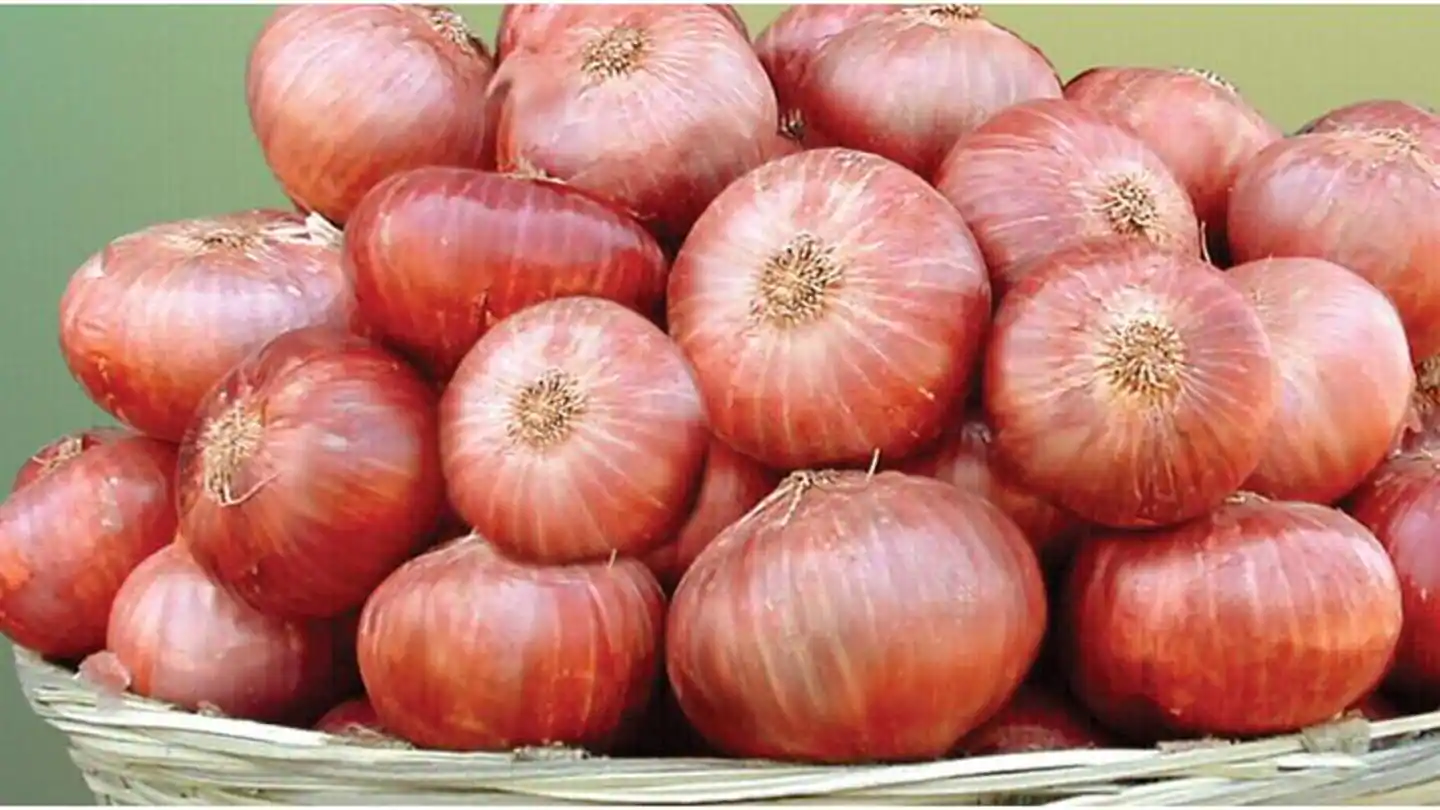
The Government declare that farmers can get $₹\ 300$ per quintal for their onions on $1^{st}$ July and after that, the price will be dropped by $₹\ 3$ per quintal per extra day. Shyams father has $80$ quintal of onions in the field on $1^{st}$ July, and he estimates that crop is increasing at the rate of 1 quintal per day.

Based on the above information, answer the following questions.
  1. If $x$ is the number of days after $1^{st}$ July, then price and quantity of onion respectively can be expressed as.
  1. $₹(300 - 3x), (80 + x)$ quintals
  2. $₹(300 - 3x), (80 - x)$ quintals
  3. $₹(300 + x), 80$ quintals
  4. None of these
  1. Revenue $R$ as a function of $x$ can be represented as.
  1. $R(x) = 3x^2 - 60x - 24000$
  2. $R(x) = 3x^2 + 60x - 24000$
  3. $R(x) = 3x^2 + 40x - 16000$
  4. $R(x) = 3x^2 - 60x - 14000$
  1. Find the number of days after $1^{st}$ July, when Shyam's father attain maximum revenue.
  1. $10$
  2. $20$
  3. $12$
  4. $22$
  1. On which day should Shyam's father harvest the onions to maximise his revenue?
  1. $11^{th}$ July
  2. $20^{th}$ July
  3. $12^{th}$ July
  4. $22^{nd}$ July
  1. Maximum revenue is equal to.
  1. $₹\ 20,000$
  2. $₹\ 24,000$
  3. $₹\ 24,300$
  4. $₹\ 24,700$
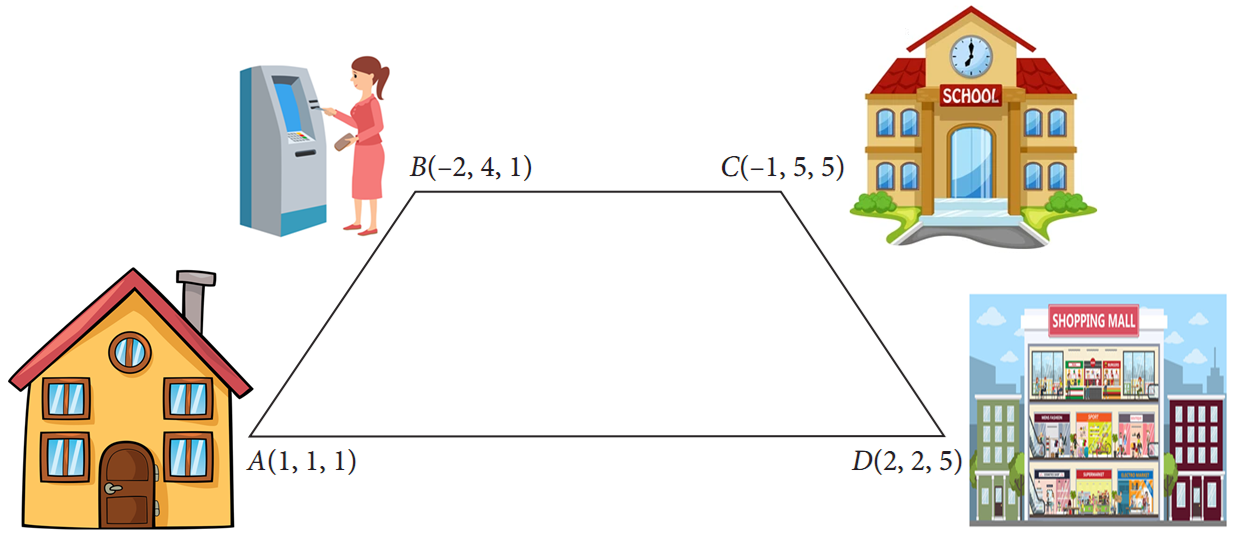
Ritika starts walking from his house to shopping mall. Instead of going to the mall directly, she first goes to a ATM, from there to her daughter's school and then reaches the mall. ln the diagram, A, B, C, and D represent the coordinates of House, ATM, School and Mall respectively.

Based on the above information, answer the following questions.
  1. Distance between House (A) and ATM (B) is:
  1. $3\text{ units}$
  2. $3\sqrt{2}\text{ units}$
  3. $\sqrt{2}\text{ units}$
  4. $4\sqrt{2}\text{ units}$
  1. Distance between ATM (B) and School (C) is:
  1. $\sqrt{2}\text{ units}$
  2. $2\sqrt{2}\text{ units}$
  3. $3\sqrt{2}\text{ units}$
  4. $4\sqrt{2}\text{ units}$
  1. Distance between School (C) and Shopping mall (D) is:
  1. $3\sqrt{2}\text{ units}$
  2. $5\sqrt{2}\text{ units}$
  3. $7\sqrt{2}\text{ units}$
  4. $10\sqrt{2}\text{ units}$
  1. What is the total distance travelled by Ritika:
  1. $4\sqrt{2}\text{ units}$
  2. $6\sqrt{2}\text{ units}$
  3. $8\sqrt{2}\text{ units}$
  4. $9\sqrt{2}\text{ units}$
  1. What is the extra distance travelled by Ritika in reaching the shopping mall?
  1. $3\sqrt{2}\text{ units}$
  2. $5\sqrt{2}\text{ units}$
  3. $6\sqrt{2}\text{ units}$
  4. $7\sqrt{2}\text{ units}$
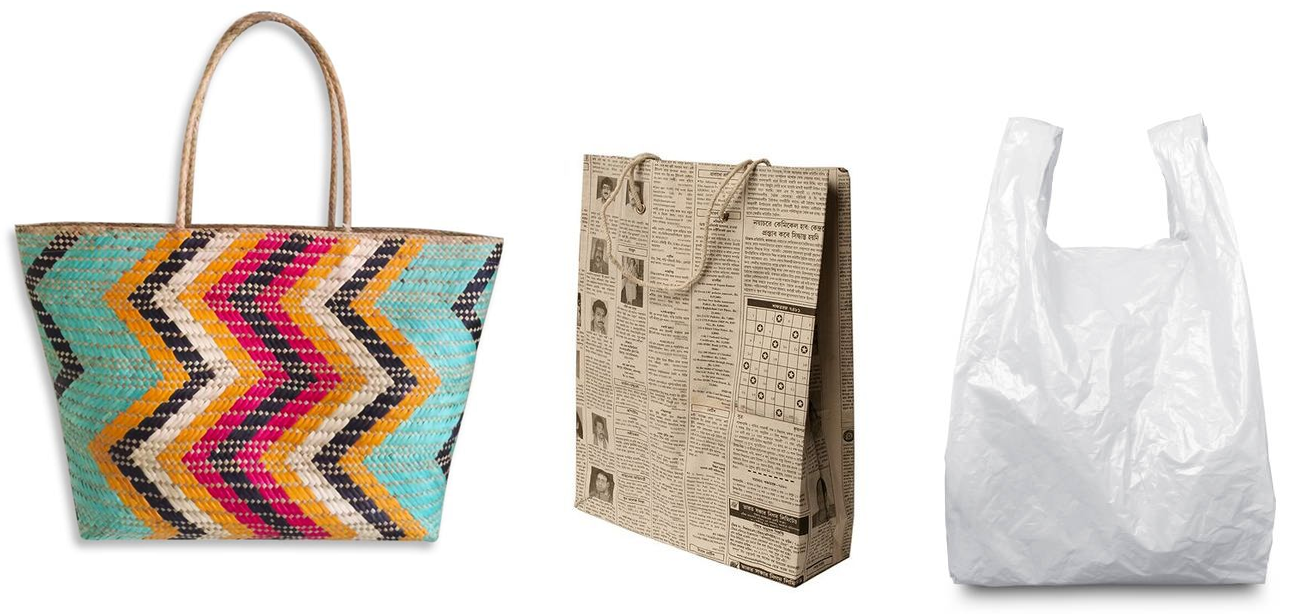
Three shopkeepers Salim, Vijay and Venket are using polythene bags, handmade bags (prepared by prisoners) and newspaper's envelope as carry bags. It is found that the shopkeepers Salim, Vijay and Venket are using $(20, 30, 40), (30, 40, 20)$ and $(40, 20, 30)$ polythene bags, handmade bags and newspaper's envelopes respectively. The shopkeepers Salim, Vijay and Venket spent $₹ 250, ₹ 270 $ and $₹ 200$ on these carry bags respectively.

Using the concept of matrices and determinants, answer the following questions.
  1. What is the cost of one polythene bag?
  1. $₹ 1$
  2. $₹ 2$
  3. $₹ 3$
  4. $₹ 5$
  1. What is the cost of one handmade bag?
  1. $₹ 1$
  2. $₹ 2$
  3. $₹ 3$
  4. $₹ 5$
  1. What is the cost of one newspaper envelope?
  1. $₹ 1$
  2. $₹ 2$
  3. $₹ 3$
  4. $₹ 5$
  1. Keeping in mind the social conditions, which shopkeeper is better?
  1. Salim
  2. Vijay
  3. Venket
  4. None of these.
  1. Keeping in mind the environmental conditions, which shopkeeper is better?
  1. Salim
  2. Vijay
  3. Venket
  4. None of these.
It is known that, if the interest is compounded continuously, the principal changes at the rate equal to the product of the rate of bank interest per annum and the principal. Let $P$ denotes the principal at any time t and rate of interest be r% per annum.

Based on the above information, answer the following question.
  1. Find the value of $\frac{\text{dP}}{\text{dt}}.$
  1. $\frac{\text{Pr}}{1000}$
  2. $\frac{\text{Pr}}{100}$
  3. $\frac{\text{Pr}}{10}$
  4. $\text{Pr}$
  1. If $P_0$ be the initial principal, then find the solution of differential equation formed in given situation.
  1. $\log\Big(\frac{\text{P}}{\text{P}_0}\Big)=\frac{\text{rt}}{100}$
  2. $\log\Big(\frac{\text{P}}{\text{P}_0}\Big)=\frac{\text{rt}}{10}$
  3. $\log\Big(\frac{\text{P}}{\text{P}_0}\Big)=\text{rt}$
  4. $\log\Big(\frac{\text{P}}{\text{P}_0}\Big)=100\text{rt}$
  1. If the interest is compounded continuously at 5% per annum, in how many years will $₹\ 100$ double itself?
  1. $12.728$ years
  2. $14.789$ years
  3. $13.862$ years
  4. $15.872$ years
  1. At what interest rate will $₹\ 100$ double itself in 10 years? $(\log_\text{e}2 = 0.6931 ).$
  1. $9.66\%$
  2. $8.239\%$
  3. $7.341\%$
  4. $6.931\%$
  1. How much will $₹\ 1000$ be worth at 5% interest after $10$ years$?$ $(e^{0.5} = 1.648).$
  1. $₹\ 1648$
  2. $₹\ 1500$
  3. $₹\ 1664$
  4. $₹\ 1572$
In a murder investigation, a corpse was found by a detective at exactly $8$ p.m. Being alert, the detective measured the body temperature and found it to be $70^\circ F$ Two hours later, the detective measured the body temperature again and found it to be $60^\circ F,$ where the room temperature is $50^\circ F$ Also, it is given the body temperature at the time of death was normal, i.e., $98.6^\circ F.$
Let $T$ be the temperature of the body at any time t and initial time is taken to be $8$ p.m.

Based on the above information, answer the following questions.
  1. By Newton's law of cooling, $\frac{\text{dT}}{\text{dt}}$ is proportional to:
  1. $T - 60$
  2. $T - 50$
  3. $T - 70$
  4. $T - 98.6$
  1. When $t = 0,$ then body temperature is equal to:
  1. $50^\circ F$
  2. $60^\circ F$
  3. $70^\circ F$
  4. $98.6^\circ F$
  1. When $t = 2,$ then body temperature is equal to:
  1. $50^\circ F$
  2. $60^\circ F$
  3. $70^\circ F$
  4. $98.6^\circ F$
  1. The value of T at any time t is:
  1. $50+20\Big(\frac{1}{2}\Big)^\text{t}$
  2. $50+20\Big(\frac{1}{2}\Big)^\text{t-1}$
  3. $50+20\Big(\frac{1}{2}\Big)^\frac{\text{t}}{2}$
  4. None of these
  1. If it is given that $\log_\text{e} (2.43) = 0.88789$ and $\log_\text{e} (0.5) = -0.69315,$ then the time at which the murder occur is:
  1. $7:30$ p.m.
  2. $5:30$ p.m.
  3. $6:00$ p.m.
  4. $5:00$ p.m.
In a murder investigation, a corpse was found by a detective at exactly $8$ p.m. Being alert, the detective measured the body temperature and found it to be $70^\circ F$ Two hours later, the detective measured the body temperature again and found it to be $60^\circ F,$ where the room temperature is $50^\circ F$ Also, it is given the body temperature at the time of death was normal, i.e., $98.6^\circ F.$
Let T be the temperature of the body at any time t and initial time is taken to be $8$ p.m.

Based on the above information, answer the following questions.
  1. By Newton's law of cooling, $\frac{\text{dT}}{\text{dt}}$ is proportional to:
  1. $T - 60$
  2. $T - 50$
  3. $T - 70$
  4. $T - 98.6$
  1. When $t = 0$, then body temperature is equal to:
  1. $50^\circ F$
  2. $60^\circ F$
  3. $70^\circ F$
  4. $98.6^\circ F$
  1. When $t = 2$, then body temperature is equal to:
  1. $50^\circ F$
  2. $60^\circ F$
  3. $70^\circ F$
  4. $98.6^\circ F$
  1. The value of T at any time t is:
  1. $50+20\Big(\frac{1}{2}\Big)^\text{t}$
  2. $50+20\Big(\frac{1}{2}\Big)^\text{t-1}$
  3. $50+20\Big(\frac{1}{2}\Big)^\frac{\text{t}}{2}$
  4. None of these
  1. If it is given that $\log_\text{e} (2.43) = 0.88789$ and $\log_\text{e} (0.5) = -0.69315,$ then the time at which the murder occur is:
  1. $7:30$ p.m.
  2. $5:30$ p.m.
  3. $6:00$ p.m.
  4. $5:00$ p.m.
Let $\text{A}=\begin{bmatrix}1&0\\2&1\end{bmatrix},$ and $U_1, U_2$ are e first and second columns respectively of a $2 \times 2$ matrix $U$. Also, let the column matrices $U_1$ and $U_2$ satisfying $\text{AU}_1=\begin{bmatrix}1\\0\end{bmatrix}$ and $\text{AU}_2=\begin{bmatrix}2\\3\end{bmatrix}.$
Based on the above information, answer the following questions.
  1. The matrix $U_1 + U_2$ is equal to:
  1. $\begin{bmatrix}1\\-1\end{bmatrix}$
  2. $\begin{bmatrix}2\\-2\end{bmatrix}$
  3. $\begin{bmatrix}3\\-3\end{bmatrix}$
  4. $\begin{bmatrix}4\\-4\end{bmatrix}$
  1. The value of $|U|$ is:
  1. $2$
  2. $-2$
  3. $3$
  4. $-3$
  1. If $\text{X}=\begin{bmatrix}3&2\end{bmatrix}\text{U}\begin{bmatrix}3\\2\end{bmatrix},$ then the value of |X| =
  1. $3$
  2. $-3$
  3. $-5$
  4. $5$
  1. The minor of element at the position $a_{22}$ in $U$ is:
  1. $1$
  2. $2$
  3. $-2$
  4. $-1$
  1. If $\text{U}=[\text{a}_\text{ij}]_{2\times2},$ then the value of $a_{11}A_{11}+ a_{12}A_{12},$ where $A_{ij} $ denotes the cofactor of $a_{ij},$ is:
  1. $1$
  2. $2$
  3. $-3$
  4. $3$
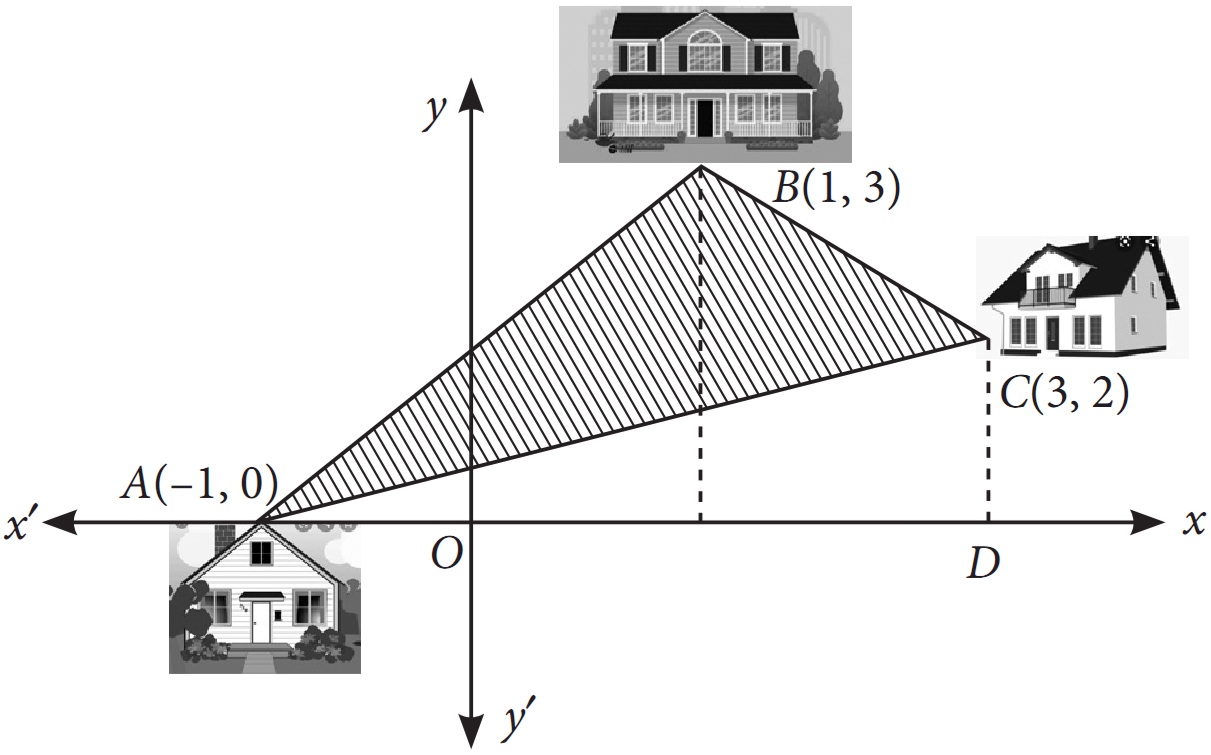
Location of three houses of a society is represented by the points A(-1, 0), B(1, 3) and C(3, 2) as shown in figure.

Based on the above information, answer the following questions
  1. Equation of line AB is.
    1. $\text{y}=\frac{3}{2}(\text{x}+1)$
    2. $\text{y}=\frac{3}{2}(\text{x}-1)$
    3. $\text{y}=\frac{1}{2}(\text{x}+1)$
    4. $\text{y}=\frac{1}{2}(\text{x}-1)$
  2. Equation of line BC is.
    1. $\text{y}=\frac{1}{2}\text{x}-\frac{7}{2}$
    2. $\text{y}=\frac{3}{2}\text{x}-\frac{7}{2}$
    3. $\text{y}=\frac{-1}{2}\text{x}+\frac{7}{2}$
    4. $\text{y}=\frac{3}{2}\text{x}+\frac{7}{2}$
  3. Area of region ABCD is.
  1. 2 sq. units
  2. 4 sq. units
  3. 6 sq. units
  4. 8 sq. units
  1. Area of $\triangle\text{ADC}$ is,
  1. 4 sq. units
  2. 8 sq. units
  3. 16 sq. units
  4. 32 sq. units
  1. Area of $\triangle\text{ABC}$ is.
  1. 3 sq. units
  2. 4 sq. units
  3. 5 sq. units
  4. 6 sq. units
A tin can manufacturer designs a cylindrical tin can for a company making sanitizer and disinfectors. The tin can is made to hold 3 litres of sanitizer or disinfector. The cost of material used to manufacture the tin can is $₹ 100 / \mathrm{m}^2$.

Image

(i) If $\mathrm{r} \mathrm{cm}$ be the radius and $\mathrm{h} \mathrm{cm}$ be the height of the cylindrical tin can, then express the surface area as a function of radius (r)

(ii) Find the radius of the can that will minimize the cost of tin used for making can?

(iii) Find the height that will minimize the cost of tin used for making can ?

OR

Find the minimum cost of material used to manufacture the tin can.