Question
Light is:
  1. Wave phenomenon.
  2. Particle phenomenon
  3. Both particle and wave phenomenon.

Answer

  1. Both particle and wave phenomenon.

Explanation:

Light shows photoelectric effect and Compton effect, which depicts its particle nature. It also shows interference and diffraction, which depicts the wave nature of light.

Need a full question paper?

Generate a complete, print-ready paper with questions like this in minutes — across 16+ boards, with answer keys.
Start Generating Free

Similar questions

When the intensity of a light source is increased:
  1. The number of photons emitted by the source in unit time increases.
  2. The total energy of the photons emitted per unit time increases.
  3. More energetic photons are emitted.
  4. Faster photons are emitted.
A fly wheel of moment of inertia $0.4\,\, kg\, m^2$ and radius $0.2\,\, m$ is free to rotate about a central axis. If a string is wrapped around it and it is pulled with a force of $10 \,N$ , then angular velocity after $4\,\, sec$ will be ......... $rad\,\,s^{-1}$.
Third harmonic frequency in open argonpipe:
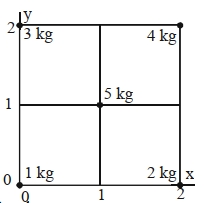
Five masses are placed in a plane as shown in figure. The coordinates of the centre of mass are nearest to.
One kg of a diatomic gas is at a pressure of $8 \times 10^4$  $N/m^2$ The density of the gas is $4$ $kg/m^3$ What is the energy (in $\times 10^4\; J$) of the gas due to its thermal motion?
A steel meter scale is to be ruled so that millimeter intervals are accurate within about $5 \times 10^{-5}$ $mm$ at a certain temperature. The maximum temperature variation allowable during the ruling is .......... $^oC$  (Coefficient of linear expansion of steel $ = 10 \times {10^{ - 6}}{K^{ - 1}})$
Which of the following plots represents schematically the dependence of the time period of a pendulum, if measured and plotted as a function of the amplitude of its oscillations? (Note amplitude need not be small)
shows a capillary tube of radius r dipped into water. If the atmospheric pressure is P0 the pressure at point A is:

  1. $\text{P}_0$

  2. $\text{P}_0+ \frac{2\text{S}}{\text{r}}$

  3. $\text{P}_0- \frac{2\text{S}}{\text{r}}$

  4. $\text{P}_0- \frac{4\text{S}}{\text{r}}$

The Poisson's ratio of a material is $0.5$. If a force is applied to a wire of this material, there is a decrease in the cross-sectional area by $4 \%$. The percentage increase in the length is ........ $\%$
Longitudinal stress of $1\,kg/m{m^2}$ is applied on a wire. The percentage increase in length is $(Y = {10^{11}}\,N/{m^2})$