Question
List the techniques of Financial Statement Analysis.

Answer

The following are the commonly used techniques of Financial Statement analysis:
  1. Comparative Financial Statements.
  2. Common Size Financial Statements.
  3. Trend Analysis.
  4. Ratio Analysis.
  5. Cash Flow Statement.
  6. Fund Flow Statement.
  7. The above listed techniques can be classified on the following basis:
A On the basis of Comparison.
Inter-firm Comparison.
  • Comparative Statement (Balance Sheet, Profit and Loss Account)
  • Common size Statement (of the same period)
  • Ratio of two or more Competitive Firms (of the same period)
  • Cash Flow Statement of two or more Competitive firms.
  • Polygon, Bar Diagram.
Intra-firm Comparison.
  • Comparative Statement (Balance Sheet, Profit and Loss Account)
  • Common size Statement (of the same period)
  • Ratio of two or more Competitive Firms (of the same period)
  • Cash Flow Statement of two or more Competitive firms
  • Polygon, Bar Diagram
Horizontal Comparison.

Vertical Comparison.
  1. On the basis of Time
Inter-period Comparison.
  • Comparative statement (two or more periods)
  • Cash Flow statement (two or more period) etc.
Cross Sectional (Intra-period) Comparison.
  • Common size statement
  • Ratio Analysis
  1. Horizontal Analysis.
  • Time series
  • Bar Diagram
  • Polygon
  • Comparative statement
  • Ratio Analysis
  1. Vertical Analysis.
  • Common size statement
  • Pie Diagram

Need a full question paper?

Generate a complete, print-ready paper with questions like this in minutes — across 16+ boards, with answer keys.
Start Generating Free

Similar questions

The Directors of a Company forfeited 500 shares of ₹ 10 each issued at a premium of ₹ 3 per share, for the, non-payment of the first call money of ₹ 3 per share. The final call of ₹ 2 per share has not been made. Half the forfeited shares were reissued at ₹ 2,500 fully paid. Record the journal entries for the forfeiture and reissue of shares.
Z Ltd. purchased furniture costing ₹ 2,20,000 from C.D Ltd. The payment was to be made by issue of 9% Preference Shares of ₹ 100 each ata premium of ₹ 10 per share. Pass necessary Journal entries in the books of Z Ltd.
Rajan Ltd. purchased assets from Geeta & Co. for ₹ 5,00,000. A sum of ₹ 1,00,000 was paid by means of a bank draft and for the balance due Rajan Ltd. issued equity Shares of ₹ 10 each at a premium of 25%. journalise the above transactions in the books of the company.
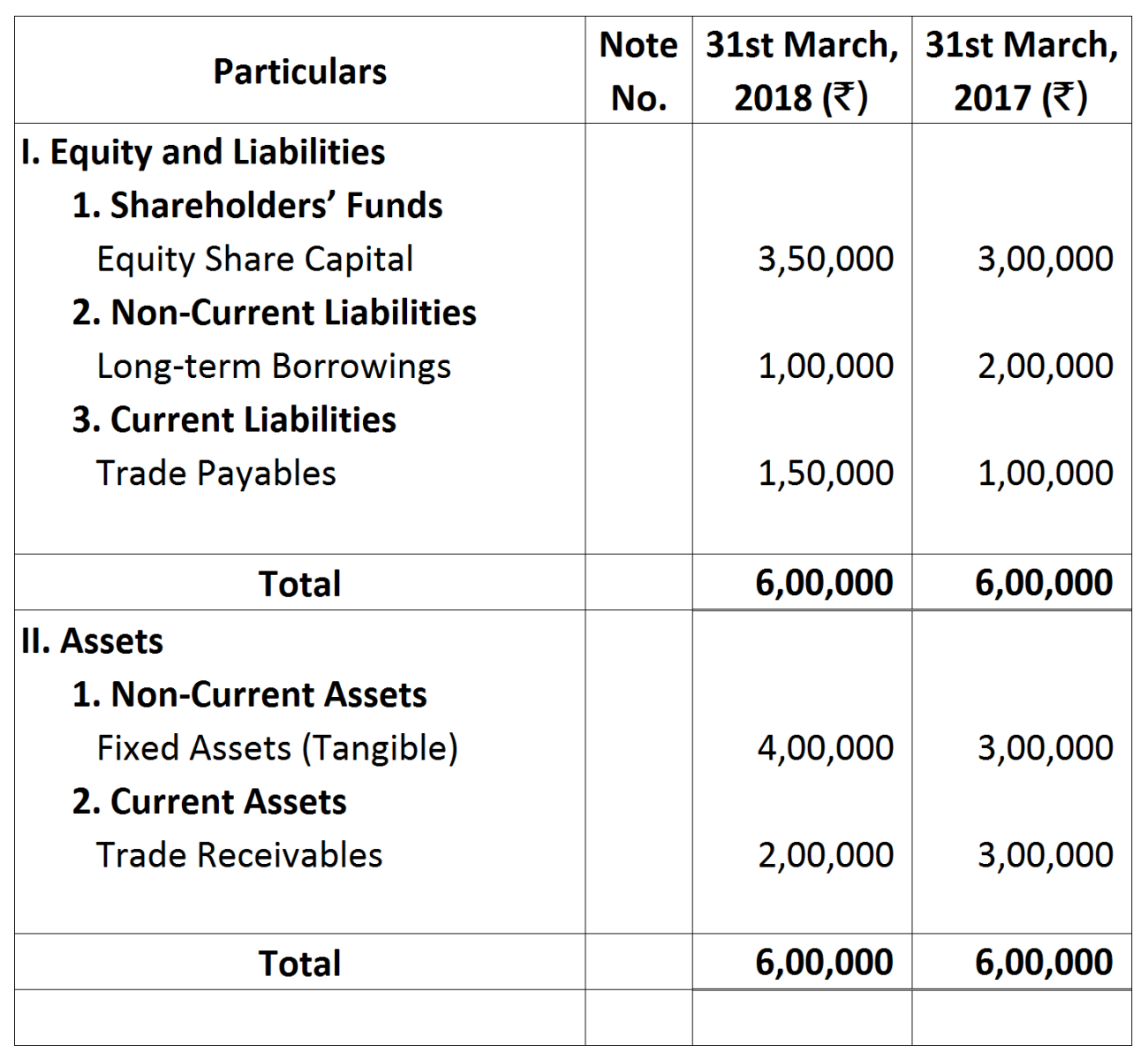
From the following balance sheet, prepare the comparative balance sheet of D Ltd.
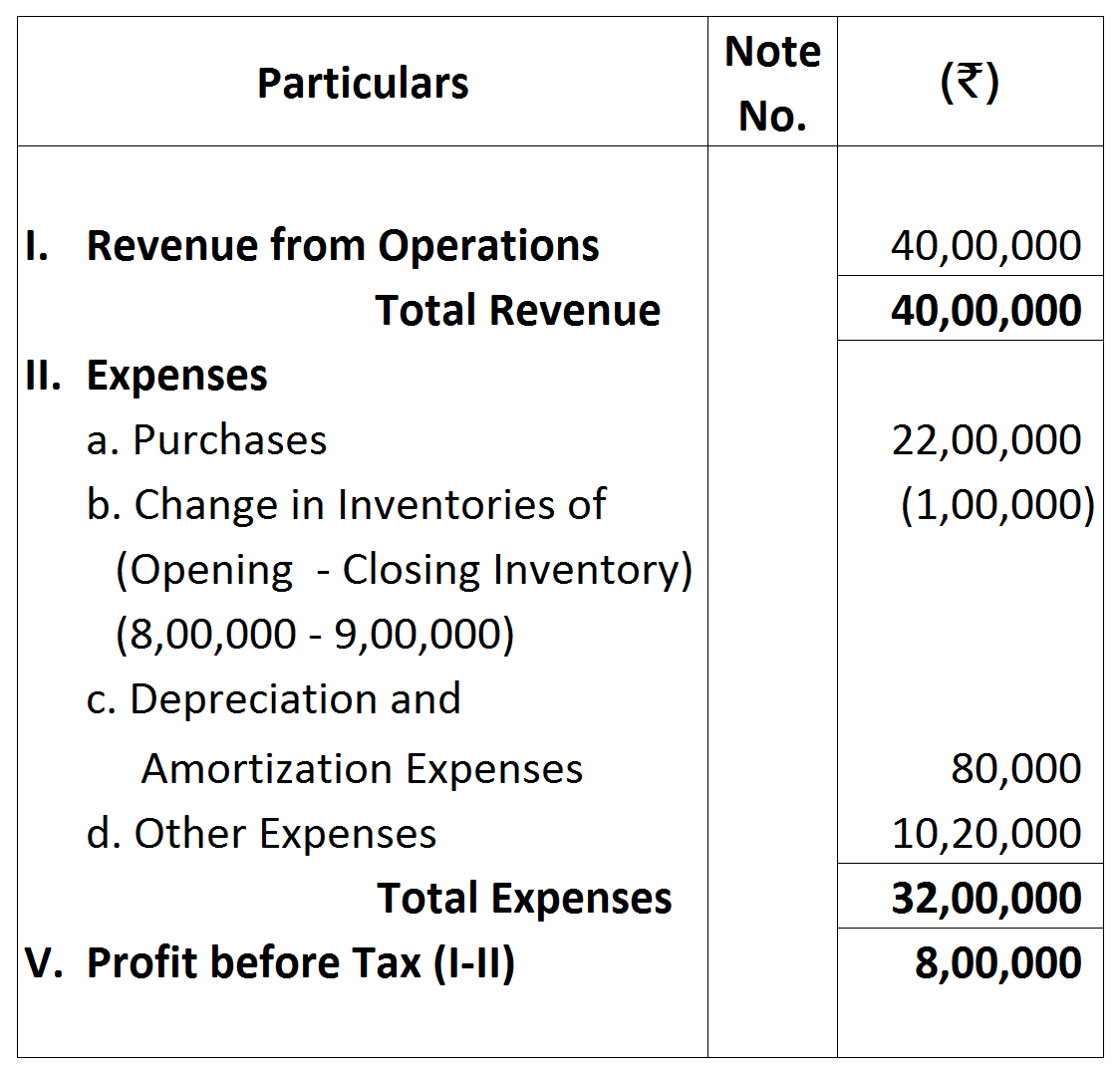
The following is the Statement of Profit and Loss of Z Ltd. for the year ended March 31, 2018:

Additional Information:
  1. Sundry Creditors increased by ₹ 40,000 during the year.
  2. Sundry Debtors increased by ₹ 70,000 during the year.
  3. Outstanding wages decreased by ₹ 10,000 during the year.
  4. Bills Receivable decreased by ₹ 5,000 during the year.
  5. Prepaid expenses decreased by ₹ 20,000 during the year.
Compute net Cash from operations by the indirect method.
Revenue from Operations, Cash Sales ₹ 4,00,000; Credit Sales ₹ 1,00,000; Gross Profit ₹ 1,00,000 Office and Selling Expenses ₹ 50,000. Calculate Operating Ratio.
Calculate Debt Equity Ratio from the following:
Total Assets ₹ 2,30,000 Total Debt ₹ 1,50,000 Current Liabilities ₹ 30,000.
Goodluck Ltd purchased machinery costing ₹ 10,00,000 from Fair Deals Ltd. The company paid the price by issue of Equity Shares of ₹ 10 each at a premium of 25%.
Pass necessary Journal entries for the above transactions in the books of Goodluck Ltd.
From the following, compute Current Ratio:
 
 
Trade Receivables (Sundry Debtors).
1,80,000
Bills Payable.
20,000
Prepaid Expences.
40,000
Sundry Creditor.
1,00,000
Case and Case Equivalents.
50,000
Debentures.
4,00,000
Marketeble Securities.
50,000
Inventories.
80,000
Land and Building.
5,00,000
Expenses Payable.
80,000
[Hint: Marketable securities means the Short-term Investment.]
Following is the extract from the Balance Sheet of Zee Ltd.:
Particulars
31st March, 2018 ₹
31st March, 2017 ₹
Equity Share Capital
10% Preference Share Capital
Surplus, i.e., Balance in Statement of Profit and Loss
Unpaid Dividend
8,00,000
6,00,000
7,20,000
20,000
8,00,000
6,00,000
4,00,000
……
Additional Information:
  1. Proposed equity dividends for the year 2016-17 and 2017-18 are ₹ 1,60,000 and 2,00,000 respectively.
  2. An Interim Dividend of ₹ 40,000 on Equity Shares was paid.
Show Net Profit before Tax and Extraordinary Items.