Question
List the various abiotic environmental factors.

Answer

Decomposition is the process that involves the breakdown of complex organic matter or biomass from the body of dead plants and animals with the help of decomposers into inorganic raw materials such as carbon dioxide, water, and other nutrients. The various processes involved in decomposition are as follows:
  • Fragmentation: It is the first step in the process of decomposition. It involves the breakdown of detritus into smaller pieces by the action of detritivores such as earthworms.
  • Leaching: It is a process where the water soluble nutrients go down into the soil layers and get locked as unavailable salts.
  • Catabolism: It is a process in which bacteria and fungi degrade detritus through various enzymes into smaller pieces.
  • Humification: The next step is humification which leads to the formation of a dark coloured colloidal substance called humus, which acts as reservoir of nutrients for plants.
  • Mineralization: The humus is further degraded by the action of microbes, which finally leads to the rlease of inorganic nutrients into the soil. This process of releasing inorganic nutrients from the humus is known as mineralization. Decomposition produces a dark coloured, nutrient-rich substance called humus. Humus finally degrades and releases inorganic raw materials such as CO2, water, and other nutrient in the soil.

Need a full question paper?

Generate a complete, print-ready paper with questions like this in minutes — across 16+ boards, with answer keys.

Start Generating Free

Similar questions

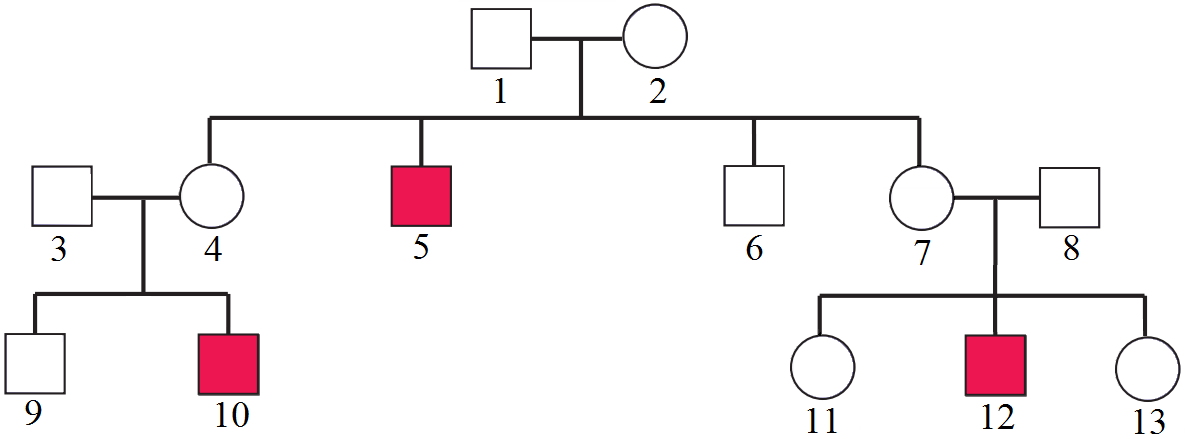
Haemophilia is a sex–linked recessive disease. Study the pedigree analysis given below showing the inheritance of the disease in a family and answer the questions that follow.

  1. Give the evidence from the above analysis which suggests that the disease is:
    1. Sex–linked and,
    2. Caused by a recessive allele.
  2. Write the possible genotypes of the individuals ‘2’ and ‘5’.
Thalassemia and Haemophilia are both Mendelian disorders related to blood. Write the symptoms of the diseases. Explain with the help of crosses the difference in the inheritance pattern of the two diseases.
Explain double fertilisation and trace the post-fertilisation events in sequential order leading to seed formation in a typical dicotyledonous plant.
Study the schematic representation of the genes involved in the lac operon given below and answer the questions that follow.

  1. Identify and name the regulatory gene in this operon. Explain its role in 'switching off the operon.
  2. Why is lac operon's regulation referred to as negative regulation?
  3. Name the inducer molecule and the products of the genes 'z' and 'y of the operon. Write the function of these gene products.
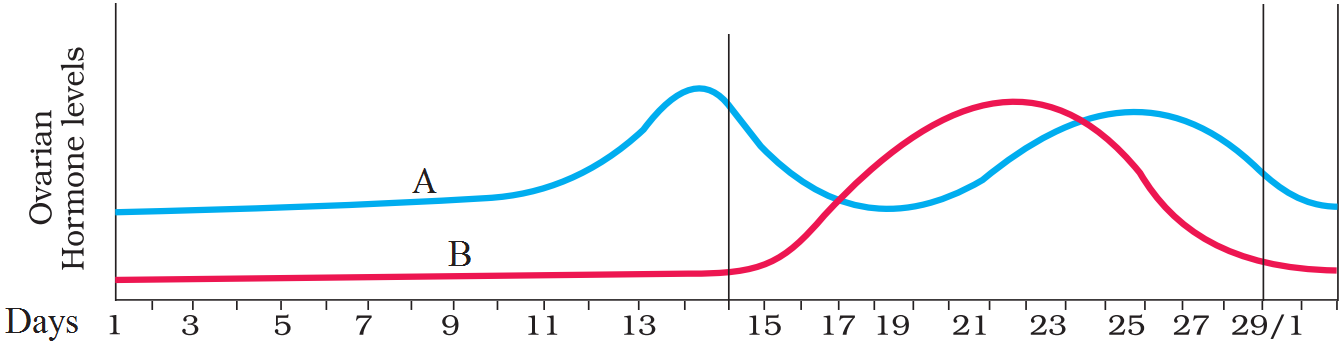
The graph given below shows the variation in the levels of ovarian hormones during various phases of menstrual cycle:

Compare the role of A and B.

Define transgenic animals. Explain in detail any four areas where they can be utilised.
Give details of different types of immune globulins in humans.
Answer the following questions:
Name the organs where gametogenesis gets completed in human male and female, respectively.
Microbes can be used to decrease the use of chemical fertilisers and pesticides. Explain how this can be accomplished.
The following is the illustration of the sequence of ovarian events (a – i) in a human female.

Explain the changes that occur in the uterus simultaneously in anticipation.