Question
List the various abiotic environmental factors.

Answer

Decomposition is the process that involves the breakdown of complex organic matter or biomass from the body of dead plants and animals with the help of decomposers into inorganic raw materials such as carbon dioxide, water, and other nutrients. The various processes involved in decomposition are as follows:
  • Fragmentation: It is the first step in the process of decomposition. It involves the breakdown of detritus into smaller pieces by the action of detritivores such as earthworms.
  • Leaching: It is a process where the water soluble nutrients go down into the soil layers and get locked as unavailable salts.
  • Catabolism: It is a process in which bacteria and fungi degrade detritus through various enzymes into smaller pieces.
  • Humification: The next step is humification which leads to the formation of a dark coloured colloidal substance called humus, which acts as reservoir of nutrients for plants.
  • Mineralization: The humus is further degraded by the action of microbes, which finally leads to the rlease of inorganic nutrients into the soil. This process of releasing inorganic nutrients from the humus is known as mineralization. Decomposition produces a dark coloured, nutrient-rich substance called humus. Humus finally degrades and releases inorganic raw materials such as $CO_2$, water, and other nutrient in the soil.

Need a full question paper?

Generate a complete, print-ready paper with questions like this in minutes — across 16+ boards, with answer keys.
Start Generating Free

Similar questions

Describe in detail the human reproductive system.
The number of trophic levels in an ecosystem are limited. Comment.
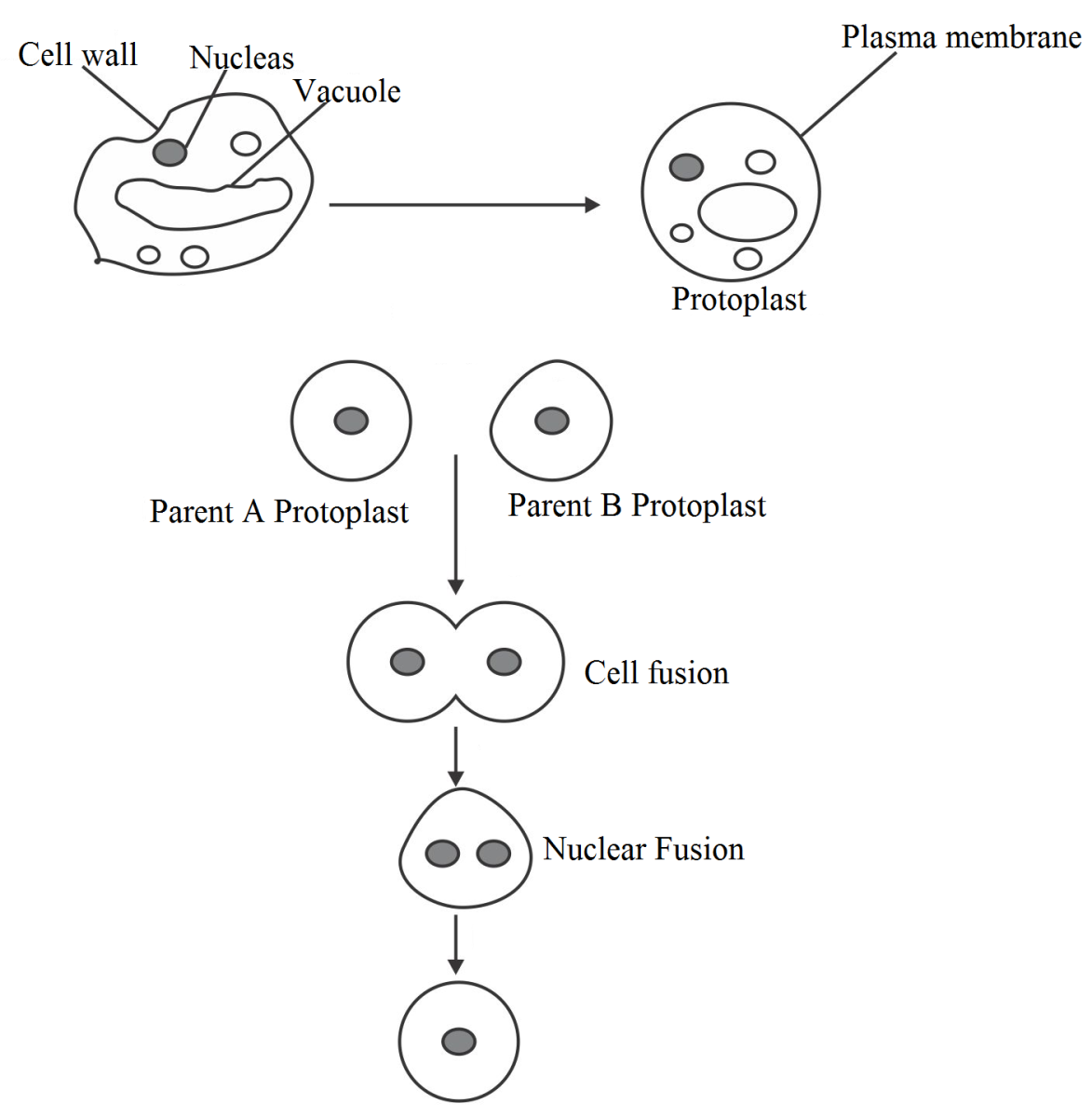
Figure given below represent a certain technique of tissue culture.
  1. Name the technique, as shown in the diagram.
  2. What are the enzymes used to digest plant cell wall?
  3. Name the fusinogen.
  4. What is the product of fusion of protoplasts?
A species-area curve is drawn by plotting the number of species against the area. How is it that when a very large area is considered the slope is steeper than that for smaller areas?
Fill in the blanks in the different column of the table given below:
Disease
Casual organisms
Medium of transfer
Symptoms
Amoebiasis
Entamoeba histolytica
a
Diarrhoea
Typhoid
b
Contaminated food
Sustained high fever
c
Plasmodium
Bite of infected female Anopheles mosquito
Chill and high fever
Pneumonia
Steptococcus
d
Fever and cough
Give a schematic labelled diagram to represent oögenesis (without descriptions)
Thalassemia and haemophilia are both Mendelian disorders related to blood. Write the symptoms of the diseases. Explain with the help of crosses the difference in the inheritance pattern of the two diseases.
OR
Why are thalassemia and hemophilia categorised as Mendelian disorders? Write the symptoms of these diseases. Explain their pattern of inheritance in humans. Write the genotypes of the normal parents producing a haemophilic son.
Define gametogenesis. How does cell division take place during gamete formation?
Answer the following questions:
Draw a diagrammatic sectional view of the female reproductive system of human and label the parts:
  1. Where the secondary oocytes develop.
  2. Which helps in collection of ovum after ovulation.
  3. Where fertilisation occurs.
  4. Here implantation of embryo occurs.
Match the items given in column A and B:
Column A Column B
a Catalytic converter i Particulate matter
b Electrostatic precipitator ii Carbon monoxide and nitrogen oxides
c Earmuffs iii High noise level
d Landfills iv Solid wastes