MCQ
Magnetic dipole moment is a
  • A
    Scalar quantity
  • Vector quantity
  • C
    Constant quantity
  • D
    None of these

Answer

Correct option: B.
Vector quantity

Need a full question paper?

Generate a complete, print-ready paper with questions like this in minutes — across 16+ boards, with answer keys.
Start Generating Free

Similar questions

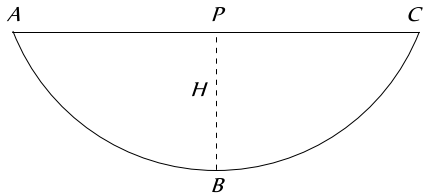
A simple pendulum with a bob of mass ' $m$ ' oscillates from $A$ to $C$ and back to $A$ such that $P B$ is $H$. If the acceleration due to gravity is ' $g$ ', then the velocity of the bob as it passes through $B$ isImage
A particle moves in a circular orbit under the action of a central attractive force inversely proportional to the distance ' $r$ '. The speed of the particle is
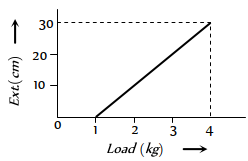
The pointer reading $v / s$ load graph for a spring balance is as given in the figure. The spring constant is

Image

A particle of mass $M$ moves with constant speed along a circular path of radius $r$ under the action of a force $F$. Its speed is
Two wires of resistance $R$ and $R$ have temperature coefficient of resistance $\alpha_1$ and $\alpha_2$, respectively. I nese are joined in sernes. The effective temperature coefficient of resistance is
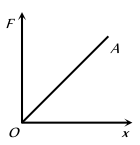
The force required to stretch a spring varies with the distance as shown in the figure. If the experiment is performed with the above spring of half length, the line OA will
Image
Given below are two statements: One is labelled as Assertion $A$ and the other is labelled as Reason $R$.

Assertion $A:$ For measuring the potential difference across a resistance of $600\,\Omega$, the voltmeter with resistance $1000\,\Omega$ will be preferred over voltmeter with resistance $4000\,\Omega$.

Reason $R:$ Voltmeter with higher resistance will draw smaller current than voltmeter with lower resistance.

In the light of the above statements, choose the most appropriate answer from the options given below.

A galaxy is observed to be moving with a velocity of $8600\ km - sec$. If it is at a distance of $430$ million light year from us, Hubble constant and corresponding age of the universe are respectively
A spring has a certain mass suspended from it and its period for vertical oscillation is $T$. The spring is now cut into two equal halves and the same mass is suspended from one of the halves. The period of vertical oscillation is now
A ball of mass $m$ moving with velocity $V$, makes a head on elastic collision with a ball of the same mass moving with velocity $2 \mathrm{~V}$ towards it. Taking direction of $V$ as positive velocities of the two balls after collision are