MCQ
Magnetic lines of force:
- AForm closed circuits.
- BCannot intersect.
- CAre crowded together near the poles.
- DAll the above are correct.
Explanation:
They always form complete closed loops. Unlike lines of electric flux which radiate from and terminate at the charged surfaces, lines of magnetic flux exist all the way through the magnet.
They behave as if they are elastic. That is, when distorted they try to return to their natural shape and spacing.
The lines of force of magnetic field are radiated from the north (N) pole to the south (S) pole.
Flux lines do not cross or interact to each other.
The density of lines of magnetic force indicates the strength of field at the point. Since strength is greatest at the poles, the magnetic lines of force are crowded there.
Generate a complete, print-ready paper with questions like this in minutes — across 16+ boards, with answer keys.
When  ampere current is passed in a tangent galvanometer, there is a deflection of 30° in it. The deflection obtained when 3 amperes current is passed, is
| (a) 30° | (b) 45° | (c) 60° | (d) 75° |
When a current is passed through water, acidified with a dilute sulphuric acid, the gases formed at the platinum electrodes are
|
(a) 1 vol. hydrogen (cathode) and 2 vol. oxygen (anode) |
|
(b) 2 vol. hydrogen (cathode) and 1 vol. oxygen (anode) |
|
(c) 1 vol. hydrogen (cathode) and 1 vol. oxygen (anode) |
|
(d) 1 vol. oxygen (cathode) and 2 vol. hydrogen (anode) |
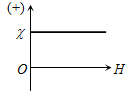
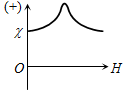
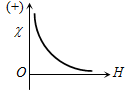
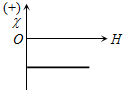
The variation of magnetic susceptibility (x) with magnetising field for a paramagnetic substance is
|
(a)
|
(b)
|
(c)
|
(d)
|
Assertion : The resistivity of a semiconductor increases with temperature.
Reason : The atoms of a semiconductor vibrate with larger amplitude at higher temperature there by increasing it's resistivity.
|
(a) If both assertion and reason are true and the reason is the correct explanation of the assertion. |
|
(b) If both assertion and reason are true but reason is not the correct explanation of the assertion. |
|
(c) If assertion is true but reason is false. |
|
(d) If the assertion and reason both are false. |