Question
Match the species given in Column I with the shape given in Column II and mark the correct option.
  Column I   Column II
(A) $\text{SF}_4$ (1) Tetrahedral
(B) $\text{BrF}_3$ (2) Pyramidal
(C) $\text{BrO}_3^-$ (3) Sea-saw shaped
(D) $\text{NH}_4^+$ (4) Bent T-shaped
  1. A (3) B (2) C (1) D (4)
  2. A (3) B (4) C (2) D (1)
  3. A (1) B (2) C (3) D (4)
  4. A (1) B (4) C (3) D (2)

Answer

  Column I   Column II
(A) $\text{SF}_4$ (3) Sea-saw shaped
(B) $\text{BrF}_3$ (4) Bent T-shaped
(C) $\text{BrO}_3^-$ (2) Pyramidal
(D) $\text{NH}_4^+$ (1) Tetrahedral
  1. A (3) B (4) C (2) D (1)
Explanation:
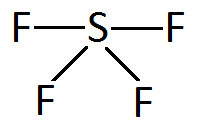
  1.  
Species: $\text{SF}_4$
Shape: Sea-saw shaped
Structure
  1.  
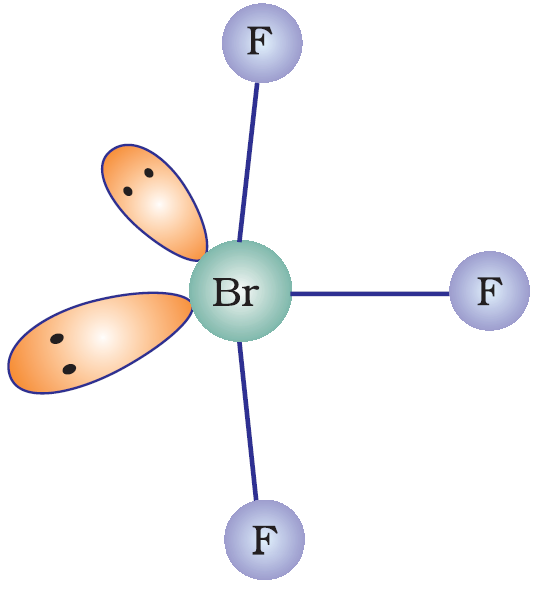
Species: $\text{BrF}_3$
Shape: Bent T-shaped
Structure:
  1.  
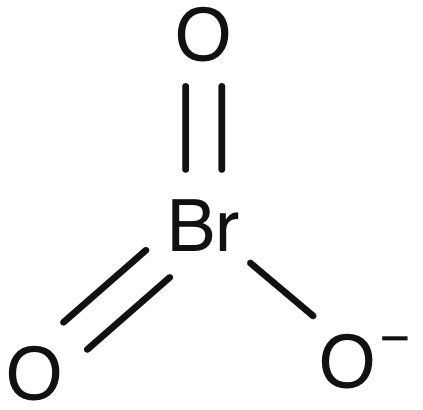
Species: $\text{BrO}_3^-$
Shape: Pyramidal
Structure:
  1.  
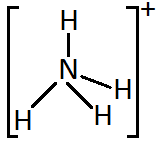
Species: $\text{NH}_4^+$
Shape: Tetrahedral
Structure:

Need a full question paper?

Generate a complete, print-ready paper with questions like this in minutes — across 16+ boards, with answer keys.

Start Generating Free

Similar questions

  1. Explain the following:
  1. $NF_3$ is an exothermic compound whereas $NCl_3$ is not.
  2. $F_2$ is most reactive of all the four common halogens.
  1. Complete the following chemical equations:
  1. $C + H_2SO_4 (conc.)\rightarrow $
  2. $P_4 + NaOH + H_2O\rightarrow $
  3. $Cl_2 + F_2 \rightarrow $
(excess)
$[A], [B], [C], [D], [E], [F]$ and $[G]$ are amines each of which forms a hydrochloride containing $32.42\%$ chlorine. $[A], [B], [C]$ and $[D]$ evolve $N_2$ on reaction with $HNO_2,$ but $[E], [F], [G]$ and $[H]$ do not. Give structures of $[A]$ to $[H]$ with reasons.
Match the terms given in Column I with the units given in Column II.
 
Column I   Column II
i. $\wedge_{\text{m}}$ a. Intensive property.
ii. $\text{E}^{\ominus}_{\text{Cell}}$ b. Depends on number of ions/volume.
iii. $\text{K}$ c. Extensive property.
iv. $\Delta_{\text{r}}\text{G}_{\text{Cell}}$ d. Increases with dilution.
An element with molar mass $63g/ mol$ forms a cubic unit cell with edge length of 360.8pm. If its density is $8.92g/ cm^3$. What is the nature of the cubic unit cell?
Write the $" \text{IUPAC}"$ names of the following coordination compounds:
$a. \left[ Pt \left( NH _3\right)_2 Cl \left( NO _2\right]\right.$
$b. K _3\left[ Cr \left( C _2 O _4\right)_3\right]$
$c. \left[ CoCl _2( en )_2\right] Cl$
$d. \left[ Co \left( NH _3\right)_5\left( CO _3\right)\right] Cl$
$e. Hg \left[ Co ( SCN )_4\right]$
What is crystal field theory? On the basis of this, explain the crystal field splitting in octahedral coordinaton compounds.

Identify A and B in the following reactions:
  1.  
  1. $\text{C}_2\text{H}_5\text{OH}\xrightarrow{\text{Cu},573\text{k}}\text{A}\xrightarrow{\text{CH}_3\text{MgBr}}\text{B}\\ \ \ \ \ \ \ \ \ \ \ \ \ \ \ \ \ \ \ \ \ \ \ \ \ \ \ \ \ \ \ \ \ \ \ \text{H}_2\text{O}/\text{H}^{+}$
Match the formulas of oxides given in Column I with the type of oxide given in Column II and mark the correct option.
  Column I   Column II
$(A)$ $Pb_3O_4$ $(1)$ Neutral oxide
$(B)$ $N_2O$ $(2)$ Acidic oxide
$(C)$ $Mn_2O_7$ $(3)$ Basic oxide
$(D)$ $Bi_2O_3$ $(4)$ Mixed oxide
  1. $A (1) B (2) C (3) D (4)$
  2. $A (4) B (1) C (2) D (3)$
  3. $A (3) B (2) C (4) D (1)$
  4. $A (4) B (3) C (1) D (2)$
Why is it not possible to obtain pure ethanol by fractional distillation? What general name is given to binary mixtures which show deviation from Raoult’s law and whose components cannot be separated by fractional distillation. How many types of such mixtures are there?
Answer the following questions:
Write balanced equations to represent what happens when.
  1. $Cu^{2+}$​​​​​​​ is treated with KI.
  2. Acidified potassium dichromate solution is reacted with iron (II) solution. (ionic equation).