Question
Mention three characteristics of Single Entry System.

Answer

Features of Single Entry System:
  1. Suitability: This system is suitable for small-size businesses where the number of transactions is less.
  2. No Uniformity: This system may differ from firm to firm as it is a mere adjustment of Double Entry System according to requirements and convenience.
  3. Maintenance of Personal Accounts: Usually under this system, only personal accounts are maintained and real and nominal accounts are avoided. Therefore sometimes, it is defined as a system where only personal accounts are kept.
  4. Maintenance of Cash Book: Generally, a Cash Book is maintained in this system which mixes up business as well as personal transactions.
  5. Dependence on Original Vouchers: Usually under this system, original vouchers are scrutinised for collection of information. For example, in case of credit sale, the owner may keep the invoice without recording it in accounting books and at the end of a particular period the total of the invoices gives credit sales of the business. Similarly, the amount of credit purchases may be determined on the basis of original invoices received from the suppliers.

Need a full question paper?

Generate a complete, print-ready paper with questions like this in minutes — across 16+ boards, with answer keys.
Start Generating Free

Similar questions

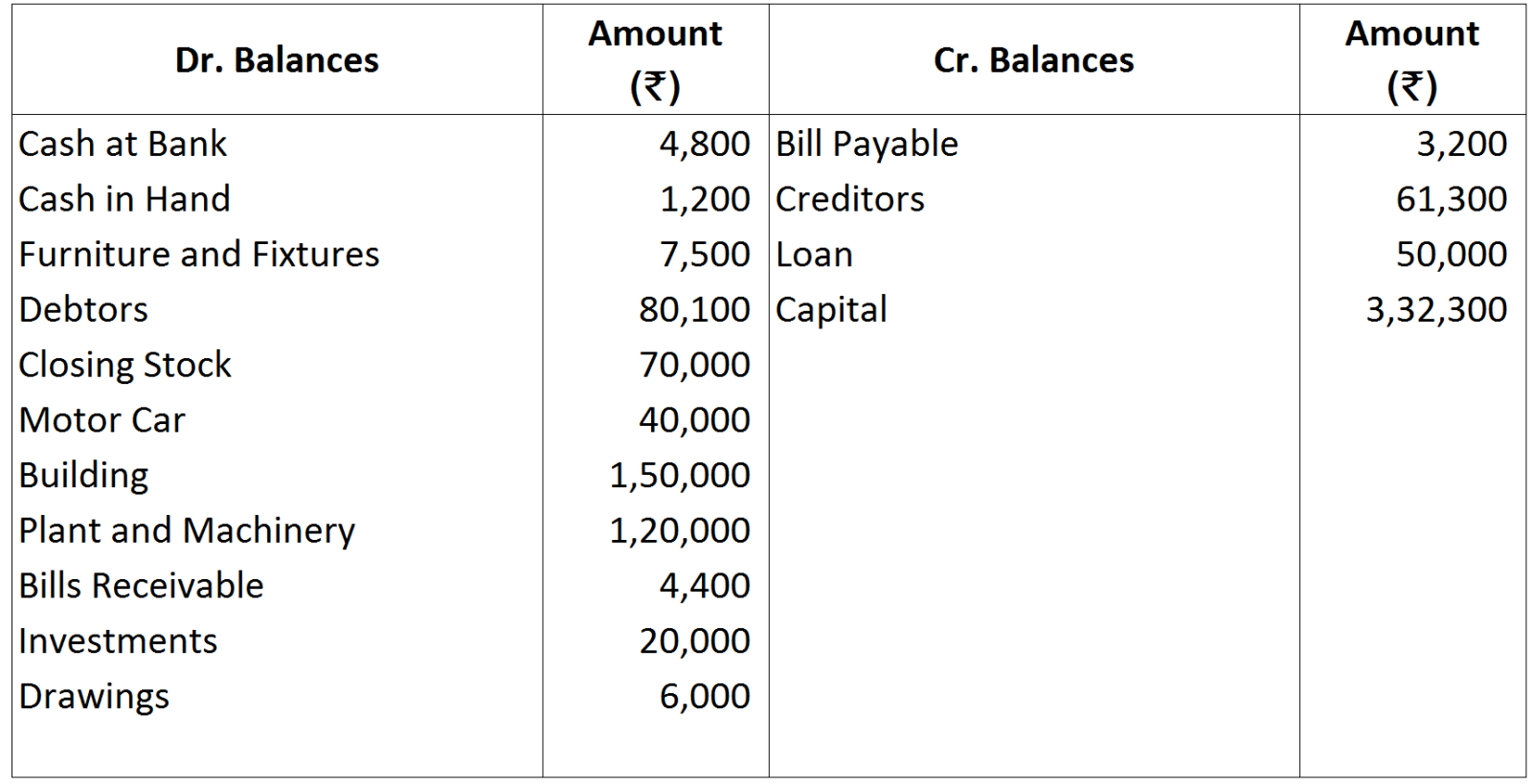
A merchant has earned a Net Profit of ₹ 57,200 for the year ended 31st March, 2017. Other balances in his Ledger are as under:
Prepare his Balance Sheet as at 31st March, 2017.
Find out the credit purchases from the following:
 
Balance of creditors April 01, 2016 1,80,425
Balance of creditors March 31, 2017 26,000
Cash paid to creditors 24,000
Cheque issued to creditors 37,200
Cash purchases 32,200
Discount received from creditors 1,99,000
Discount allowed 26,000
Bills payable given to creditors 2,09,050
Return outwards 8,97,000
Bills payable dishonoured 1,40,000
Bills receivable endorsed to creditors 4,500
Bills receivable endorsed to creditors dishonoured 1,800
Return inwards 3,700
Calculate Gross Profit and Cost of Goods Sold from the following information:Net Sales $₹\ 1,00,000$
Gross Profit $33\frac{1}{3}\%$ on Cost.
Prepare a ‘Total Creditors Account with imaginary figures.
Distinguish between Sales Book and Sales Account. Difference between Sales Book and Sales Account Basis Sales Book.
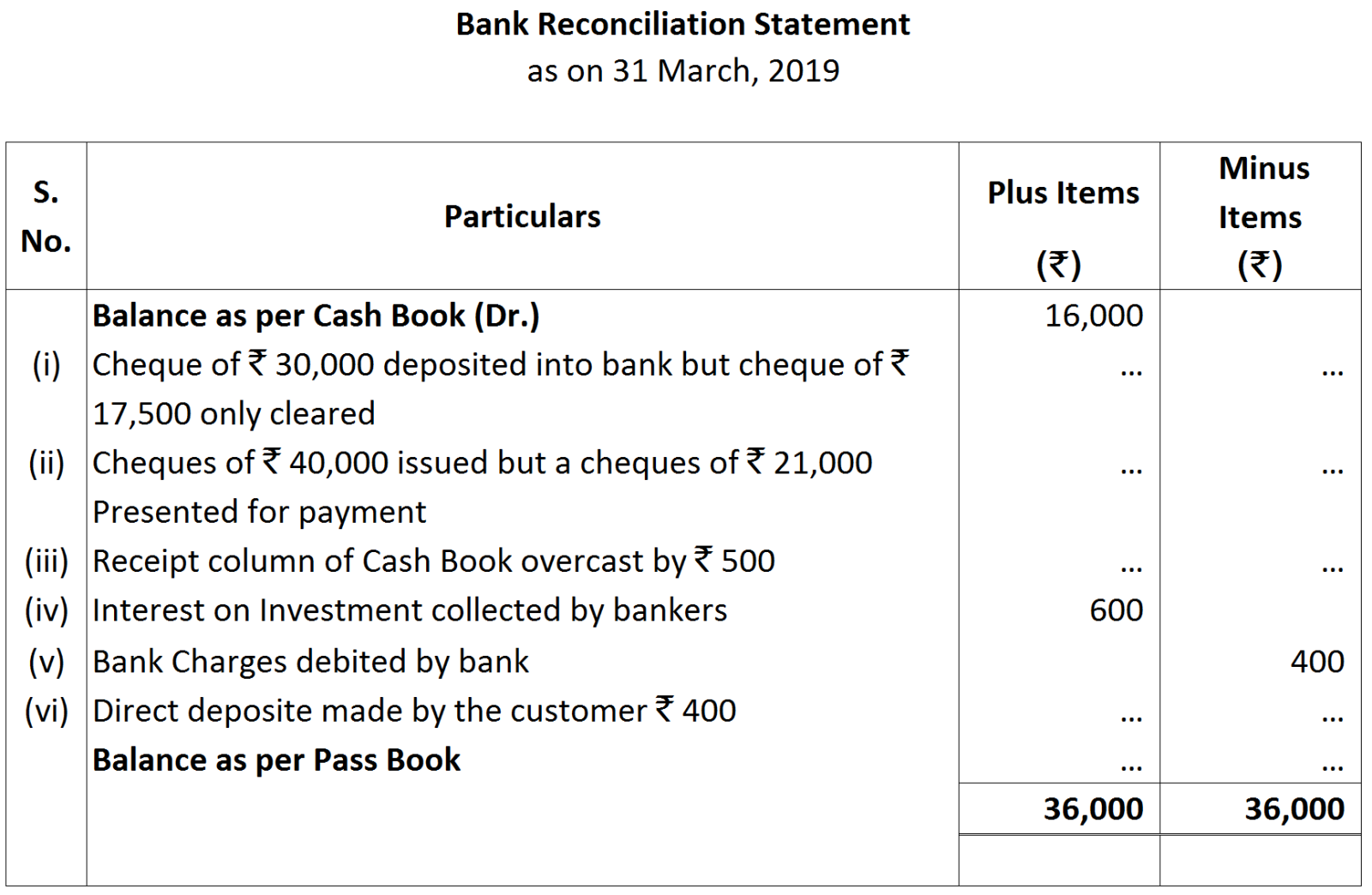
In the following Bank Reconciliation Statement. determine the missing amount:
On 20th March, 2019, Naresh sold goods to Kailash to the value of ₹ 1,250, taking a bill at 3 months for the amount. On maturity, the bill was dishonoured. Naresh paid ₹ 10 as noting charges. On 1st July, Kailash cleared his account by paying ₹ 1,260.
Make the entries in the books of both the parties to record the above transactions.
Calculate Gross Profit and Cost of Goods Sold from the following information:Net Sales $₹\ 1,00,000$
Gross Profit $33\frac{1}{3}\%$ on Cost.
Rectify the following errors assuming that there is no Suspense Account:
  1. Salary of ₹ 5,000 paid to Rahul was not posted to Salaries Account.
  2. Sales to Amrish of ₹ 1,430 posted to his account as ₹ 1,340.
  3. Sales to Vijay of ₹ 2,470 posted to his account as ₹ 2,740.
  4. Purchases from Pal of ₹ 1,430 posted to his account as ₹ 1,340.
Record the following transactions in Double Columns Cash Book and balance the book on 31st March, 2019:
2019
 
March 1
Cash in Hand
12,750
 
Cash at Bank
72,400
March 4
Received from Asha cash ₹ 1,200 and a cheque for ₹ 3,200, allowed discount ₹ 400
 
March 7
Paid salary to staff by cheque
25,600
March 9
Withdrawn cash from bank for office use
21,900
March 12
Interest paid by bank on bank balance
1,200
March 16
Purchased furniture in cash
16,500
March 21
Paid Mohan & Co. by cheque, discount received ₹ 100
10,900
March 24
Proprietor withdrew from office cash for his personal use
11,600
March 29
Sold goods to Manoj for cash
14,800
March 31
Deposited office cash into bank
21,200